Cheap Sony A7 III Lenses That Don't Sacrifice Quality
- Nathaniel Stephan
- September 18, 2025
Table of Contents
The Sony A7 III (ILCE-7M3) arrived at the end of 2018 and remains a fantastic choice for photographers. Sony currently manufactures 74 different E-mount lenses, plus numerous options from third-party makers.
Here’s the reality: Your A7 III is worth around $1,000, so lens recommendations focus on realistic budgets that make sense for your investment.
Budget tip: If you find yourself wanting to spend significantly more on lenses, consider upgrading to another camera in the Sony A7 III series instead. Newer models offer better high ISO performance, superior video features, and improved autofocus systems.
Sony E-Mount Basics: What You Need to Know
Your Sony A7 III uses Sony E-mount lenses—a bayonet-style mount with electronically controlled aperture. Full-frame lenses are labeled with FE in the name.
Quick lens reference guide:
- FE – Full-frame lenses (what you want)
- E – APS-C lenses (will work but use crop mode, reducing resolution to 10.8 megapixels instead of 24)
- SEL – Sony E-mount lens designation
- OSS – Optical SteadyShot (image stabilization)
- GM – G Master (Sony’s current premium optical quality)
- G – Gold (older Sony premium line)
- ZA – Zeiss Alpha (designed with Zeiss)
- LE – Light Edition
- PZ – Power Zoom
- T* – Zeiss optical coatings
Using APS-C Lenses on Full Frame
APS-C lenses work on the A7 III, but the camera switches to crop mode. You’ll lose resolution—from 24 megapixels down to 10.8 megapixels. Generally, stick with FE full-frame lenses.
Adapting Vintage Sony A-Mount Lenses
Before mirrorless, Sony made DSLRs using the Minolta/Sony A-mount. You can adapt these lenses using LA-EA adapters, though compatibility varies:
- LA-EA1 – No autofocus motor
- LA-EA2 – No autofocus motor, no eye AF
- LA-EA3 – Built-in autofocus motor
- LA-EA4 – Built-in motor and sensor (most capable)
- LA-EA5 – Built-in autofocus motor
Sony’s comparison of LA-EA adapters
Affiliate Advertising Disclosure
Outside the Shot is a participant in the Amazon Services LLC Associates Program, an affiliate advertising program designed to provide a means for sites to earn advertising fees by advertising and linking to Amazon.com. As an eBay Partner, I may be compensated if you make a purchase. I also participate in affiliate advertising programs with KEH, and WEX Photo Video. More can be found on the Affiliate Disclosure page.
Kit Lenses: Your Starting Point
Sony FE 28-70mm f3.5-5.6 OSS — Original Kit Lens
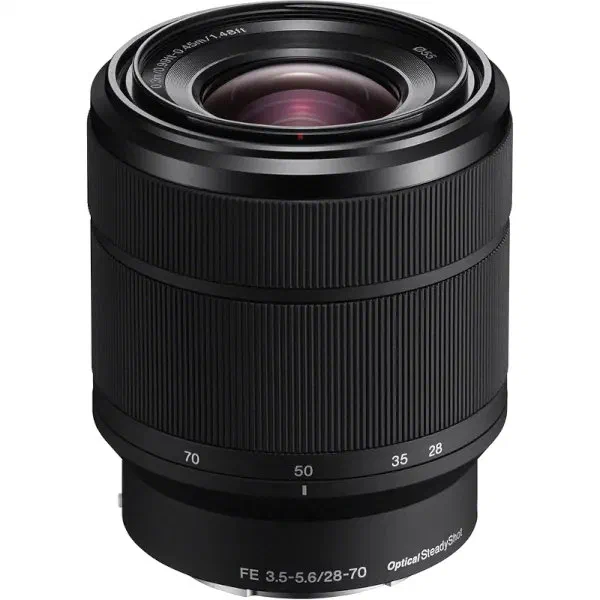
- Weight: 295g
- Filter Size: 55mm
- Model: SEL2870
This kit lens is affordable and easy to find used. It’s lightweight and includes optical image stabilization—great for casual shooting, events, and travel.
The trade-offs: Only reaches 28mm on the wide end and maxes out at f5.6, limiting low-light capability.
See current price and information:
Sony FE 28-60mm f4-5.6 — Newer, Lighter Alternative
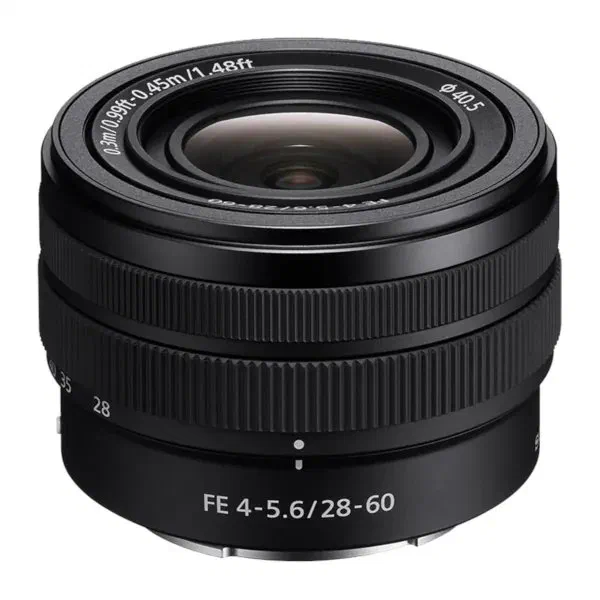
- Weight: 167g (super compact!)
- Filter Size: 40.5mm
- Model: SEL2860
Released in 2020 with the A7C series, this is significantly lighter and sharper than the 28-70mm. Used prices are well below MSRP, making it exceptional value.
Pro tip: Get a 40.5mm-to-49mm step-up ring to avoid buying rare filter sizes.
See current price and information:
All-in-One Travel Zooms: Do-It-All Lenses
Perfect for travel and events, these versatile zooms offer reasonable size, weight, and price.
Tamron 28-200mm F2.8-5.6 Di III RXD — Best Travel Value
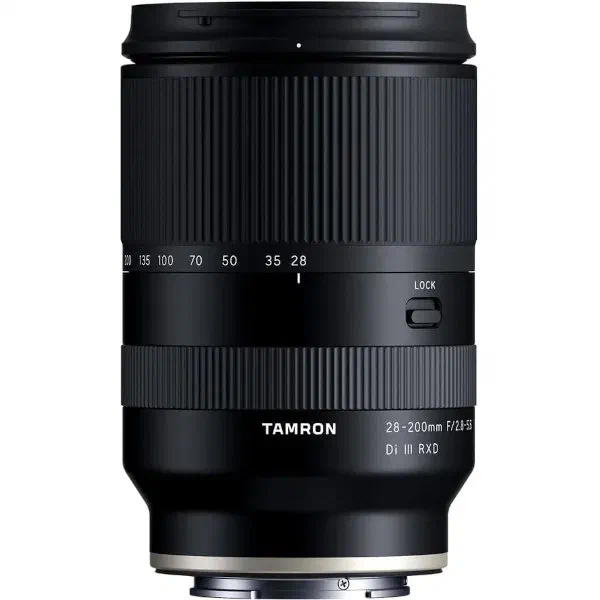
- Weight: 575g
- Filter Size: 67mm
- Model: A071
This lens does nearly everything. The 28-200mm range covers landscapes, portraits, and distant subjects without changing lenses. Designed for mirrorless with 18 elements including 3 special dispersion and 4 aspherical elements.
Released in 2020, it’s the sweet spot for travel photographers.
See current price and information:
Sony FE 24-105mm F4 G OSS — Professional Standard
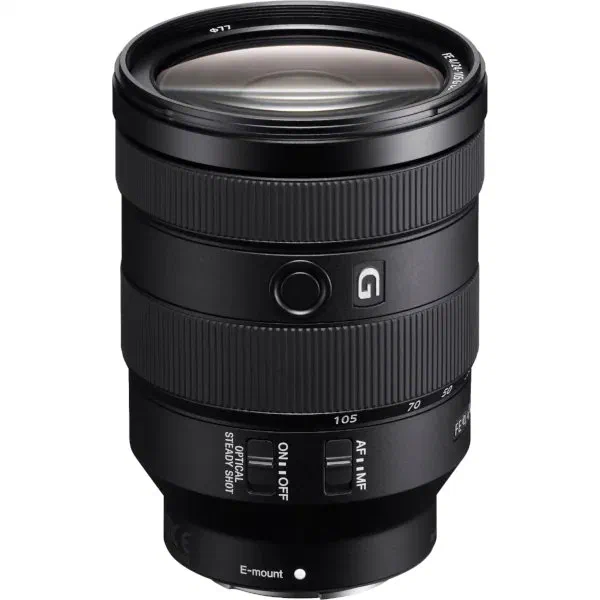
- Weight: 663g
- Filter Size: 77mm
- Model: SEL24105G
Starting at 24mm (wider than most kit lenses) gives you significantly more flexibility. Excellent for travel when you can’t get close to your subject—perfect for barrier-heavy tourist areas or capturing action.
See current price and information:
Sony FE 24-70mm f/4 ZA OSS Zeiss Vario-Tessar T* — Compact Urban Choice
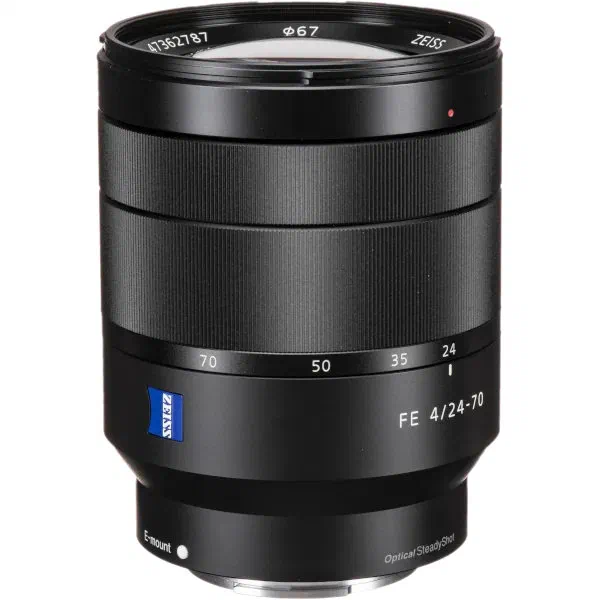
- Weight: 426g (most portable)
- Filter Size: 67mm
- Model: SEL2470Z
Smaller and lighter than competitors, this Zeiss lens is ideal for urban travel—less obvious, easier to carry all day. The shorter zoom range is no problem when you can move around.
Lens pairing idea: Matches perfectly with the Tamron 70-300mm (same 67mm filter threads).
See current price and information:
Prime Lenses for Creative Freedom: Fast & Sharp
Prime lenses (fixed focal length) are smaller, lighter, and deliver superior image quality compared to zooms. Large apertures create stunning bokeh and excel in low light.
Sony FE 50mm f1.8 — The Learning Lens
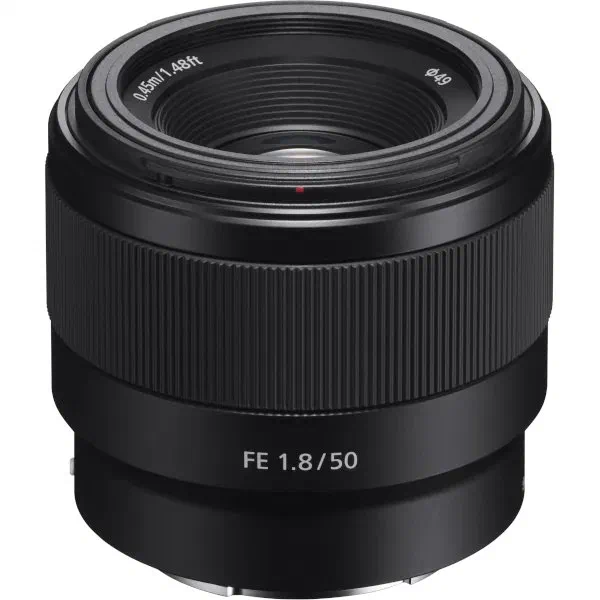
- Weight: 186g
- Filter Size: 49mm
- Model: SEL50F18F
50mm is the perfect focal length to learn photography—it matches human vision perspective and forces you to move around rather than zoom. The f1.8 aperture stays compact while enabling low-light work and beautiful bokeh.
Leave it on your camera as your daily lens.
See current price and information:
Sony FE 35mm f1.8 — The Versatile Workhorse
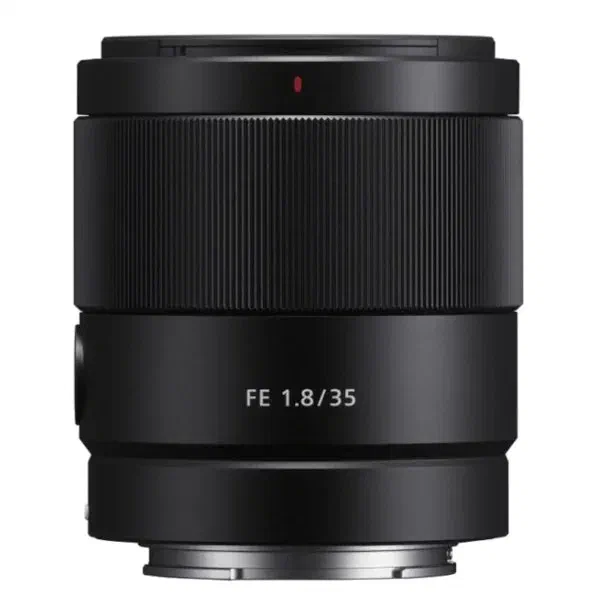
- Weight: 280g
- Filter Size: 55mm
- Model: SEL35F18F
The 35mm focal length requires sophisticated optical design. This lens uses 11 elements in 9 groups with aspherical elements to deliver corner-to-corner sharpness.
Note: Even used examples cost more than the 50mm or 28mm due to that complex design.
See current price and information:
Sony FE 28mm f2 — The Everyday Prime
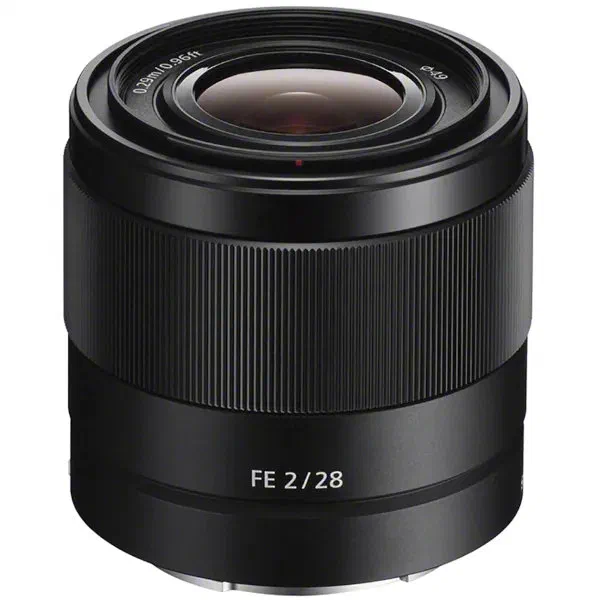
- Weight: 200g
- Filter Size: 49mm
- Model: SEL28F20
Perfect for street, travel, landscapes, interiors, and everyday shooting. The 28mm field of view captures more than 35mm while staying wider than a standard 50mm.
Bonus: Shares 49mm filters with the 50mm, so you only need one set of filters.
See current price and information:
Portrait Perfection: Telephoto Primes
Beautiful background separation and subject isolation define portrait photography.
Sony FE 85mm f1.8 — Entry-Level Portrait Powerhouse
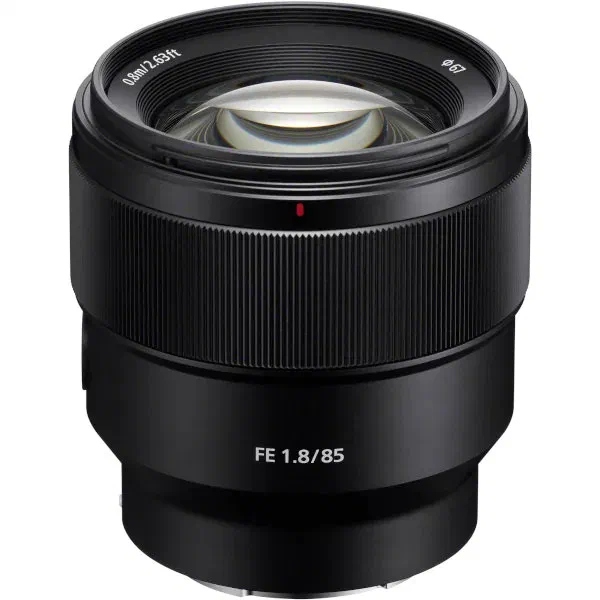
- Weight: 371g
- Filter Size: 67mm
- Model: SEL85F18
The entry point for serious portrait work. Shoot wide open at f1.8 and backgrounds melt into creamy bokeh. You’ll achieve professional results without premium pricing.
Shallow depth of field makes subject separation effortless.
See current price and information:
Sigma 85mm f1.4 DG DN Art — Professional-Grade Alternative
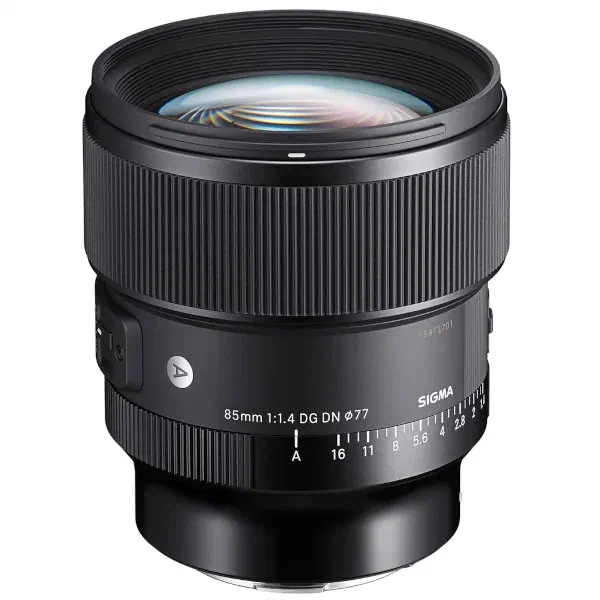
- Weight: 625g
- Filter Size: 77mm
- Model: A2020
The wider f1.4 aperture delivers even shallower depth of field. Here’s the thing: most subjects look better with both the nose and ears in focus—f1.8 is often better than f1.4.
But if you’re charging for portraits, this premium lens commands respect and delivers stunning results.
See current price and information:
Telephoto Reach: Sports, Wildlife & Distant Subjects
Telephoto lenses have complex optical designs, making them expensive. They’re also heavy—a monopod or tripod becomes essential for comfortable handheld shooting.
Budget reality check: Consider upgrading to an A7 IV or original A9 before investing in telephoto lenses. Better-suited cameras include:
- Sigma 100-400mm f5-6.3 DG ND OS – $750
- Sony 100-400mm f4.5-5.6 GM OSS – $1,500
- Sony 200-600mm f5.6-6.3 G OSS – $1,500
- Sigma 150-600mm f5-6.3 DG DN OS Sports – $1,100
Adapted option: You can mount Canon EF telephoto lenses via adapter:
- Tamron SP 150-600mm f/5-6.3 Di VC USD A011 – $500
- Tamron SP 150-600mm f5-6.3 Di VC USD G2 (A022) – $750
Tamron 70-300mm F4.5-6.3 Di III RXD — Most Affordable Telephoto
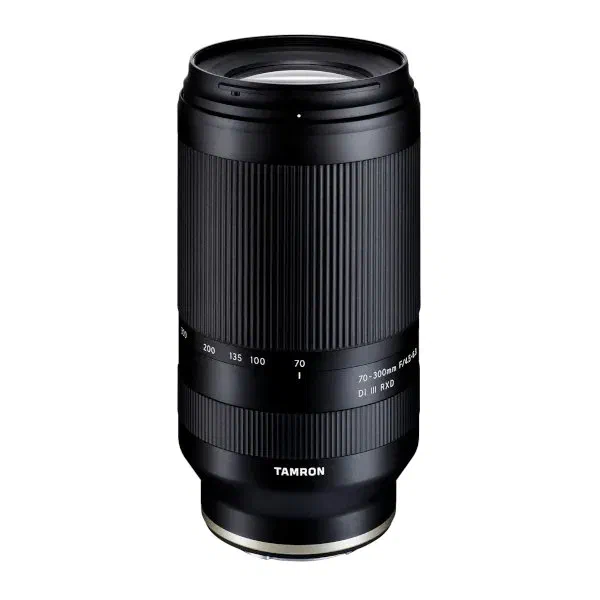
- Weight: 545g
- Filter Size: 67mm
- Model: A047
The budget-friendly telephoto option, designed specifically for mirrorless. The RXD motor keeps pace with advanced autofocus. Chromatic aberration is expertly controlled via 15 elements across 10 groups.
Advantage: 300g lighter than Sony’s equivalent—you’ll feel the difference on all-day shoots.
See current price and information:
Sony FE 70-300mm F4.5-5.6 G OSS — Sony’s Telephoto Standard
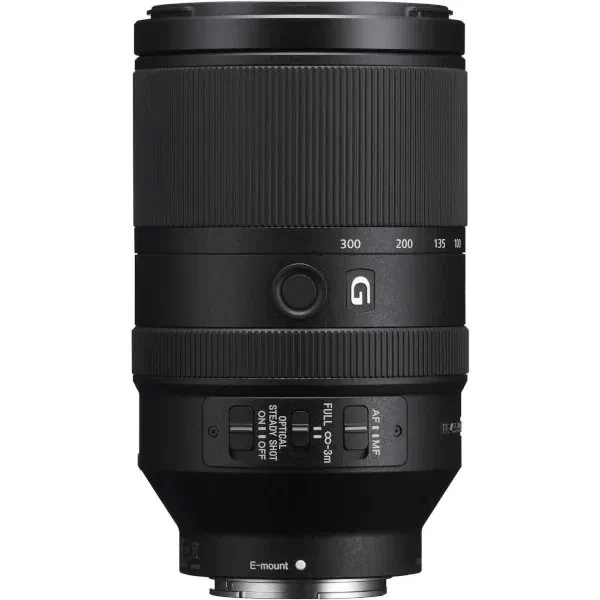
- Weight: 854g
- Filter Size: 72mm
- Model: SEL70300G
Yes, it’s pricey—comparable to a used DSLR. But the exceptional optics combined with optical image stabilization deliver corner-to-corner sharpness. If telephoto is central to your photography, this is worth the investment.
See current price and information:
Wide Angle: Landscapes, Architecture & Video
These lenses excel at sweeping vistas, architectural detail, and cinematic video work.
Viltrox 20mm f2.8 — Budget-Friendly Wide Gem
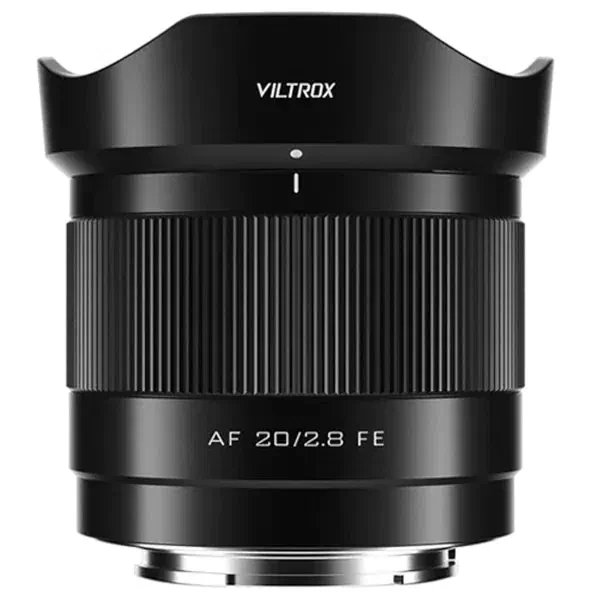
- Weight: 157g
- Filter Size: 52mm
- Model: AF 20/2.8 FE
Shockingly affordable autofocus wide-angle with internal focus. The lightweight design and expansive field of view make it perfect for travel, hiking, and walks.
Pairing suggestion: Combine with a 50mm or 35mm for a versatile two-lens travel kit.
Caveat: Many Viltrox lenses aren’t full-frame—verify before buying.
See current price and information:
Sony 16-35mm ZA T* f4 OSS — Ultra-Wide Professional
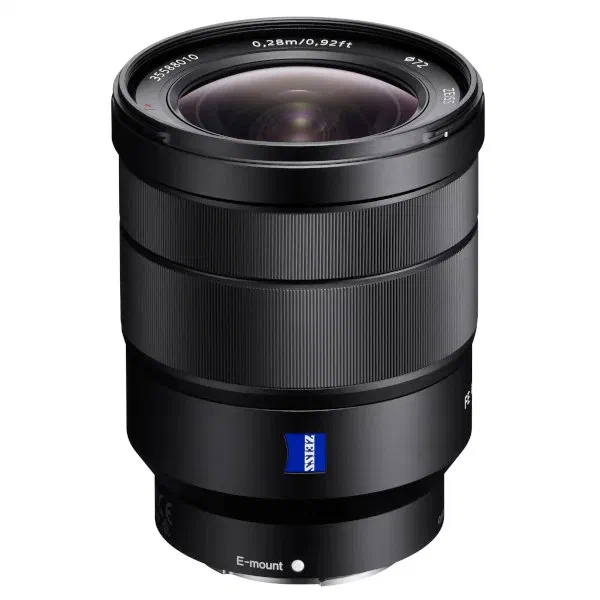
- Weight: 518g
- Filter Size: 72mm
- Model: SEL1635Z
Expect minor vignetting at 16mm wide open—stop down to f8 and everything sharpens beautifully across the frame.
Note: Not weather-sealed, so protect it in harsh conditions.
See current price and information:
Macro Photography: Extreme Close-Up Detail
These lenses capture 1:1 magnification with razor-sharp detail for macro and tabletop photography.
Sony FE 50mm F2.8 Macro — Close-Up Powerhouse
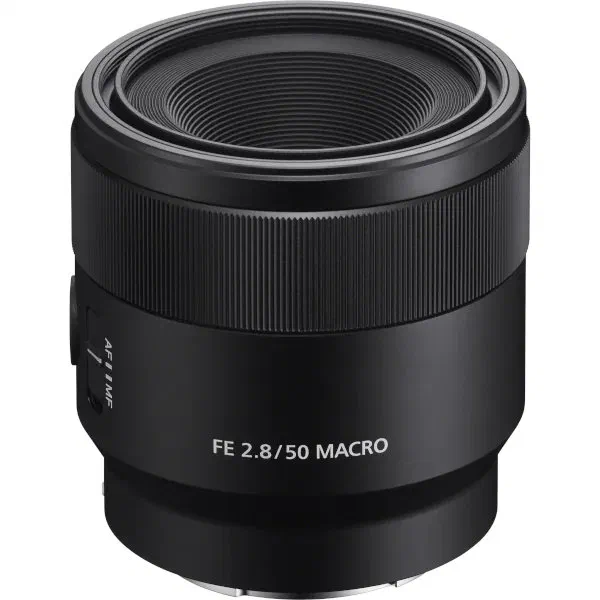
- Weight: 236g
- Filter Size: 55mm
- Model: SEL50M28
Ideal for tabletop photography and close-up detail. Capture intricate shots within arm’s reach—no stepladder needed for overhead compositions.
See current price and information:
Sony FE 90mm f2.8 Macro G OSS — Studio Macro Master
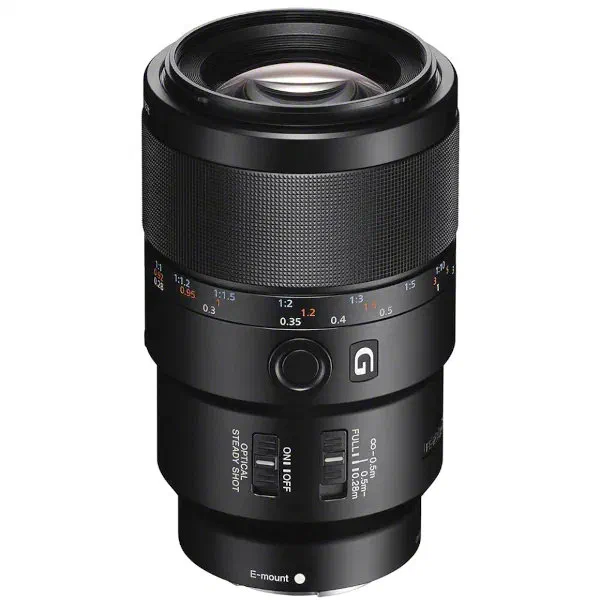
- Weight: 602g
- Filter Size: 62mm
- Model: SEL90M28G
The dust and moisture-resistant design pairs perfectly with the weather-sealed A7 III. Optical SteadyShot and focus limiter switch make it work as both macro lens and regular telephoto—portraits will be stunning.
In a studio at 1:1 magnification, there’s ample working distance for professional lighting setups.
See current price and information: