A Guide to Minolta and Sony A-mount Lenses
- Nathaniel Stephan
- June 4, 2025

Table of Contents
A-mount lenses can be used on newer Sony mirrorless cameras with an adapter. This is one of the best reasons to consider buying A-mount lenses, since many can be found used at a very low price.
The Minolta A-mount started in 1985 with 12 lenses. It was the first autofocus lens mount to become widely popular. Before the A-mount, Minolta used the SR, MC, and MD mounts for manual focus film cameras, like the Minolta SR-T 101.
Over the years, more lenses were added and the A-mount moved from film cameras to DSLRs.
Minolta had to recall almost all of their first two DSLR cameras due to a bug called the “first black frame” problem. The first photo taken after turning the camera on would come out completely black. The recall cost Minolta a lot of money, and the company sold their camera division to Sony in 2006.
Sony kept making A-mount cameras and lenses under the Sony name. The last A-mount camera, the Sony A99 II, came out in 2016. Sony then shifted to mirrorless cameras, which use the Sony E-mount.
Here is an example section, including a decision tree diagram:
A-Mount to E-Mount Adapters
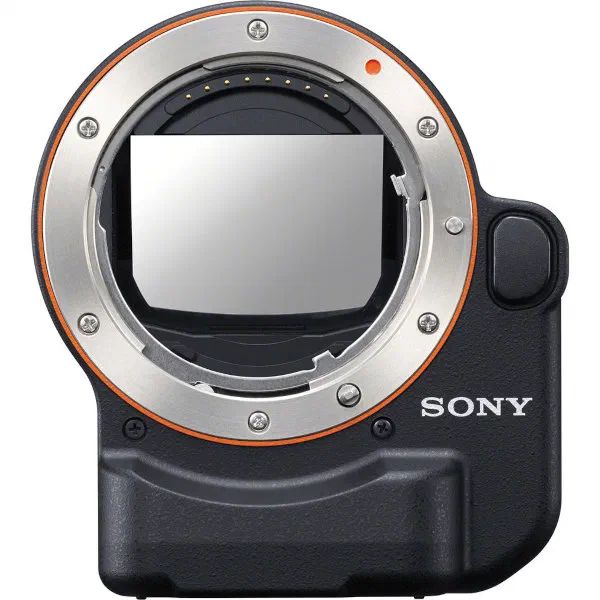
Sony makes several A-mount to E-mount adapters with different capabilities. The adapter you choose will impact if autofocus is available and how well it works.
Contrast detection autofocus is slower and often less accurate than phase detection autofocus.
Translucent mirrors will reduce the amount of light by approximately 1/3 of a stop that goes to the image sensor.
| Adapter | Autofocus | AF System | Translucent Mirror | Notes |
|---|---|---|---|---|
| LA-EA1 | Yes (SAM/SSM only) | Contrast detect | No | Basic, budget option |
| LA-EA2 | Yes (all lenses) | Phase detect | Yes | Good for older cameras |
| LA-EA3 | Yes (SAM/SSM only) | Contrast detect | No | Slim profile |
| LA-EA4 | Yes (all lenses) | Phase detect | Yes | Best for older cameras |
| LA-EA5 | Yes (all lenses) | Phase detect | No | Best for modern cameras |
The Sony LA-100W was designed to be used with the HVR-S270J and HVR-Z7J, which are camcorders.
Which Adapter Should I Buy?
    flowchart TD
	    start["What camera do you have?"] --> modern["Modern camera\n(A7 III or later,\nA9 II, ZV-E1, etc.)"]
	    start --> older["Older camera\n(A7, A7 II,\nA7R, A7S, etc.)"]

	    modern --> allLenses1{"Do you need AF\nwith all lens types?"}
	    allLenses1 -->|"Yes"| ea5["LA-EA5\nRecommended"]
	    allLenses1 -->|"SSM / SAM\nlenses only"| ea3["LA-EA3\nBudget option"]

	    older --> allLenses2{"Do you need AF\nwith all lens types?"}
	    allLenses2 -->|"Yes"| ea4["LA-EA4\nRecommended"]
	    allLenses2 -->|"SSM / SAM\nlenses only"| ea1["LA-EA1\nBudget option"]
Get the LA-EA5 if you have a newer Sony mirrorless camera (A7 III or later, ZV-E1, A9 II, etc.). It supports full phase detection autofocus on all A-mount lenses without a translucent mirror, which means you are not sacrificing any light.
Get the *LA-EA4 for older E-mount cameras like the A7 or A7R II because they adapter has better autofocus capabilities.
The LA-EA1 and LA-EA3 have slower autofocus. They are good when used with lenses that have SSM or SAM motors.
Sony Lens Abbreviations
When shopping for A-mount lenses, you will see a lot of letters and abbreviations in the lens names. Here is what each one means.
SAL stands for Sony Autofocus Lens. You will see this in the product number of any A-mount lens.
DT stands for Digital Technology. They were made for APS-C DSLRs.
SSM stands for SuperSonic Motor. This is Sony’s version of an ultrasonic focus motor. It gives you fast and quiet autofocus, which is great for portraits or sports photography.
SAM stands for Smooth Autofocus Motor. This motor is used in less expensive lenses. It works well but is a little slower and louder than SSM.
OSS stands for Optical Steady Shot. This is Sony’s version of image stabilization built into the lens. It helps you take sharper photos when shooting handheld, especially in low light.
ED stands for Extra-low Dispersion. This means the lens uses special glass to reduce chromatic aberration, which is a blurring or color fringing that can appear around edges in a photo.
G stands for Gold. This label is only used on Sony’s highest quality lenses.
ZA stands for Zeiss Alpha. These lenses were designed together with Carl Zeiss, a famous German lens maker known for very sharp and high quality optics.
APO stands for Apochromatic. These lenses are designed to keep colors sharp and reduce distortion, which is especially helpful with telephoto lenses.
IF stands for Internal Focus. The lens does not extend outward when focusing. This makes the lens easier to use with a lens hood or filter.
SEL stands for Sony E-mount Lens. These lenses are made for mirrorless E-mount cameras and will not fit or work on A-mount cameras. This is a very common mistake when shopping for lenses, so always double check before buying.
Sony DT Lenses for APS-C Cameras
These lenses are made for cameras with an APS-C sized sensor. They will work on full frame A-mount cameras, but they will not cover the whole sensor, which will cause dark corners in your photos. They are best used on APS-C cameras like the Sony A65 or A77.
Sony DT Lenses:
- Sony DT 18-55mm f/3.5-5.6 SAM
- Sony DT 18-55mm f/3.5-5.6 SAM II
- Sony DT 16-50mm f/2.8 SSM
- Sony DT 11-18mm f/4.5-5.6
- Sony DT 18-135mm f/3.5-5.6 SAM
- Sony DT 18-250mm f/3.5-6.3
- Sony DT 55-300mm f/4.5-5.6 SAM
Konica Minolta DT Lenses:
These lenses were made by Konica Minolta before Sony took over. They use the same A-mount and will work on Sony A-mount cameras.
- Konica Minolta AF Zoom DT 11-18mm f/4.5-5.6 (D)
- Konica Minolta AF Zoom DT 18-70mm f/3.5-5.6 (D)
Zeiss DT Lenses:
- Zeiss Vario-Sonnar T* DT 16-80mm f/3.5-4.5 ZA
Minolta Full Frame Lenses
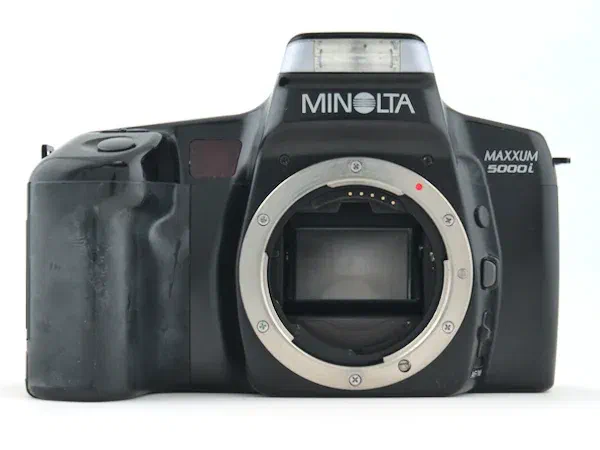
These lenses were made by Minolta before Sony took over. They use the A-mount and will work on Sony A-mount cameras. Many of them can also be used on Sony E-mount cameras with an adapter. Used Minolta lenses can often be found at a lower price than newer Sony lenses, which makes them popular with budget-conscious photographers.
Prime Lenses:
Prime lenses have a fixed focal length and do not zoom. They are often sharper than zoom lenses and let in more light.
- AF Fish-Eye 16mm f/2.8
- AF 20mm f/2.8
- AF 24mm f/2.8
- AF 28mm f/2
- AF 28mm f/2.8
- AF 35mm f/1.4
- AF 35mm f/2
- AF 50mm f/1.4
- AF 50mm f/1.7
- AF Macro 50mm f/2.8
- AF Macro 50mm f/3.5
- AF 85mm f/1.4
- AF 100mm f/2
- AF 100mm f/2.8
- AF Soft Focus 100mm f/2.8
- AF 135mm f/2.8
- STF 135mm f/2.8 (Smooth Trans Focus)
- AF APO Tele 200mm f/2.8
- High Speed AF APO Tele 200mm f/2.8 G
- AF APO Tele Macro 200mm f/4 G
- AF APO Tele 300mm f/2.8 G
- High Speed AF APO Tele 300mm f/2.8 G
- High Speed AF APO Tele 300mm f/4 G
- High Speed AF APO Tele 400mm f/4.5 G
- AF Reflex 500mm f/8
- AF APO Tele 600mm f/4 G
- High Speed AF APO Tele 600mm f/4 G
Sony Full Frame A-Mount Lenses
These are the full frame A-mount lenses made by Sony after they took over from Minolta. They will work on any A-mount camera and can also be used on E-mount cameras with an adapter.
If you buy a longer telephoto lens, make sure it comes with a lens hood. Lens hoods help block unwanted light from the sides, which improves image quality. They can be expensive to buy separately, so it is worth checking before you purchase.
- Sony Alpha Fish-Eye 16mm f/2.8
- Sony Alpha 20mm f/2.8
- Sony Alpha 28mm f/2.8
- Sony Alpha 35mm f/1.4 G
- Sony Alpha Macro 50mm f/2.8
- Sony Alpha 50mm f/1.4
- Sony Alpha Macro 100mm f/2.8
- Sony Alpha Carl Zeiss Sonnar T* 135mm f/1.8 ZA
- Sony Alpha STF 135mm f/2.8 T4.5
- Sony Alpha Carl Zeiss Vario-Sonnar T* 24-70mm f/2.8 ZA SSM
- Sony Alpha Zeiss Vario-Sonnar T* 24-70mm f/2.8 ZA SSM II
- Sony Alpha 24-105mm f/3.5-4.5
- Sony Alpha 70-200mm f/2.8 G SSM
- Sony Alpha 70-200mm f/2.8 G SSM II
- Sony Alpha 75-300mm f/4.5-5.6
- Sony Alpha 300mm f/2.8 G SSM
- Sony Alpha 300mm f/2.8 G SSM II
- Sony Alpha Reflex 500mm f/8

