What is Flange Focal Distance?
- Nathaniel Stephan
- May 10, 2025

Table of Contents
The Flange Focal Distance is the distance between a camera’s lens mount and the film plane or image sensor.
It determines if lenses can be adapted between different camera systems.
A lens needs to be at a specific distance from the sensor to focus correctly. Mounted too close, it loses the ability to focus at close distances. Mounted too far, it behaves like an extension tube, losing the ability to focus at infinity.
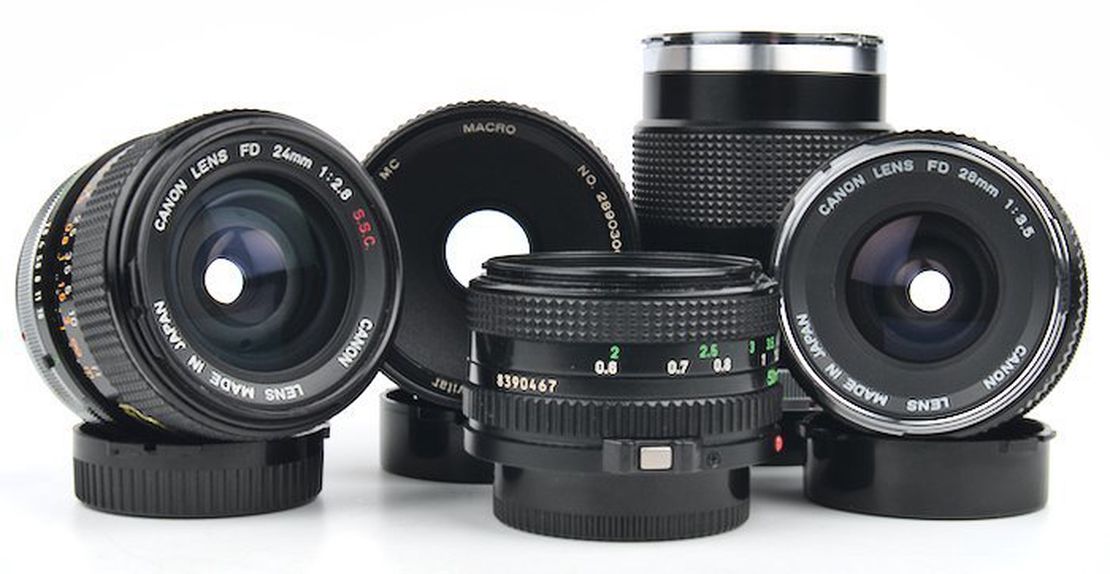
The flange distance becomes relevant when adapting lenses between camera systems. Mirrorless cameras have shorter flange distances than SLRs because there is no mirror box. The difference in flange distance is large enough for a lens adapter, allowing film and DSLR lenses to focus correctly on mirrorless bodies.
In fact, almost all mirrorless cameras have settings and focusing aids designed to make using manual focus lenses easy.
Most 35mm film and DSLR systems have flange distances too close to accommodate a physical adapter. Adapting lenses between those systems generally isn’t practical.
For example, adapting a Canon FD lens to a Nikon F-mount body is not practical, since their flange distances differ by only about 0.35mm.
In older manuals and books, flange distance can be referred to as flange focal depth, flange back distance, flange focal length, flange-to-film distance, back focus, or register.
Film Plane Indicator / Focal Plane Mark
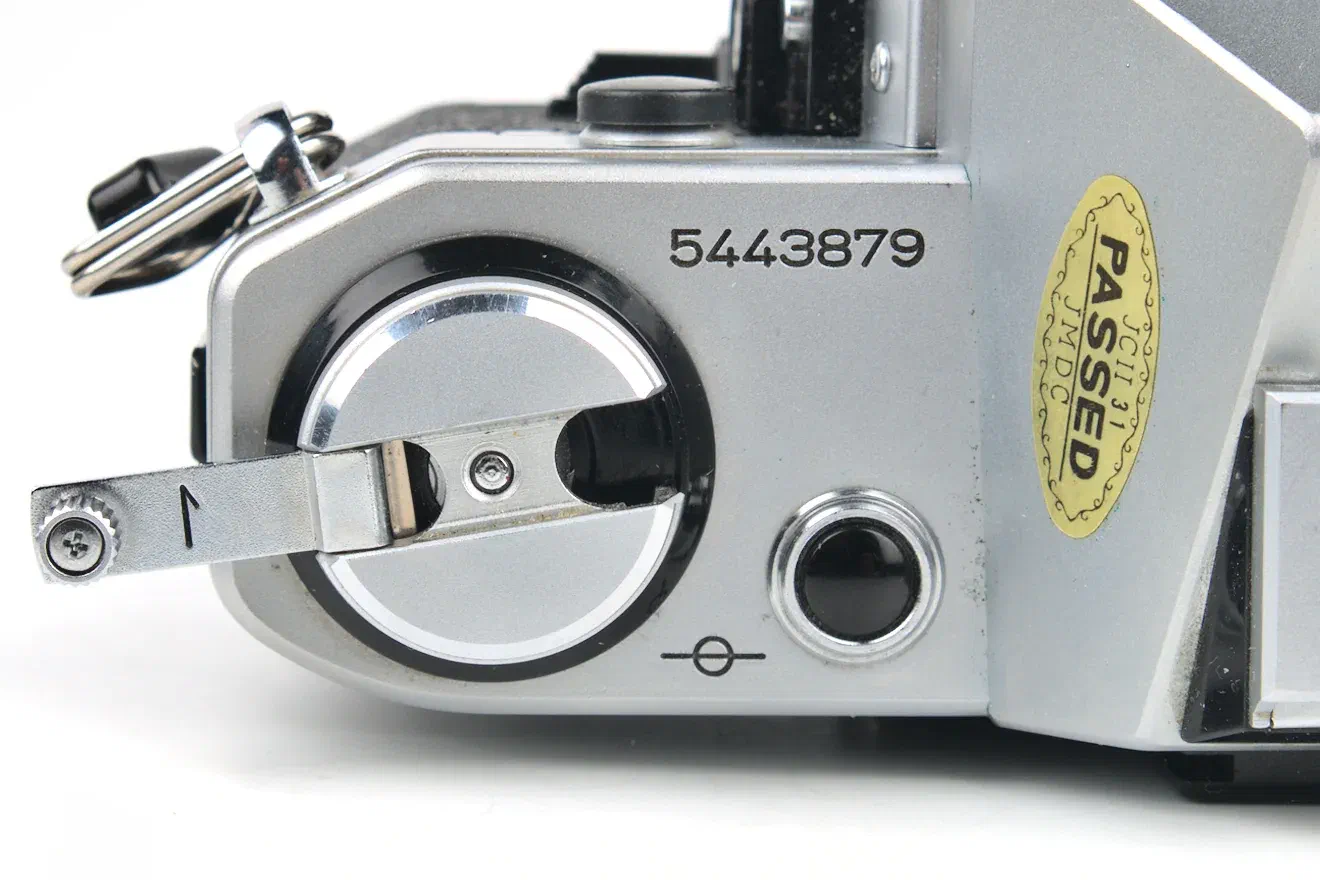
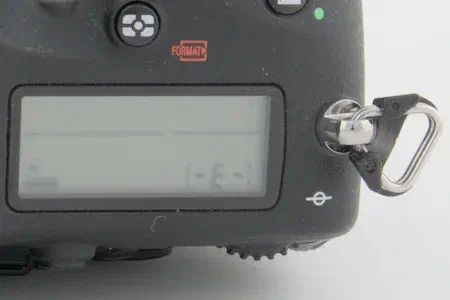
Each manufacturer uses a different symbol to indicate the location of the film or sensor plane. The most common is a circle with a horizontal line through it.
On film cameras such as the Canon AE-1, the mark is located on the top of the camera body. On digital cameras, the same symbol is often called the focal plane mark, since digital cameras have no film plane.
Knowing the exact location of the sensor plane is useful for macro and close-up photography, where precise subject-to-sensor distance matters.
Successfully Adapting Lenses
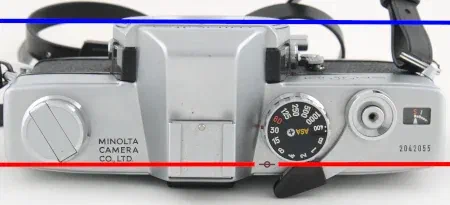
To easily adapt a lens, its native flange distance needs to be larger than the flange distance a camera body was designed to use.
This is why Nikon F-mount lenses (46.50mm flange focal distance) are easy to adapt to the new Nikon Z-mount (16mm flange focal distance).
The difference of 30.50mm (46.50mm − 16mm) leaves over an inch of space for an adapter.
Vintage manual focus lenses are popular to adapt because they have no electronics. Adapters only need to be a metal ring, so they are cheap and easy to find.
“Smart adapters” have electrical contacts that enable autofocus, image stabilization, aperture control, and EXIF data passthrough. Feature reliability varies by adapter, lens, and camera combination. First-party adapters generally offer the most reliable compatibility.
The Workaround that Ruins Image Quality
Some adapters include a correcting lens element to restore infinity focus when the flange distance gap isn’t large enough on its own.
These correcting elements are common in M42 (45.46mm) to Nikon F-mount (46.50mm) adapters because of how close the flange distances are.
The additional low-quality optic will noticeably degrade sharpness and contrast.
Specialty Adapters
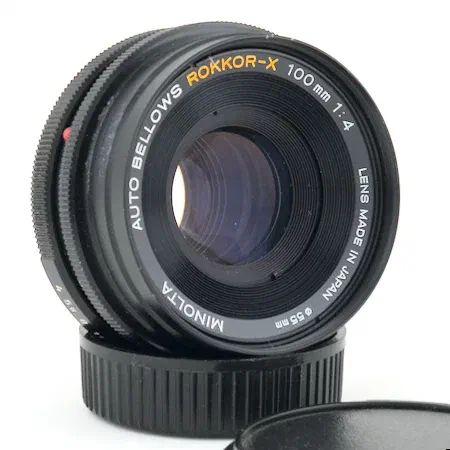
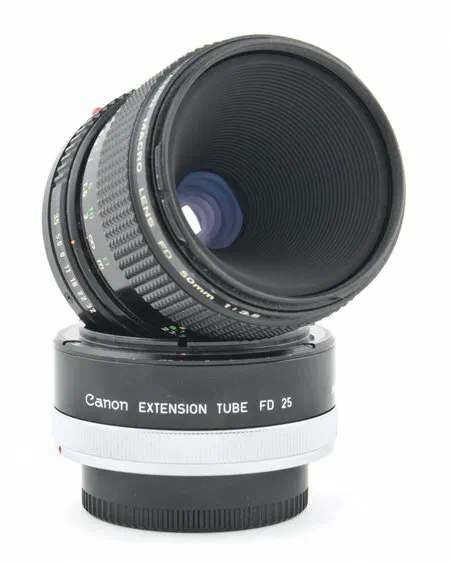
Some adapters place a lens farther from the sensor than its flange distance requires, functioning as an extension tube.
An example is adapting a Minolta MD-mount lens to a Nikon F-mount body. Because the F-mount’s 46.50mm flange distance exceeds the MD-mount’s 43.50mm, even the thinnest possible adapter would push the lens 3mm past the expected focus plane, limiting the focus range to closer than infinity.
For macro work this is not a drawback. In my case the goal was to use a Minolta bellows lens on a Nikon PB-4, where infinity focus wasn’t needed.
Camera Lens Mount Flange Focal Distances
Mirrorless
| Mount | Flange Focal Distance | Format | Notes |
|---|---|---|---|
| Samsung NX mini | 6.95 mm | 1" (13.2×8.8 mm) | Fixed-lens body only; no interchangeable lenses |
| Pentax Q-mount | 9.20 mm | 1/2.3" (6.17×4.55 mm) | Smallest interchangeable lens system ever made |
| Nikon Z-mount | 16.00 mm | 24×36 mm / APS-C | Also used for Nikon Z APS-C (DX) bodies |
| Nikon 1-mount | 17.00 mm | CX (13.2×8.8 mm) | Discontinued 2018 |
| Fujifilm X-mount | 17.70 mm | APS-C (23.6×15.6 mm) | Active system; large native lens lineup |
| Canon EF-M mount | 18.00 mm | APS-C (22.3×14.9 mm) | Discontinued 2023; no full-frame EF-M body ever made |
| Sony E-mount | 18.00 mm | APS-C (23.5×15.6 mm) & 24×36 mm | APS-C and full-frame bodies share the same mount |
| Hasselblad XCD mount | 18.14 mm | 43.8×32.9 mm | Medium format mirrorless; used on X1D, X2D |
| Micro Four Thirds | 19.25 mm | 4/3" (17.3×13 mm) | Open standard; shared by Olympus/OM System and Panasonic |
| Canon RF mount | 20.00 mm | 24×36 mm / APS-C | Also used on Canon APS-C R bodies (RF-S lenses) |
| Leica L-mount | 20.00 mm | 24×36 mm / APS-C | L-Mount Alliance: Leica, Panasonic, Sigma |
| Samsung NX-mount | 25.50 mm | APS-C (23.5×15.7 mm) | Discontinued ~2016 |
| Fujifilm G-mount (GFX) | 26.70 mm | 43.8×32.9 mm | Medium format mirrorless; active system |
| Leica M-mount | 27.80 mm | 24×36 mm | Rangefinder; used on Leica M film and digital bodies |
| M39 (M39×26 tpi) | 28.80 mm | 24×36 mm | Leica Thread Mount (LTM); screw-mount rangefinder |
| M39 (M39×1 mm) | 28.80 mm | 24×36 mm | Soviet rangefinder variant (FED, Zorki); same flange, different thread pitch |
| Contax G-mount | 29.00 mm | 24×36 mm | Autofocus rangefinder-style; Zeiss lenses |
| Hasselblad XPan | 34.27 mm | 24×36 mm / 24×65 mm | Panoramic; shared with Fujifilm TX-1 |
| Contax RF-mount | 34.85 mm | 24×36 mm | Contax rangefinder; shares flange distance with Nikon S |
| Nikon S-mount | 34.85 mm | 24×36 mm | Nikon rangefinder; same flange distance as Contax RF but incompatible |
| Braun Paxette Reflex DKL | 45.70 mm | 24×36 mm | DKL lenses shared with Voigtländer Bessamatic and Kodak Retina |
| Voigtländer Vitessa T DKL | 45.70 mm | 24×36 mm | DKL lenses shared with Braun Paxette and Kodak Retina |
Film SLR
| Mount | Flange Focal Distance | Format | Notes |
|---|---|---|---|
| Pentax Auto 110 | 27.00 mm | 13×17 mm | Subminiature SLR system |
| Nikonos | 28.00 mm | 24×36 mm | Underwater/amphibious camera |
| Olympus PEN F (film) | 28.95 mm | 18×24 mm | Half-frame |
| Minolta V-mount | 36.00 mm | 28×40 mm | APS-H; Minolta Vectis film SLR |
| Olympus Four Thirds | 38.67 mm | 17.3×13 mm | Shared with digital 4/3 DSLRs |
| Konica F-mount | 40.50 mm | 24×36 mm | Early Konica bayonet; superseded by AR |
| Konica AR-mount | 40.50 mm | 24×36 mm | Same flange distance as Konica F but incompatible |
| Canon FL-mount | 42.00 mm | 24×36 mm | Predecessor to FD; stop-down metering only |
| Canon FD-mount | 42.00 mm | 24×36 mm | Fully compatible with FL bodies |
| Start (Soviet) | 42.00 mm | 24×36 mm | KMZ Start; M42-based bayonet variant |
| Minolta SR-mount | 43.50 mm | 24×36 mm | Also known as MC/MD mount |
| Fujica X-mount | 43.50 mm | 24×36 mm | Not compatible with Fujifilm X mirrorless |
| Canon EF-mount | 44.00 mm | 24×36 mm | Electronic mount; compatible with EF-S lenses |
| Canon EF-S mount | 44.00 mm | APS-C (22.5×15 mm) | APS-C only; EF-S lenses not for full-frame bodies |
| Sigma SA-mount | 44.00 mm | 24×36 mm | Also used on Sigma DSLRs |
| Praktica B-mount | 44.40 mm | 24×36 mm | Protruding electrical pin prevents most adapters |
| Minolta / Sony A-mount | 44.50 mm | APS-C & 24×36 mm | Continuous lineage from 1985 to Sony Alpha DSLR |
| Rollei QBM | 44.50 mm | 24×36 mm | Quick Bayonet Mount; Rollei/Voigtländer SLRs |
| Samsung/Chinon Kenox | 44.50 mm | 24×36 mm | Rebranded Chinon mount |
| Exakta | 44.70 mm | 24×36 mm | One of the earliest SLR bayonet mounts (1950) |
| M39×1 | 45.20 mm | 24×36 mm | Soviet SLR screw mount; distinct from Leica M39 |
| M37×1 | 45.46 mm | 24×36 mm | Rare; used on some Soviet cameras |
| M42×1 | 45.46 mm | 24×36 mm | “Pentax screw mount”; extremely wide lens selection |
| Pentax K-mount | 45.46 mm | 24×36 mm / APS-C | Same flange distance as M42; still in production |
| Contax/Yashica (C/Y) | 45.50 mm | 24×36 mm | Shared between Contax and Yashica SLRs |
| Petri Bayonet | 45.50 mm | 24×36 mm | Petri Camera Co.; limited third-party support |
| Mamiya ZE / Z-mount | 45.50 mm | 24×36 mm | Electronic Mamiya SLR mount; not the Nikon Z-mount |
| Kodak Retina DKL | 45.70 mm | 24×36 mm / 28×28 mm | Shared with Voigtländer Bessamatic and Braun Paxette |
| Voigtländer Bessamatic DKL | 45.70 mm | 24×36 mm | DKL lenses cross-compatible with Kodak Retina |
| Yashica MA-mount | 45.80 mm | 24×36 mm | Used on Yashica TL Electro and related bodies |
| Olympus OM-mount | 46.00 mm | 24×36 mm | Compact 35mm SLR system; popular for adapting |
| Nikon F-mount | 46.50 mm | 24×36 mm / APS-C | 1959–present; longest-running F-mount production run |
| Leica R-mount | 47.00 mm | 24×36 mm | 1-cam, 2-cam, and 3-cam variants affect compatibility |
| KMZ Zenit DKL | 47.58 mm | 24×36 mm | Soviet variant of the DKL mount |
| Contax N-mount | 48.00 mm | 24×36 mm | Autofocus Contax system; discontinued 2005 |
| Tamron Adaptall / Adaptall-2 | 50.70 mm | 24×36 mm | Interchangeable adapter system fits many bodies |
| Mini T-mount | 55.00 mm | 24×36 mm | Smaller variant of T-mount thread |
| T-mount / T2-mount | 55.00 mm | 24×36 mm | Universal mount; common for telescopes and spotting scopes |
| YS mount | 55.00 mm | 24×36 mm | Variant of T-mount standard |
Medium Format
| Mount | Flange Focal Distance | Format |
|---|---|---|
| Fujifilm G-mount (GFX) | 26.70 mm | 43.8×32.9 mm |
| Leica S-mount | 53.00 mm | 45×30 mm |
| Mamiya 6 | 56.20 mm | 6×6 cm |
| Mamiya 7 | 59.00 mm | 6×7 cm |
| Hasselblad H-mount | 61.63 mm | 6×4.5 cm |
| Mamiya 645 | 63.30 mm | 6×4.5 cm |
| Novoflex A-mount | 63.30 mm | 6×4.5 cm |
| Contax 645 | 64.00 mm | 6×4.5 cm |
| Phase One XF-mount | 64.55 mm | 53.7×40.4 mm |
| Zenza Bronica ETR | 69.00 mm | 6×4.5 cm |
| Pentax 645 | 70.87 mm | 6×4.5 cm |
| Rollei 6000 | 73.80 mm | 6×6 cm |
| Rollei SLX | 74.00 mm | 6×6 cm |
| Pentacon Six | 74.10 mm | 6×6 cm |
| Hasselblad V-mount | 74.90 mm | 6×6 cm |
| Mamiya Press | 78.00 mm | 6×7 cm |
| Kowa Six/Super 66 | 79.00 mm | 6×6 cm |
| Hasselblad 1000F & 1600F | 82.10 mm | 6×6 cm |
| Salyut/Kiev mount | 82.10 mm | 6×6 cm |
| Pentax 6×7 | 84.95 mm | 6×7 cm |
| Zenza Bronica SQ | 85.00 mm | 6×6 cm |
| Zenza Bronica GS | 85.00 mm | 6×7 cm |
| Zenza Bronica S2A | 101.70 mm | 6×6 cm |
| Rollei SL66 | 102.80 mm | 6×6 cm |
| Mamiya RZ | 105.00 mm | 6×7 cm |
| Mamiya RB | 112.00 mm | 6×7 cm |
TV / Industrial
| Mount | Flange Focal Distance | Format | Common Use |
|---|---|---|---|
| M12 (S-mount) | 3.00 mm | 1/4"–1/2" | Security cameras, drones, action cams |
| M58×0.75 | 12.00 mm | 24×36 mm | Machine vision, microscopy |
| CS-mount | 12.526 mm | 1/4", 1/3", 1/2" | CCTV, IP cameras |
| C-mount | 17.526 mm | 8mm, 16mm, 1/3"–1" | CCTV, machine vision, film |
| JVC 1/3" bayonet | 25.00 mm | 1/3" 3-CCD | JVC ENG/EFP camcorders |
| 1/2" TV bayonet | 35.74 mm | 1/2" 3-CCD | Broadcast ENG camcorders |
| Sony 1/2" TV bayonet | 38.00 mm | 1/2" 3-CCD | Sony ENG camcorders |
| B4-mount | 48.00 mm | 2/3" 3-CCD | Broadcast ENG/EFP cameras |
Cinema
| Mount | Flange Focal Distance | Format |
|---|---|---|
| D-mount | 12.29 mm | 8mm / Double 8mm |
| DJI DL-mount | 16.84 mm | Super 35 (27.03×14.25 mm) |
| Sony FZ-mount | 19.00 mm | Super 35 (24×18 mm) |
| RED ONE interchangeable mount | 27.30 mm | Super 35 (24.4×13.7 mm) |
| Panavision SP70 mount | 38.00 mm | 65mm / 70mm |
| Aaton mount | 40.00 mm | 16mm / Super 16 (12.35×7.42 mm) |
| Pentaflex 16 | 44.00 mm | 16mm / Super 16 |
| Arri LPL | 44.00 mm | Large Format (36.70×25.54 mm) |
| Arri STD | 52.00 mm | 16mm / 35mm |
| Arri B | 52.00 mm | 35mm |
| Arri PL | 52.00 mm | 35mm / Super 35 (24.89×18.66 mm) |
| Panavision PV-mount | 57.15 mm | 35mm / Anamorphic 35mm |
| OCT-19 | 61.00 mm | 16mm / Super 16 |