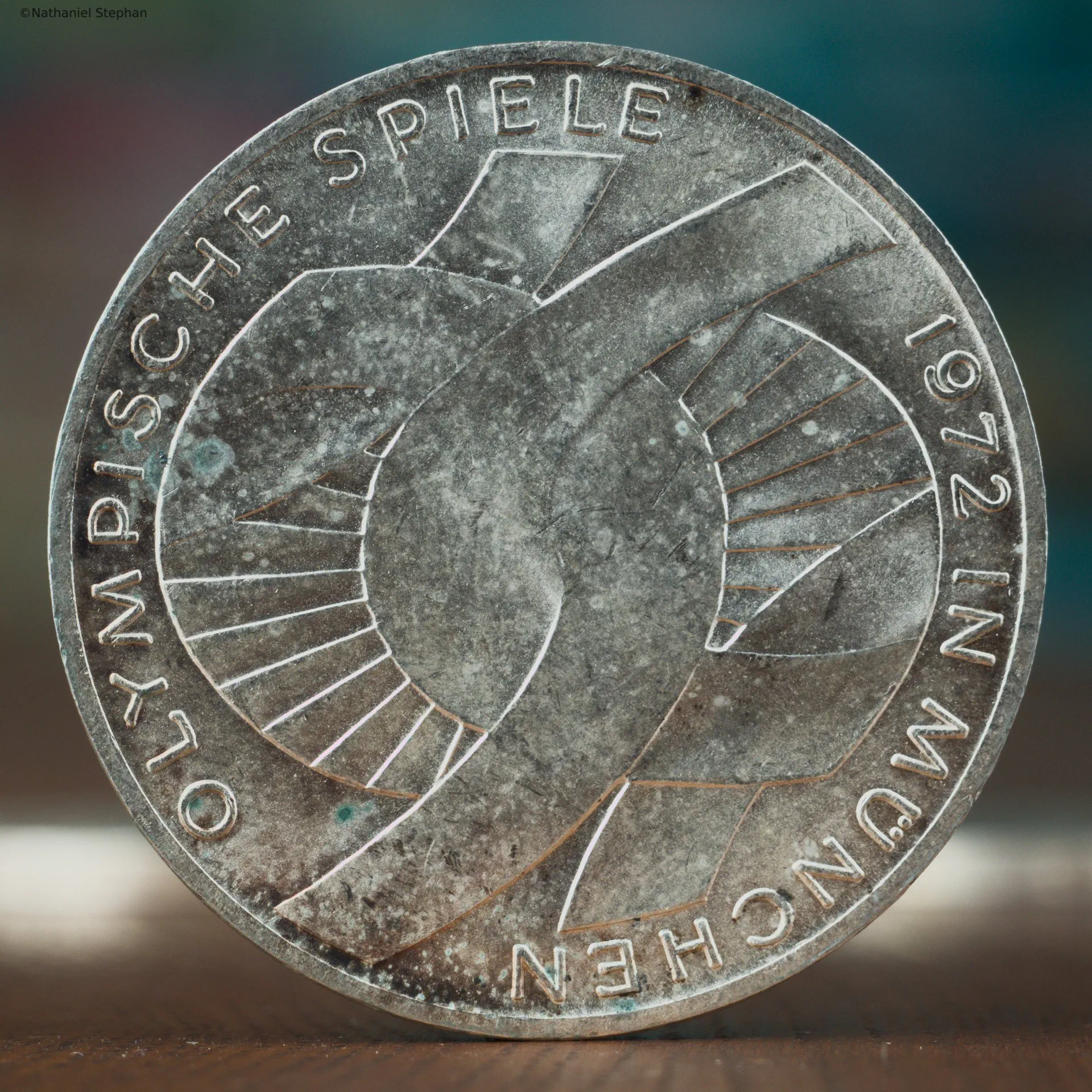
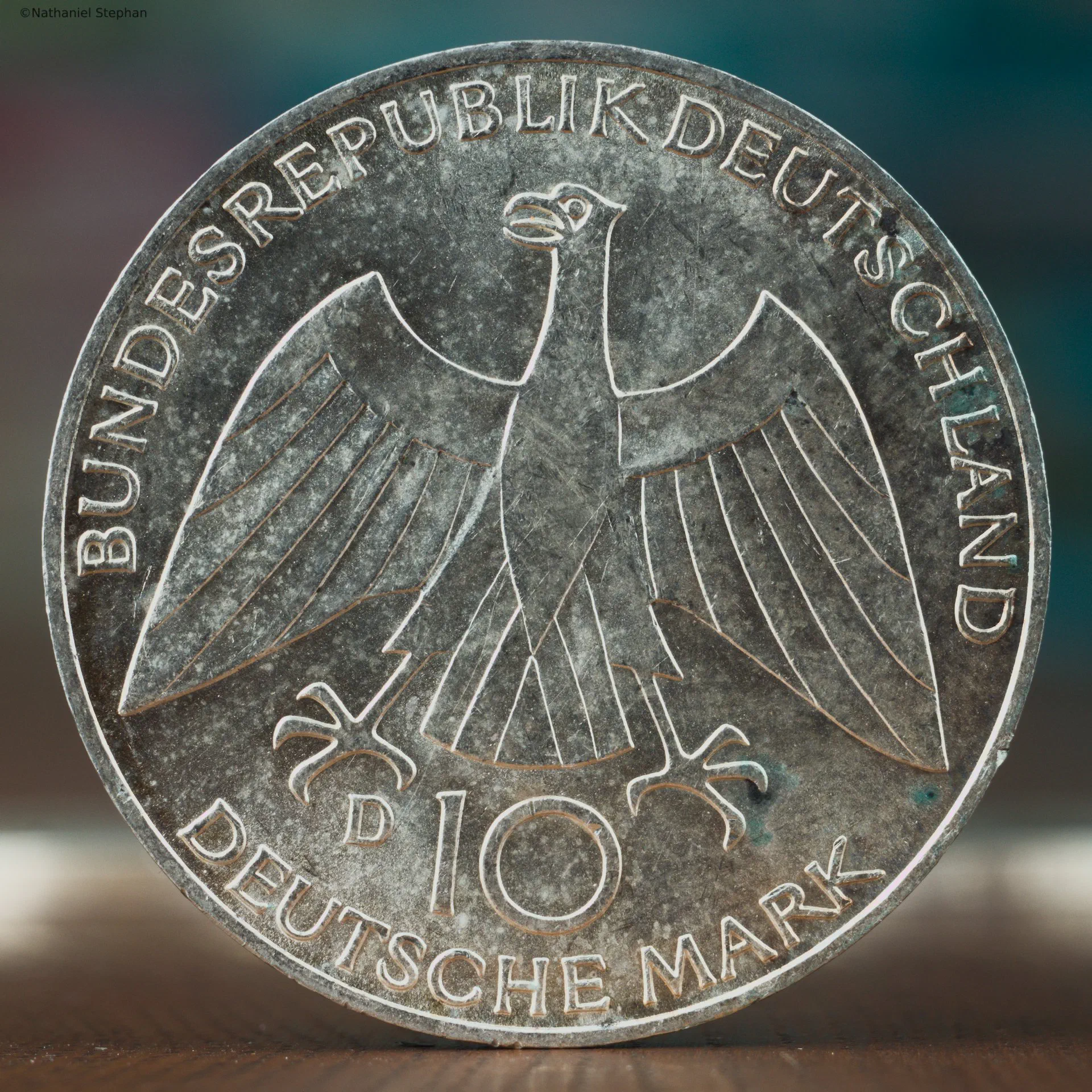
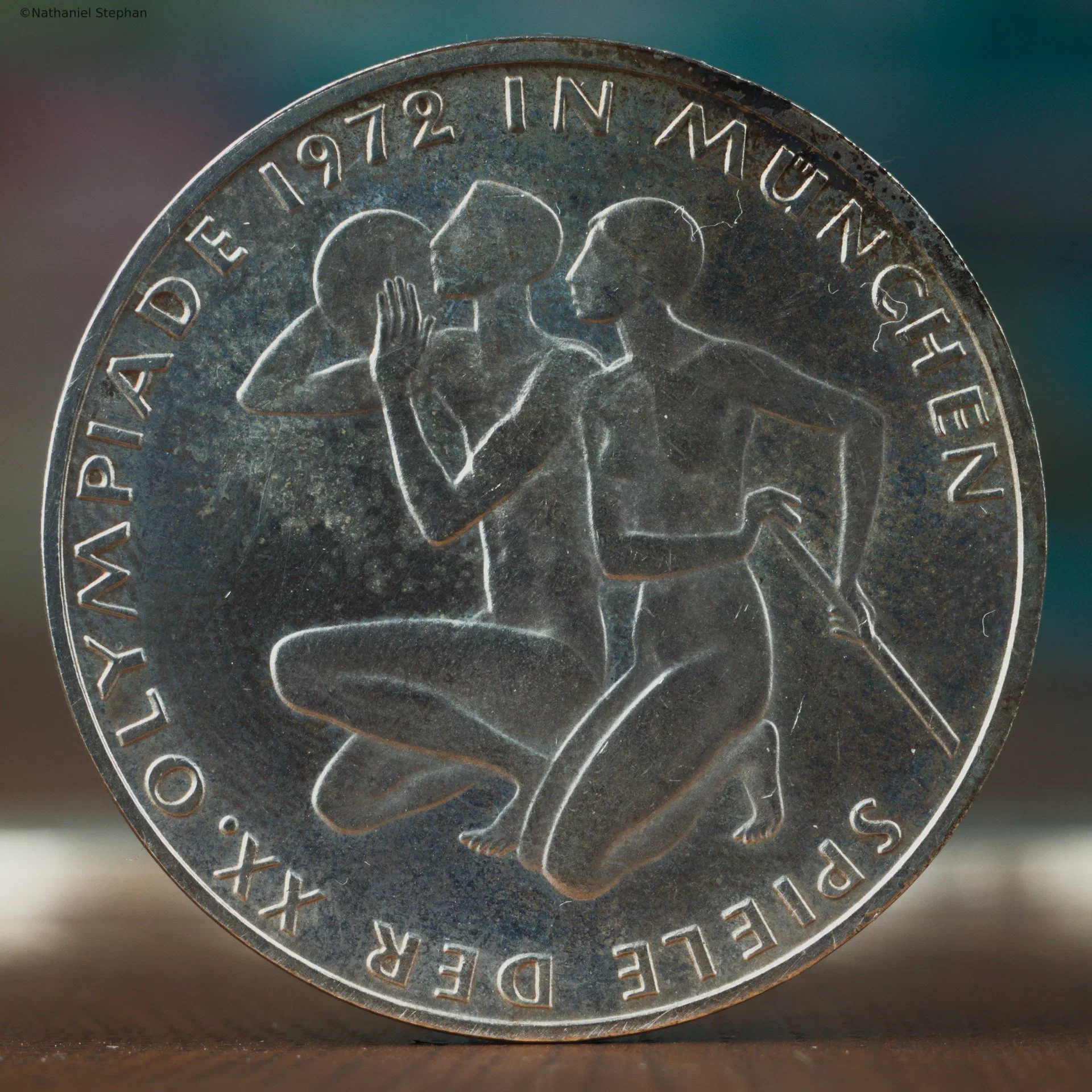
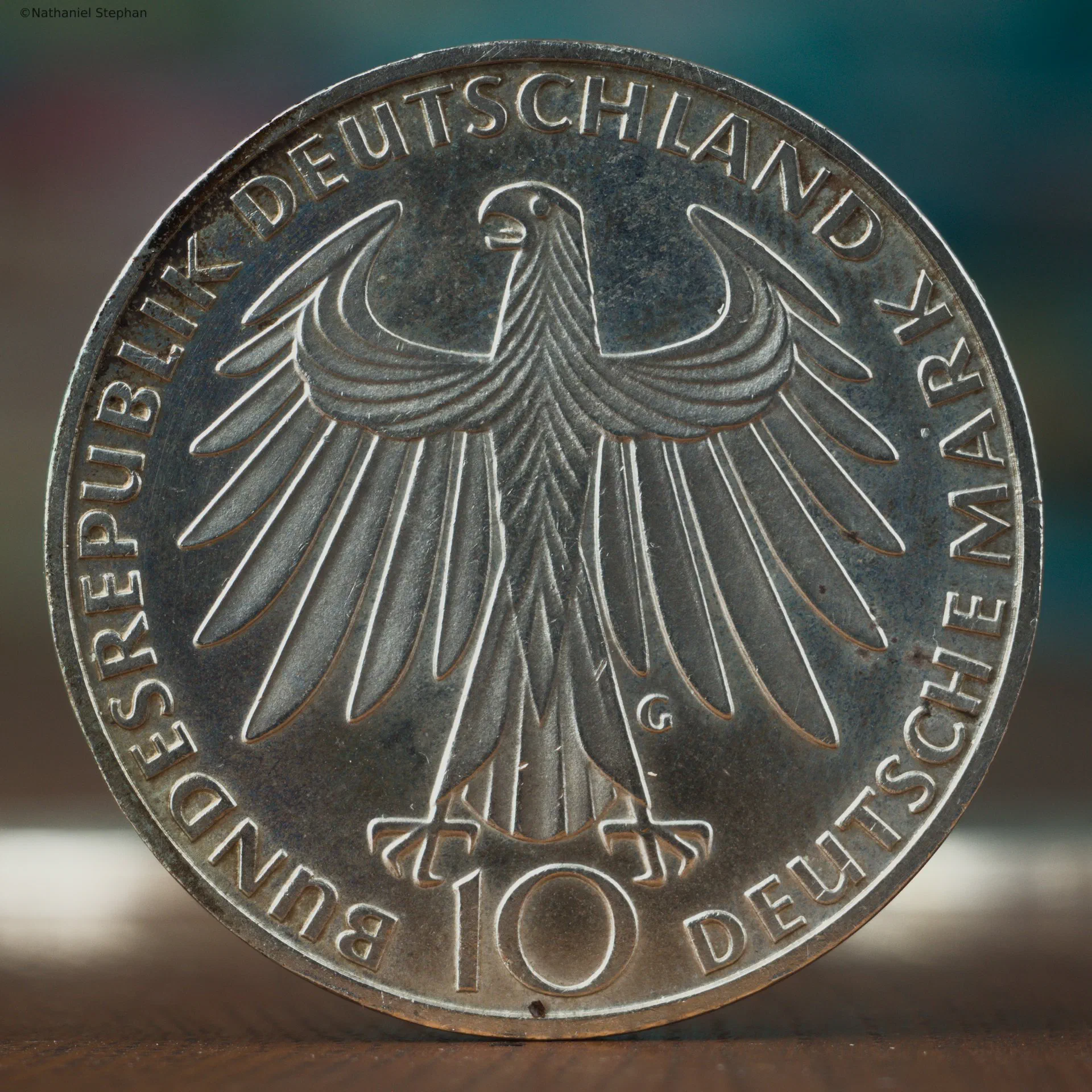
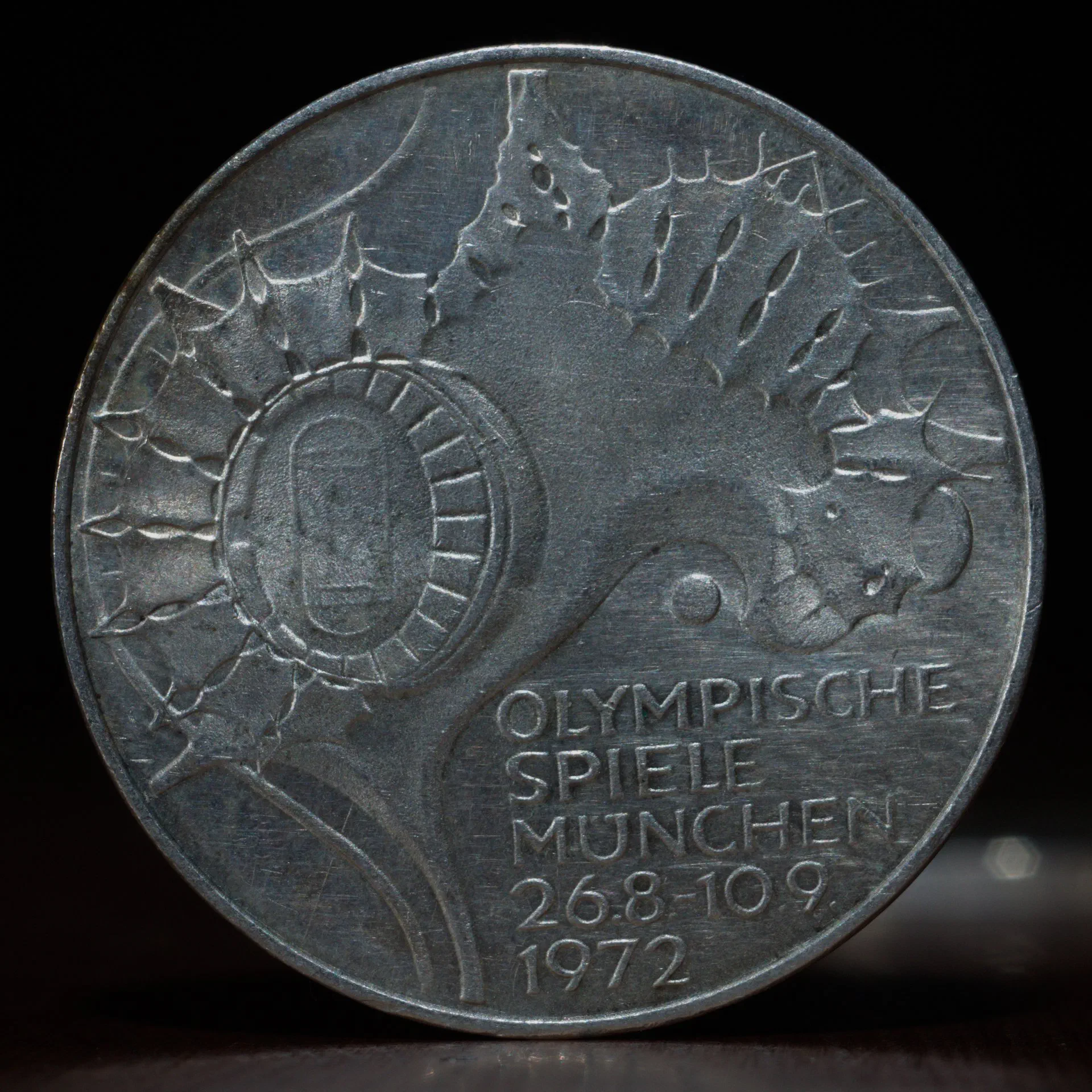
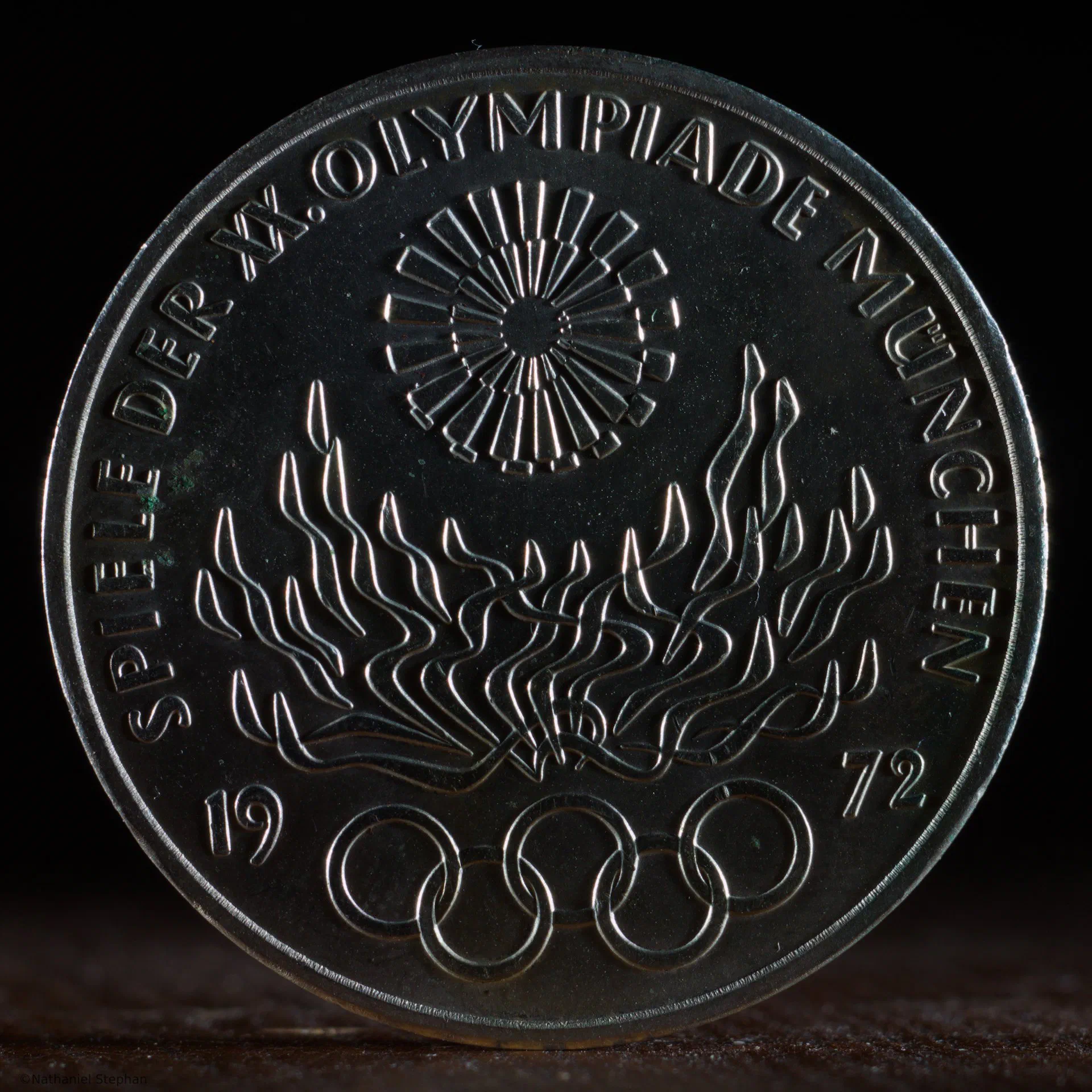
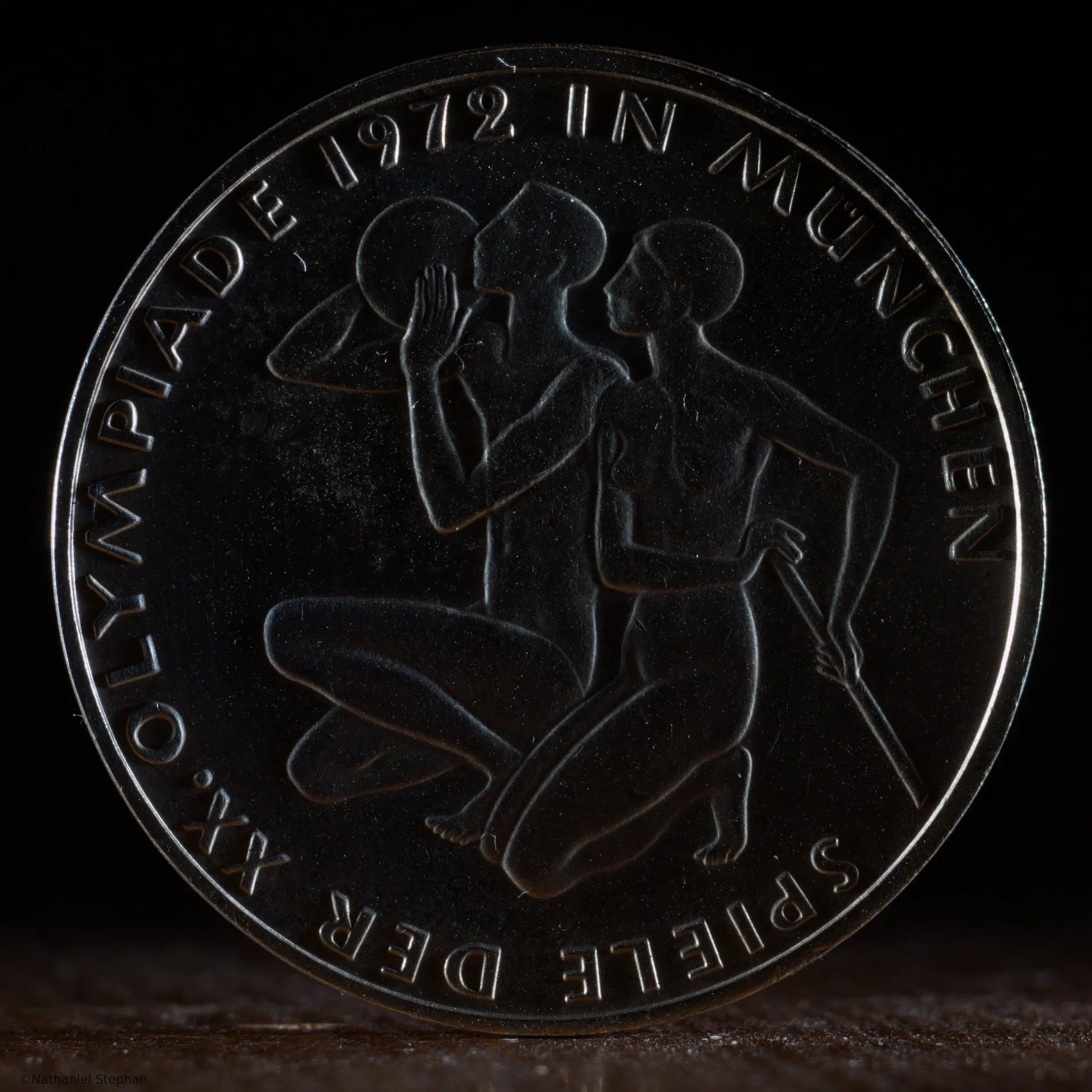
The 1972 Munich Olympics 10 Mark Commemorative Coins
- Nathaniel Stephan
- April 14, 2026
Table of Contents
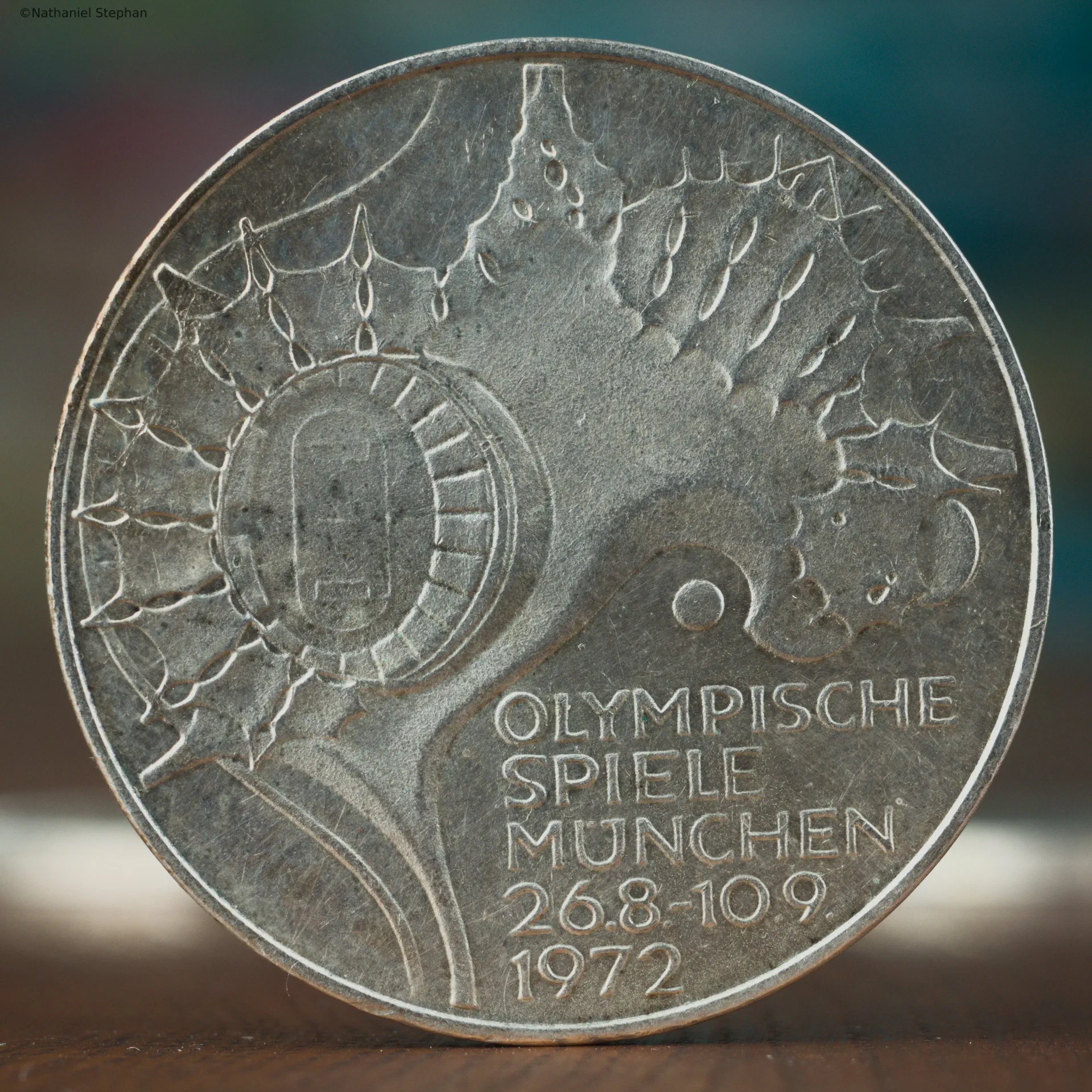
The 1972 Summer Olympics, officially known as the Games of the XX Olympiad, were held in Munich, West Germany from August 26 to September 11, 1972.
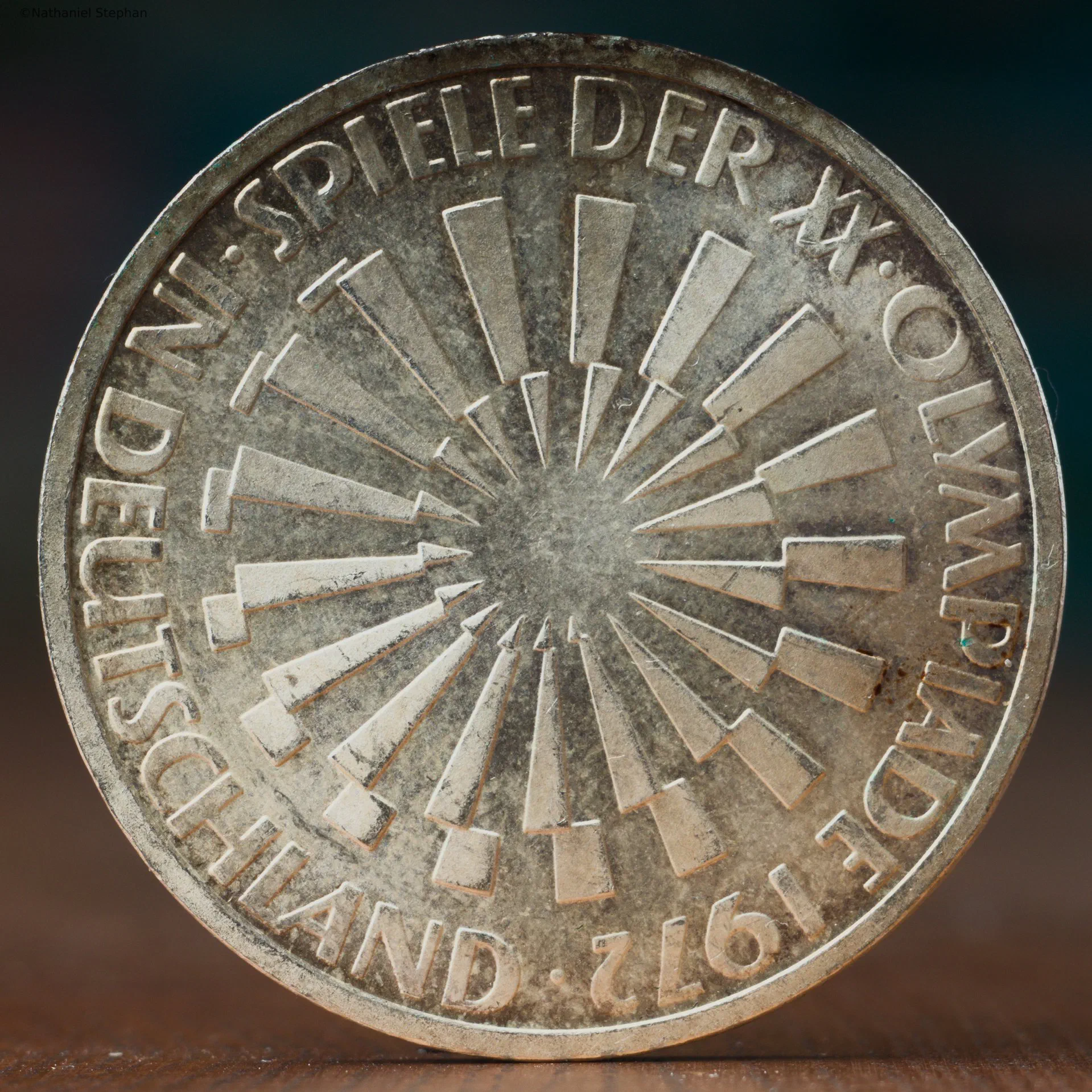
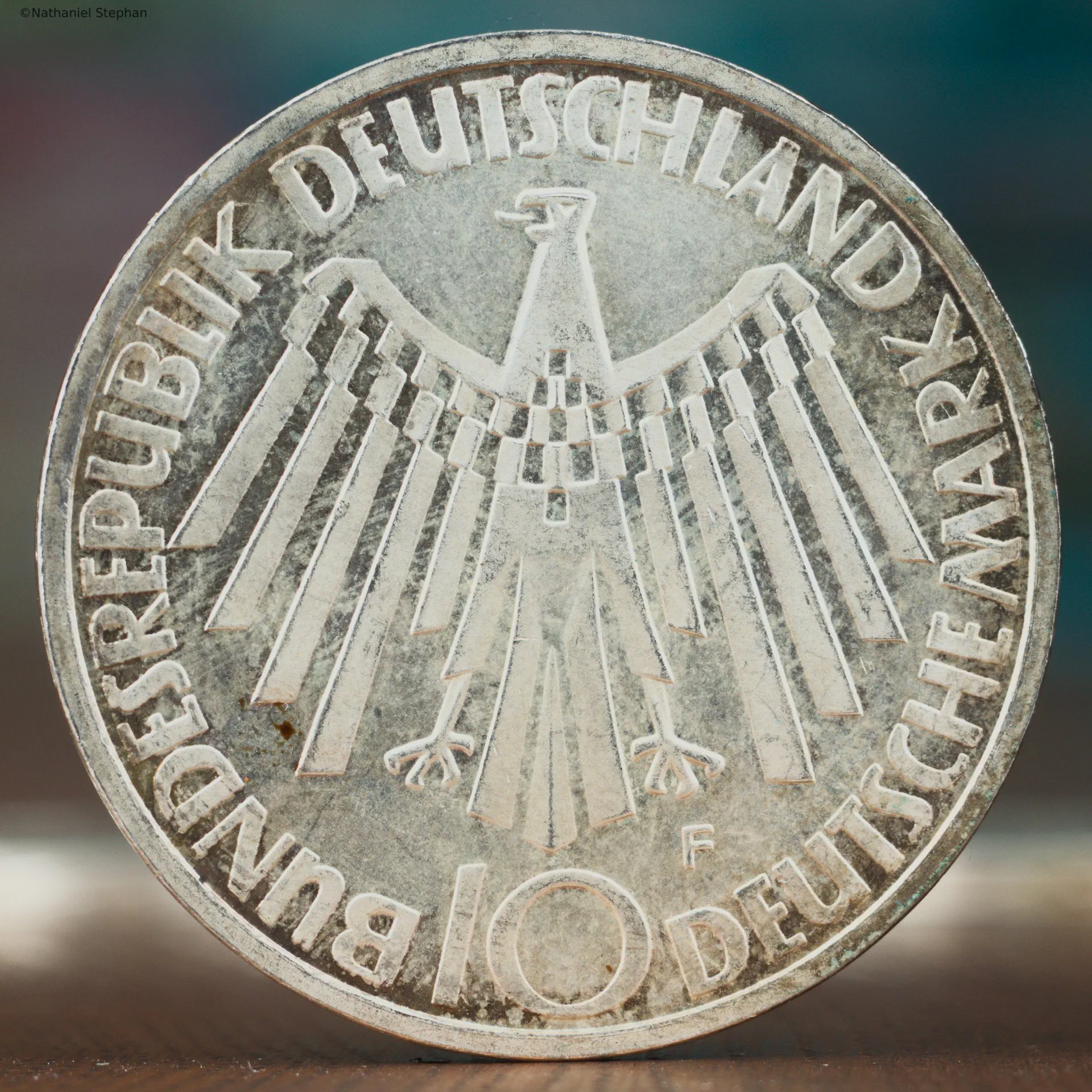
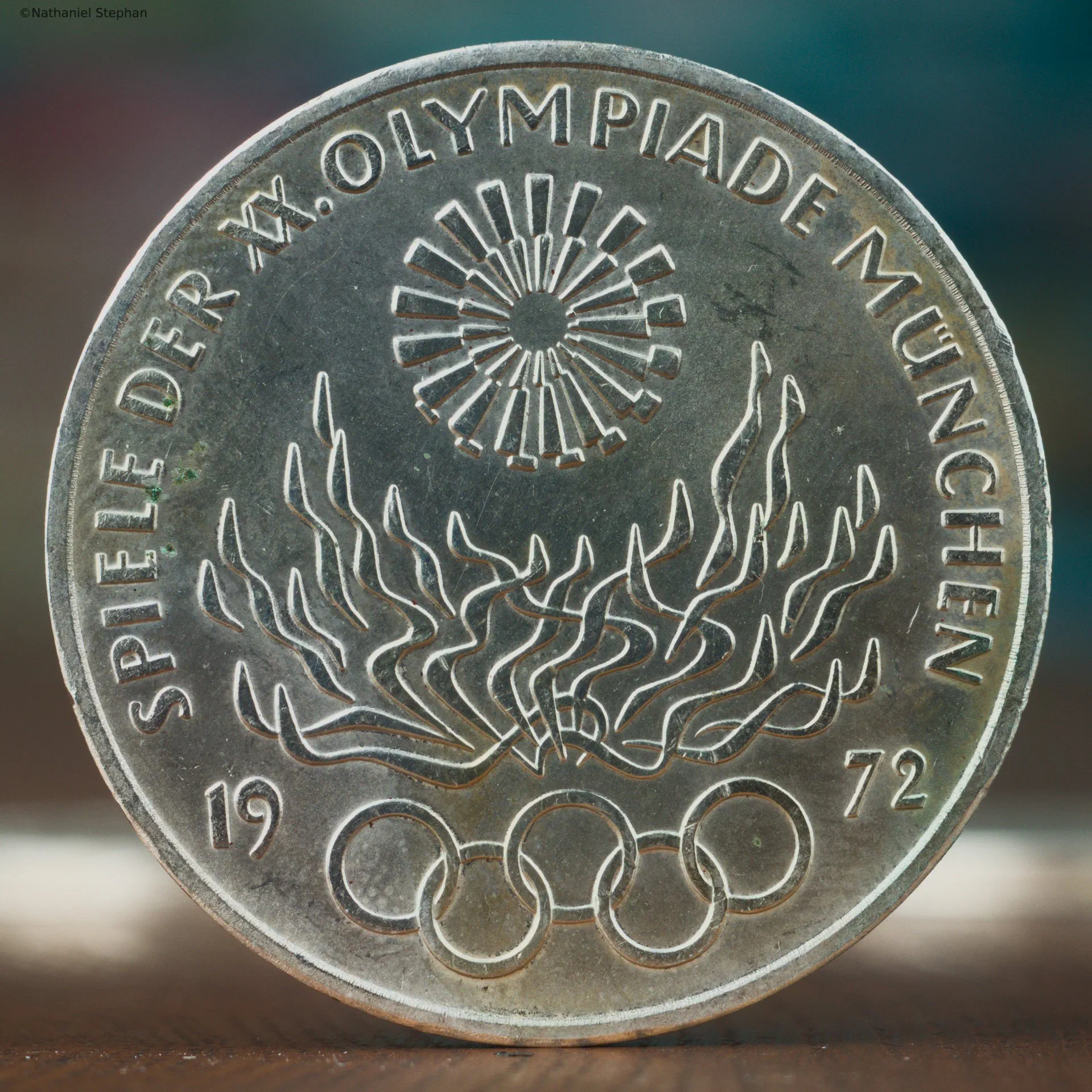
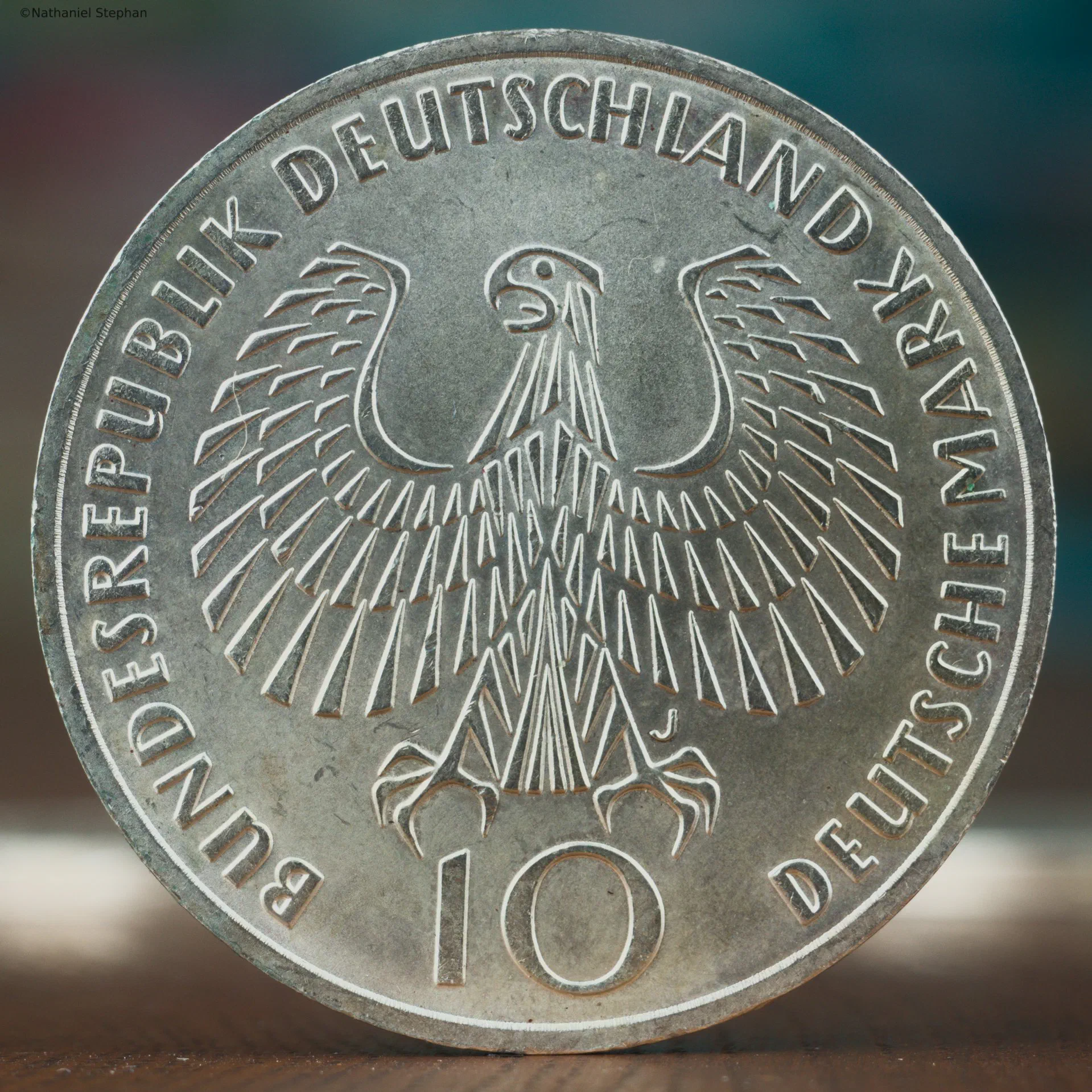
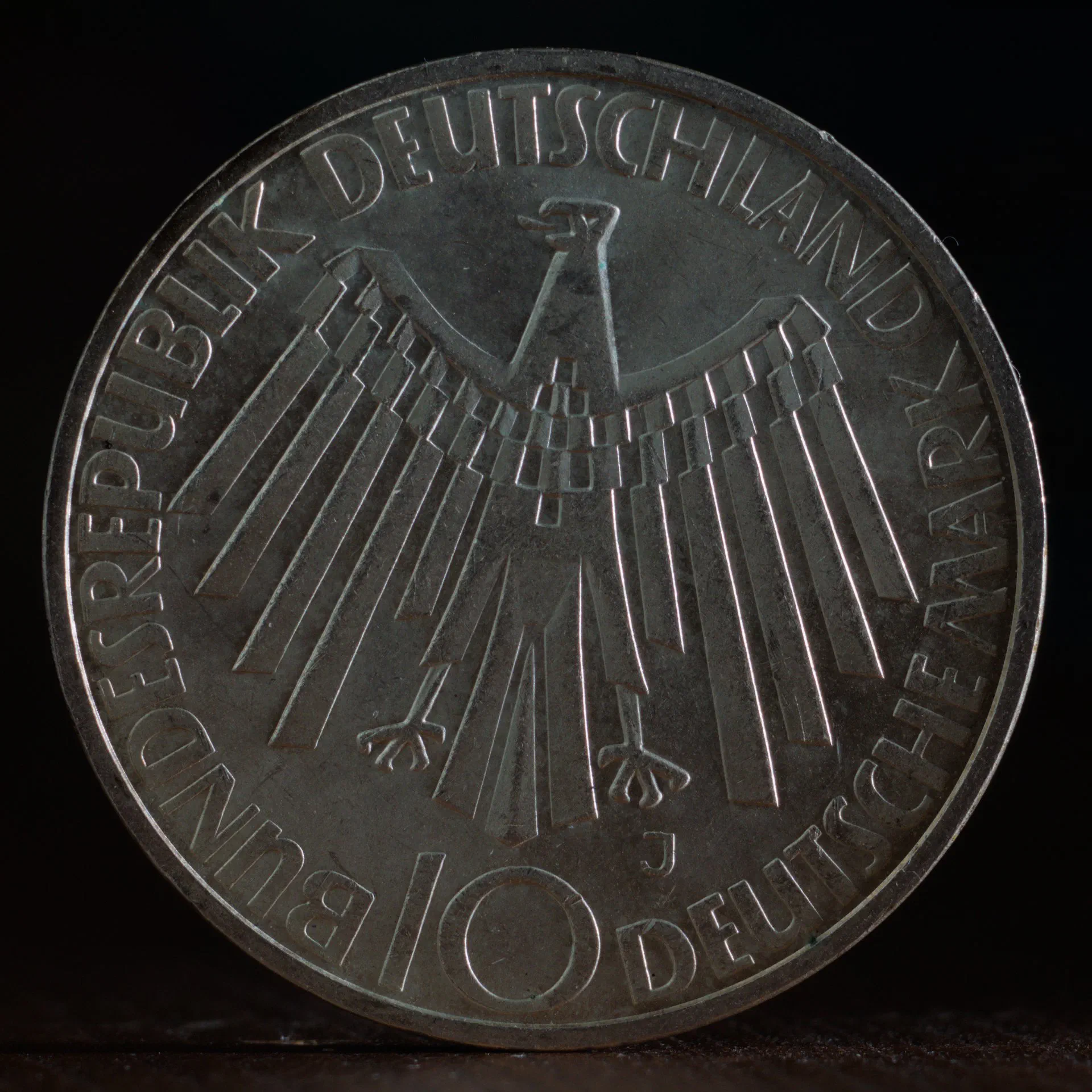
There are 6 different commemorative coin designs.
How Many Coins Were Released?
West Germany issued a substantial series of commemorative coins leading up to and during the 1972 Olympics.
- 6 distinct coin designs were issued in total across the series
- Each design was struck in both proof and uncirculated (BU) finishes
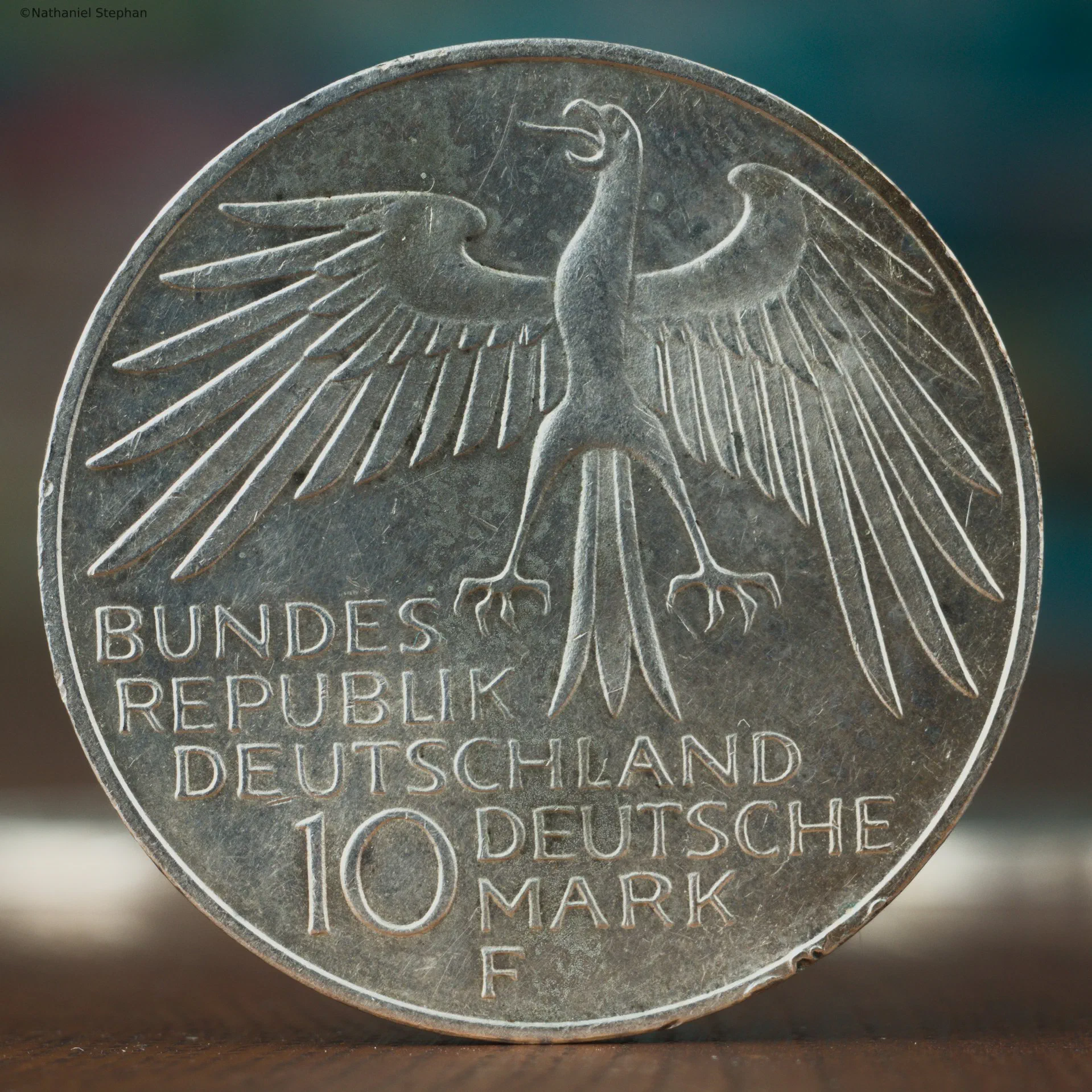
- Coins were minted at five West German mints: Berlin (F), Hamburg (J), Karlsruhe (G), Munich (D), and Stuttgart (F)
Estimated Mintage
| Issue | Estimated Mintage |
|---|---|
| Each circulated design (per mint) | ~10 million |
| Total circulated across all designs | ~50–60 million |
| Proof versions (combined) | ~4–6 million |
| Total estimated coins produced | ~55–65 million |
These are among the most widely produced Olympic commemorative coins in history, largely because West Germany used coin sales as a primary funding mechanism for the games themselves.
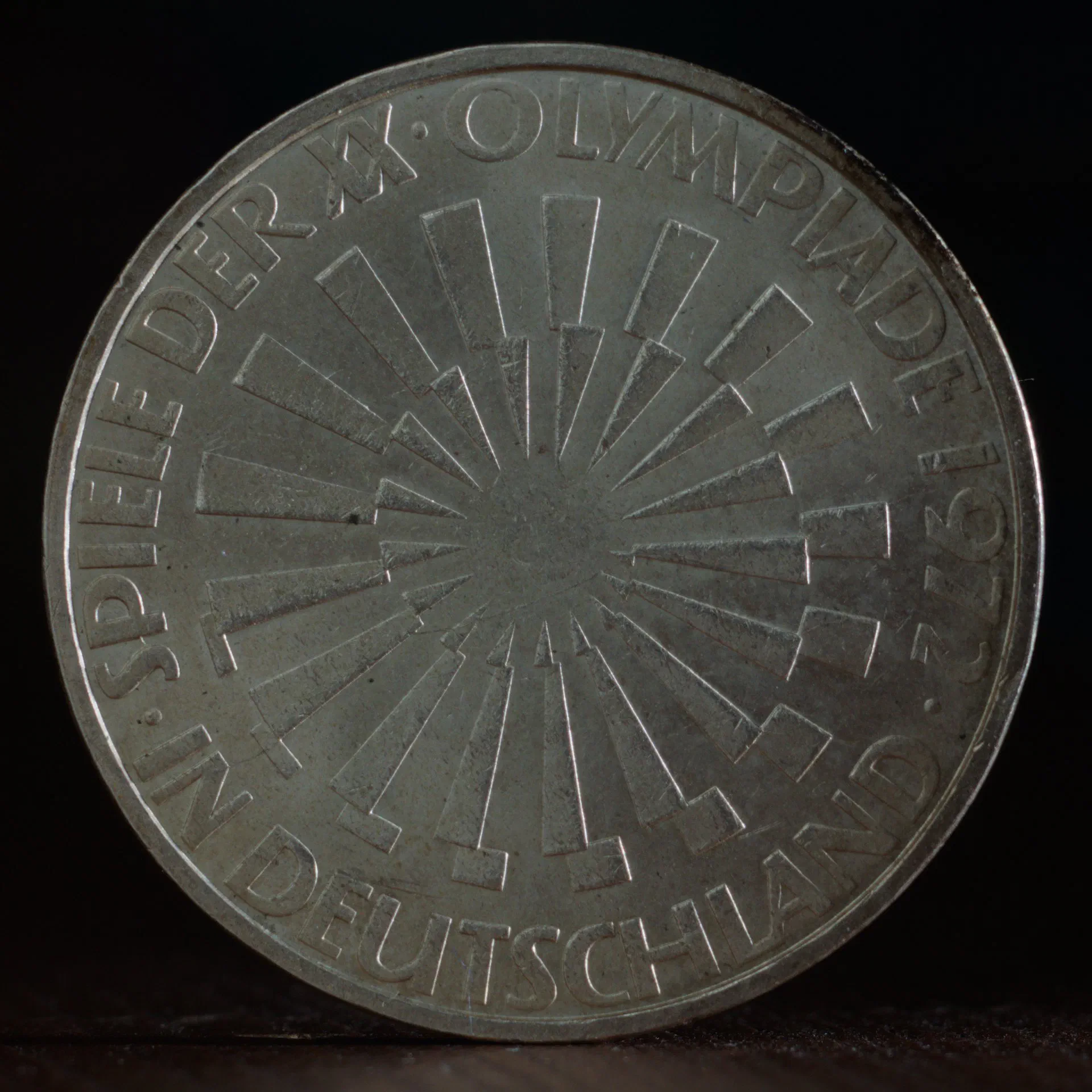
Silver Content and Composition
These coins are 62.5% silver. Here is the full breakdown of their composition:
- Silver: 62.5% — approximately 7 grams of pure silver per coin
- Copper: 37.5%
- Total coin weight: 15.5 grams
- Diameter: 32.5 mm
This alloy, sometimes called “625 silver”, was a deliberate choice. It kept the coins affordable enough to sell in large quantities for Olympic fundraising while still giving them genuine precious metal content and a premium feel. Pure silver or sterling (.925) would have made mass production far more costly.
Who Collects These Coins?
These coins appeal to a surprisingly wide range of collectors, making them both accessible and desirable on the secondary market.
- World coin collectors — German coins, especially West German issues, are a popular collecting area
- Olympic memorabilia collectors — The 1972 games have significant historical weight, making related artifacts highly sought after
- Silver bullion investors — With ~7g of silver per coin, they hold modest but real precious metal value
- History enthusiasts — The context of the Munich massacre gives these coins a place in broader 20th-century history collections
- German history collectors — West German coinage represents a specific and well-documented era of post-war German identity
- Thematic/topical collectors — Sports, architecture, and international events are all popular themes in numismatics
Mint Marks
The J mint mark indicates the Hamburg mint, while the F mint mark indicates the Stuttgart mint. Both struck the same designs, but collectors who pursue complete sets often seek one example from each of the five West German mints (D, F, G, J, and the Berlin mint which used no mint mark on some issues).