Cameras Under $500
- Nathaniel Stephan
- May 2, 2024
Table of Contents
These are the best 17 cameras for under $500. That includes a lens, memory card, charger, and battery.
15 years of DSLR and mirrorless cameras are included.
Most cameras have a few different lens choices. You can choose the best lens for the type of photography or videography you’re interested in.
The controls, built-in flashes, and other features make them a different experience than a phone
How much is a camera worth?
Prices change. The “Sold Items” filter on eBay is the best way to check prices.
It will show what’s sold in the last 90 days.
That’s helpful because the best deals sell quickly.
A little research will give you the confidence of being able to spot a good deal.
Another tip is to look for bundles with any accessories you might want, like a circular polarizer.
Camera Condition
Avoid cameras that are dusty or have sand on them. That’s bad for moving parts.
Make sure there is no corrosion in the battery compartment or on the bottom of the camera. Look around screws for blue or white corrosion.
Look for cameras with shutter counts less than 50,000. Entry level shutters will be rated for at least 100,000 actuations. Professional cameras will be hundreds of thousands.
Affiliate Advertising Disclosure
Outside the Shot is a participant in the Amazon Services LLC Associates Program, an affiliate advertising program designed to provide a means for sites to earn advertising fees by advertising and linking to Amazon.com. As an eBay Partner, I may be compensated if you make a purchase. I also participate in affiliate advertising programs with KEH, and WEX Photo Video. More can be found on the Affiliate Disclosure page.
Nikon DSLRs
The Nikon F-mount is my favorite lens mount. I think these cameras are the best choices for photography.
Higher end bodies have large optical view finders and excellent ergonomics. They’re fun cameras to use.
In most situations the image quality holds up against the newest high end mirrorless cameras.
Portraits
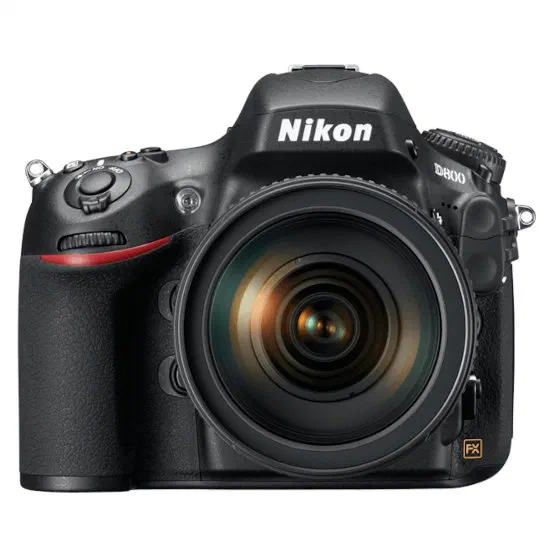
- Released 2012, 900g (32oz)
- 36.3 megapixels, 4fps, 51 AF points
- 1080p30 video
- Weather-sealed body
- CompactFlash & SDXC UHS-I slots
The 36 megapixel Nikon D800 is the highest resolution camera that can be found for under $500.
It’s a great choice for portraits, landscapes, and anything slow. Due to the size, I wouldn’t want to carry it around all day or travel with it.
Used Nikon F-mount lenses are a great value right now.
The D800E does not have a low pass filter.
For photography, it compares well to the Canon 5DS/R and Sony A7R. Both of which are more expensive.
See current price and information:
The Professional DSLR Experience
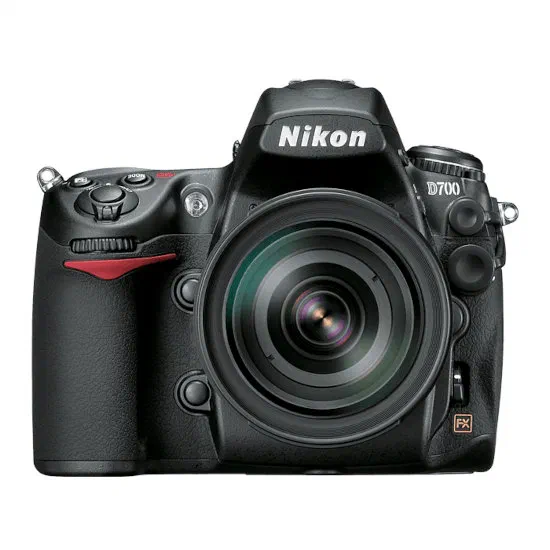
- Released 2008, 995g (35.1oz)
- 12.1 megapixels, 5fps, 51 AF points
- No video
- Second Nikon full frame DSLR
- Single CompactFlash slot
The Nikon D700 marks Nikon’s entry into the full frame DSLRs. It was released with the Nikon D3, and they share the same sensor.
The D700 competed against the Canon 5D mark II. The consensus was that the D700 was better in low light.
See current price and information:
Sport & Wildlife
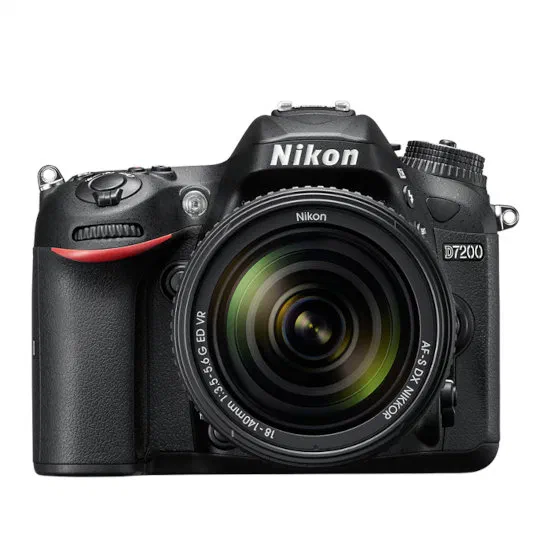
- Released 2015, 765g (27oz)
- 24.0 megapixels, 6fps, 51 AF points
- 1080p60 video
- APS-C, “crop sensor”
- Dual SDXC slots
The Nikon D7200 is good for wildlife photography because it has an APS-C sensor.
With telephoto lenses, the crop factor comes in handy.
See current price and information:
Nikon Z-mount Mirrorless
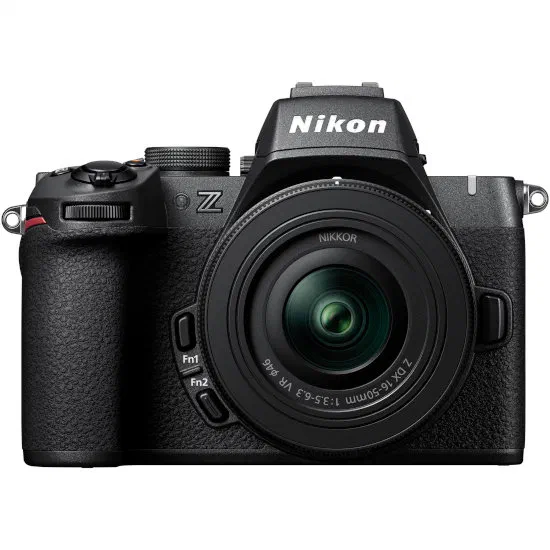
- Released 2019, 450g (16oz)
- 20.9 megapixels, 5fps, 209 AF points
- 4k30 video, high speed 1080p120
- Uses the Z-mount
- Single SDXC UHS-I slot
The Nikon Z50 is the only Z-mount camera that can be found for under $500.
It’s an entry level APS-C camera that great for learning photography or how to shoot video.
I like that it can record 4k30 video. That’s going to be a usable resolution and frame rate for a long time.
See current price and information:
Nikon Z6 and Z5 are the cheapest full frame cameras. Unfortunately, both are a little over $500.
Canon Cameras
Until recently Canon cameras have had better video features than Nikons.
Some of the DSLRs are able to use the Magic Lantern firmware that transforms them into cinema cameras. The video quality that can be gotten out of them is still impressive.
The Legendary Canon 5D mark II
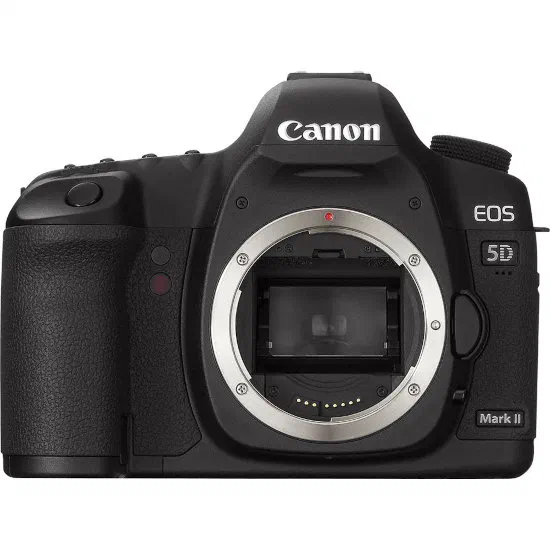
- Released 2008, 810g (29 oz)
- 21.0 megapixels, 3.9 fps, 9 AF points
- Full frame 1080p30 video
- Cinema camera with Magic Lantern
- Single CompactFlash card slot
The Canon 5D mark II is legendary for the quality of video it is capable of recording.
When released, being able to record 1080p video was cutting edge. The entire full frame sensor was captured, allowing for thin depths of field.
It’s great for photography as it still captures beautiful images.
I had one I used with the Canon EF 50mm f1.8 STM. It’s easy to see why so many people used and still use one today.
See current price and information:
APS-H DSLR for Sports
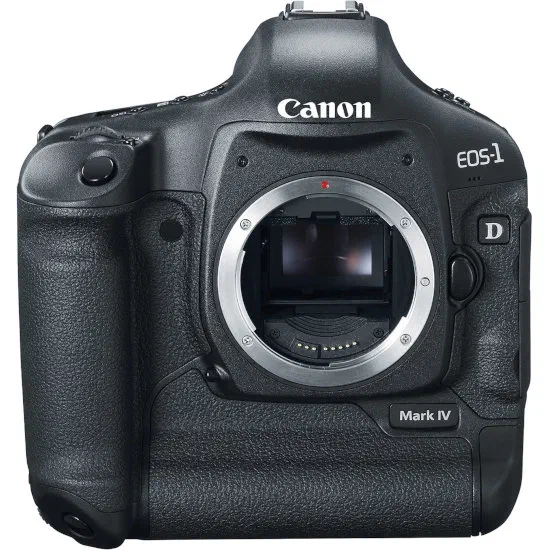
- Released 2009, 1,180g (42oz)
- 16.1 megapixels, 10 fps, 45 AF points
- 10fps (28 RAW, 121 JPEG)
- Integrated grip
- CompactFlash slot, SDHC slot
The Canon 1D mark IV is the last camera Canon made with an APS-H sensor. APS-H is smaller than full frame, with a 1.3x crop factor.
That means it’s larger than APS-C. (1.6x crop factor with Canon.)
It was designed for high speed continuous shooting of news and sports in harsh weather.
The difficult part is going to be finding one in good condition.
See current price and information:
Canon’s Entry Level Full Frame DSLR
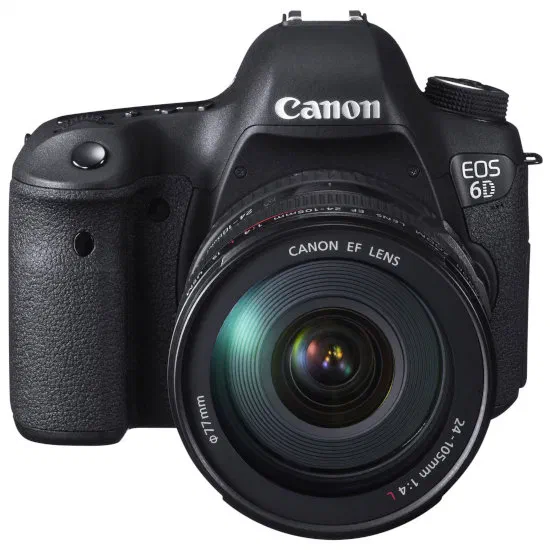
- Released 2012, 755g (26.6oz)
- 20.2 megapixels, 4.5fps, 11 AF points
- 1080p30 video
- Screen is fixed in place
- Single SDXC UHS-I slot
The Canon 6D was Canon’s first entry level full frame DSLR.
In 2012, the body alone would have cost $1,899. It was released shortly after the 5D mark III, which sold for $3,499.
The price gap has shrunk but 6D still only has 11 autofocus points. That’s not great compared to the 5D3, which has 61.
Where the 6D shines is in slower paced photography. General use, snapshots, landscapes, and portraits.
Camera bodies alone are well under $500, which leaves lots of room in the budget for lenses.
{< canon-cameras/canon-6d >}}
Canon M50 Mark II (EF-M)
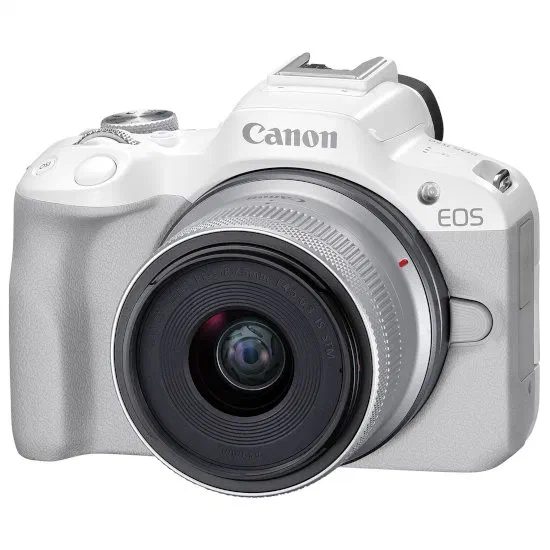
- Released 2020, 387g (13.7oz)
- 24.1 megapixels, 7.4fps, 143 AF points
- 4k24 video
- EF-M lens mount (Discontinued)
- Single SDXC UHS-I slot
The EF-M system has been discontinued by Canon.
An advantage of that is used lenses are cheap. Though, there is not a very large selection.
See current price and information:
Canon R100 (RF-S)
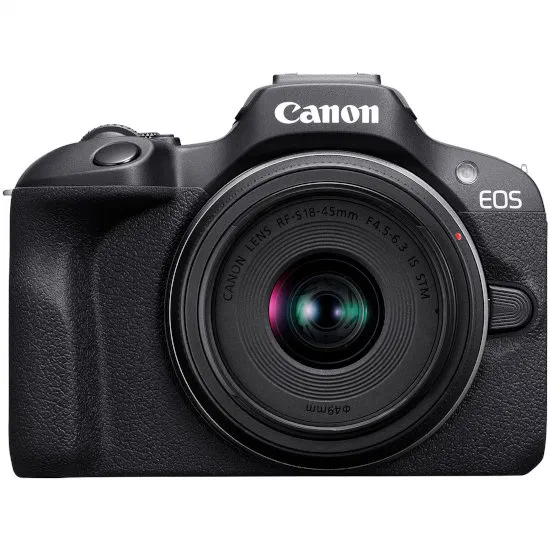
- Released 2023, 356g (12.6oz)
- 24.1 megapixels, 3.5fps, 143 AF Zones
- 4k24 video
- Uses the current RF-S mount
- Single SDXC UHS-I slot
The Canon R100 is surprisingly similar to the M50 mark II, but uses the current RF-S lens mount.
Autofocus speed and accuracy is going to be among the best.
The one downside is that there are not very many RF-S lenses.
See current price and information:
The closest full frame cameras under $500 are the Canon R and RP.
Sony Cameras
Full Frame Mirrorless
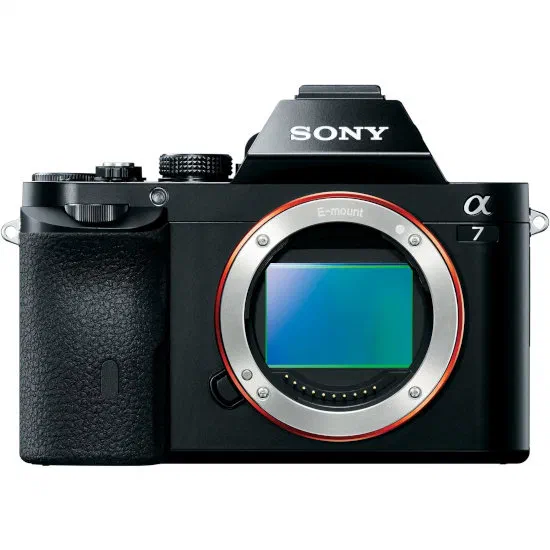
- Released 2013, 474g (16.7oz)
- 24.0 megapixels, 5fps, 117 AF points
- 1080p60 video
- One of the first full frame E-mount cameras
- Single SDXC/PRO Duo Memory Stick slot
The Sony A7 was one of the first full frame mirrorless cameras.
The E-mount has the largest selection of lenses out of the full frame mirrorless systems.
One downside is the battery life. The A7 eats through batteries.
See current price and information:
APS-C Mirrorless
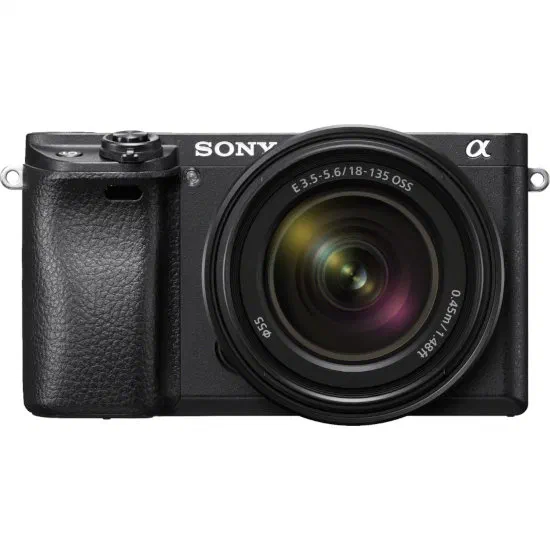
- Released 2016, 404g (14.3oz)
- 24.3 megapixels, 11.1fps, 425 AF points
- 4k30 video
- Fast phase detection AF
- Single SDXC slot
The Sony A6300 is an impressive camera with excellent autofocus.
The APS-C lens selection is better than the mirrorless options from Nikon or Canon.
Maximum video bitrate is 100 Mbps. It’s one of the best choices for video.
See current price and information:
Sony Single Lens Translucent Camera
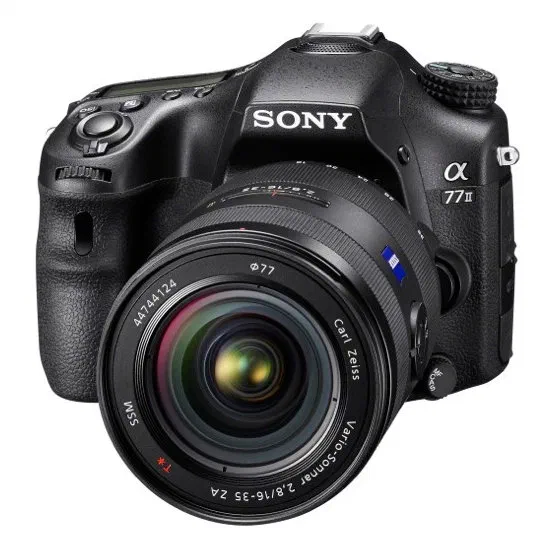
- 2014, 1,351g (47.7oz)
- 24.3 megapixels, 12 fps, 79 AF points
- 1080p60 video
- Viewfinder is an EVF
- Single SDXC/Memory Stick PRO Duo slot
The Sony A77 II is one of the last of SLT cameras. It has an APS-C sensor.
It’s a technological showcase by Sony with impressive specs.
It uses Sony/Minolta A-mount lenses. That opens up the ability to use older Minolta lenses that were released for 35mm film cameras.
See current price and information:
Micro Four Thirds
There are dozens of cheap Micro Four Thirds lenses. That’s what makes it so appealing for people looking for a deal.
Many of the older camera bodies hold up well. There’s lots of tech in the cameras to make up for the smaller sensor.
Panasonic G9
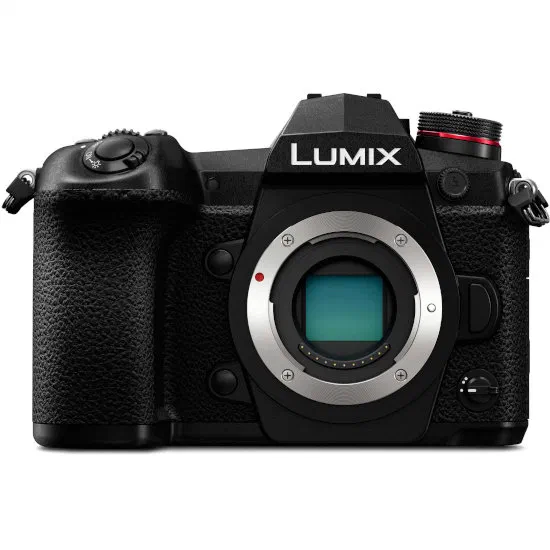
- Released 2017, 650g (23oz)
- 20.1 megapixels, 60fps, 225 AF points
- 4k60 video
- Contrast detection autofocus
- Two SDXC UHS-II slots
The Panasonic G9 is impressive with the ability to shoot 60 frames per second.
It’s the only camera under $500 that can record 4k60 video.
The only downside is the contrast detection autofocus.
See current price and information:
Panasonic GH4
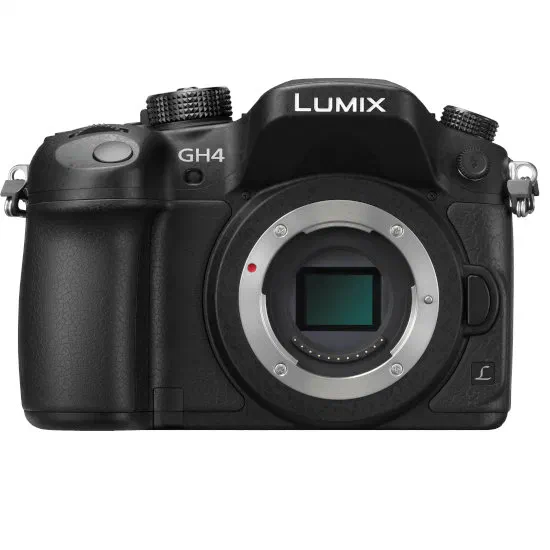
- Released 2014, 560g (20oz)
- 16.0 megapixels, 12fps, 49AF points
- 4k30 video
- Video focused accessories
- Single slot
The Panasonic GH4 is known for it’s professional video capabilities.
Video quality is so good that it was used on TV shows and in movies. There are plenty of accessories to rig it out for video.
Combined with the lens selection, it’s a hard value to beat for someone serious about video.
See current price and information:
Olympus OM-D E-M5 Mark II
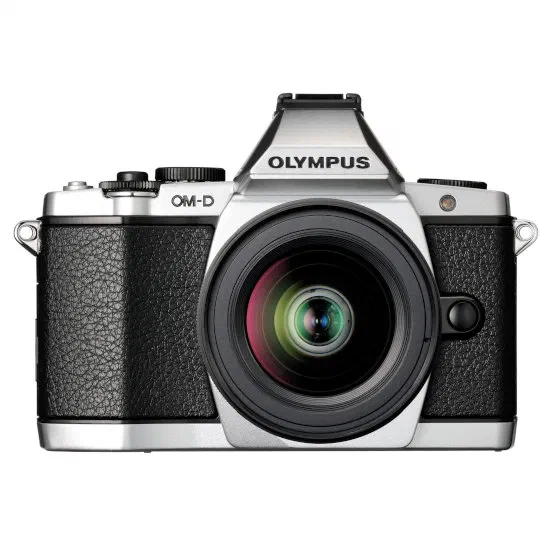
- Released 2015, 469g (16.5oz)
- 16.0 megapixels, 10 fps, 81 AF points
- 1080p60 video
- Dust and splash-proof
- Single SDXC slot
The Olympus OM-D E-M5 Mark II is packed with advanced features.
The five-axis IBIS can be used for pixel shift, allowing 64MP images to be captured. It’s a great feature for static subjects.
See current price and information:
Fujifilm
Fujifilm is known for their film simulations. People love how JPEGs look. No time needs to be spent editing RAW files.
These cameras are good for general use, travel, street, landscapes, architecture, and other types of photography that don’t push the autofocus system. Nikon and Canon have better continuous autofocus.
Fujifilm X-T10
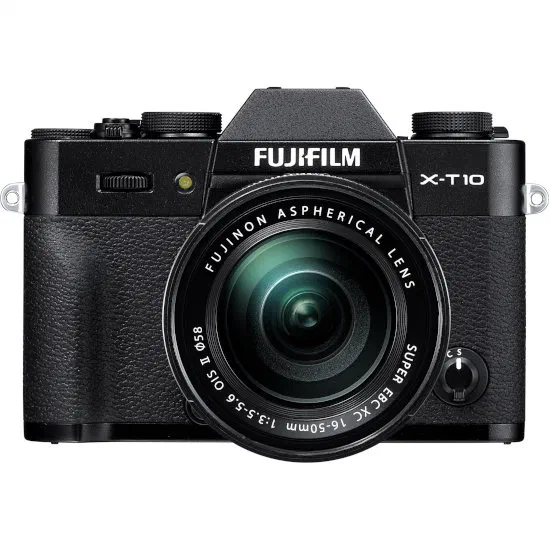
- Released 2015, 381g (13oz)
- 16.0 megapixels, 8 fps, 49 AF points
- 1080p60 video
- Retro styling
- Single SDXC UHS-I slot
A Fujifilm X-T10 body can be found for around $400. The problem is that doesn’t leave much room for a lens.
Fujifilm X lenses tend to be more expensive and in shorter supply on the used market compared to other brands.
Look for a Fujifilm Fujinon XC 16-50mm f/3.5-5.6 OIS lens.
Cheaper options include manual focus lenses from 7Artisans. Lens adapters allow manual focus film lenses to be used.
See current price and information:
Fujifilm X-E1
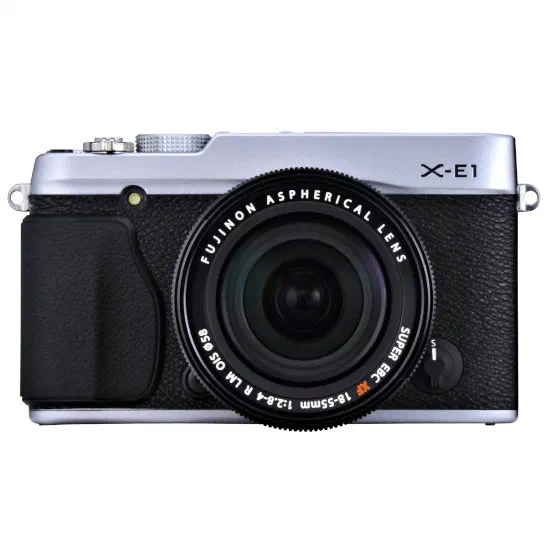
- Released 2012, 350g (12oz)
- 16.3 megapixels, 6 fps, Center point AF
- 1080p24 video
- Rangefinder style EVF
- Single SDXC slot
The Fujifilm X-E1 is less expensive than then X-T10. It’s possible to get a lens and still be under $500.
Realistically, the Fujifilm XF18-55mm F2.8-4.0 R LM OIS is the best lens that could fit in the budget.
See current price and information: