The Best Value Nikon D7000 Lenses
- Nathaniel Stephan
- May 5, 2025
Table of Contents
The Nikon D7000 is compatible with almost all Nikon F-mount lenses.
There can be issues with the oldest manual focus “non-Ai” lenses.
DX lenses are designed for the APS-C sensor in the Nikon D7000. Full frame, FX lenses, are also compatible.
Some F-mount lenses will not work. Those include AF-P, D, and AF.
These recommended Nikon D7000 lenses are fully compatible.
Feel free to skip the compatibility explanation.
I have picked lenses that and fun and under $200.
Nikon D7000 Memory Card Requirements
Nikon D7000 Lens Compatibility
- AF-S Lenses They have built-in Silent Wave Motors (SWM). They focus quickly and quietly.
- G Type: They do not have an aperture ring. There will be a ‘G’ after the aperture. For example, F1.8G.
- AF & AF-D These lenses have autofocus, but the AF system needs to be driven by an in-body focus motor. The D7000 does not have a built-in focus motor, so AF will not work with these lenses.
- AF-P Lenses These lenses feature a Pulse motor or stepping motor that makes autofocus even smoother and quieter than AF-S lenses.
The Nikon D7000 can use FX and AF-S DX lenses.
The Nikon has a built-in autofocus motor. AF and D-series lenses, from the 1980s and 90s, can be used with autofocus.
DX lenses were designed for APS-C sensors, which the Nikon has. DX AF-P lenses are not compatible. They will not function.
FX lenses are for full frame cameras. Their only downside is that they are larger and more expensive. FX AF-P lenses can be used. The focus ring will not work in autofocus mode.
Manual focus lenses will only work in manual mode. There is no linkage to let the Nikon know what the aperture is set to.
See the Nikon F-mount lens and compatibility page for a more detailed explanation.
Lens Abbreviations
- AF: Auto Focus. All Nikon AF lenses have a built-in motor for automatic focusing.
- AF-D: Distance Information. These lenses transmit distance information to the camera for exposure metering.
- AF-S: Autofocus is powered by a Silent Wave Motor. (SWM)
- AF-P: Autofocus is powered by a Pulse motor. They are newer, faster, and quieter than AF-S lenses.
- E: Electromagnetic Diaphragm. The lens aperture is electronically controlled.
- ED: Extra-low Dispersion lens elements. They reduce chromatic aberrations for better image sharpness and color.
- G: These lenses do not have an aperture ring.
- IF: Internal Focusing. The lens doesn’t change size during focusing.
- VR: Vibration Reduction. This feature reduces the effect of camera shake.
- DX: These lenses are designed for Nikon’s APS-C sensor DSLR cameras.
- FX: FX format lenses are designed for full frame Nikon DSLRs. They can be used on DX camera bodies.
- Micro: Nikon’s name for macro lenses.
Autofocus Not Working
Check the ‘A/M’ switch on the lens. ‘A’ is autofocus. ‘M’ is manual focus.
Affiliate Advertising Disclosure
Outside the Shot is a participant in the Amazon Services LLC Associates Program, an affiliate advertising program designed to provide a means for sites to earn advertising fees by advertising and linking to Amazon.com. As an eBay Partner, I may be compensated if you make a purchase. I also participate in affiliate advertising programs with KEH, and WEX Photo Video. More can be found on the Affiliate Disclosure page.
Original Kit Lens
- Original kit lens
- Image stabilization
- 67mm filter threads
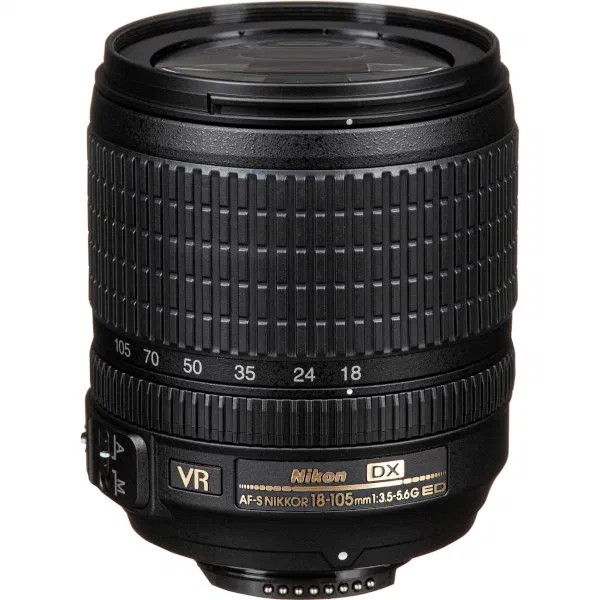
The Nikon AF-S DX Zoom-NIKKOR 18-105mm f/3.5-5.6G ED VR was the original kit lens for the Nikon D7000.
It’s good for landscapes, portraits, events, snapshots, and all types of general photography. The autofocus will be quite and fast.
See current price and information:
Best Value Lens
- The best value
- Kit lens for the Nikon D3000 series
- Lots of used copies
- 52mm filter threads
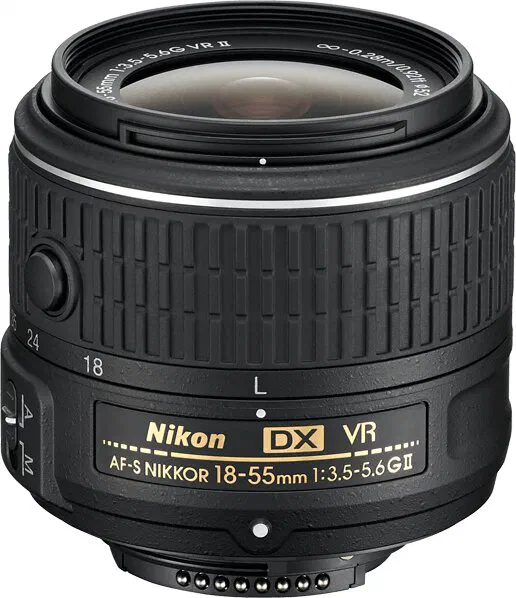
There are 5 versions of the Nikon 18-55mm f/3.5-5.6. They were kit lenses for many Nikon DSLRs.
The AF-P lenses will not work with the D7000.
- AF-S Nikkor 18-55mm f/3.5-5.6G VR DX
- AF-S Nikkor 18-55mm f/3.5-5.6G ED II DX
- AF-S Nikkor 18-55mm f/3.5-5.6G ED VR II
- Nikkor 18-55mm f/3.5-5.6G AF-P VR
- Nikkor 18-55mm f/3.5-5.6G AF-P
The 18-55mm focal range covers most types of photography. It’s good zoom lens for everything from landscapes to general photography.
They’re small, light, and cheap. It’s an easy lens to carry around all day. Plus, lens filters, like a circular polarizer, will be cheaper.
I’d recommend getting one of the kit lenses with VR. The optical image stabilization will help you get sharper images.
See current price and information:
Sports, Action, & Wildlife Telephoto Zoom Lenses
Longer focal length lenses have more reach. They are better for capturing action from far away.
A bird will no longer be a small spec.
These lenses will help take advantage of the 39 AF points. For moving subjects, 3D tracking will show what the autofocus system is capable of.
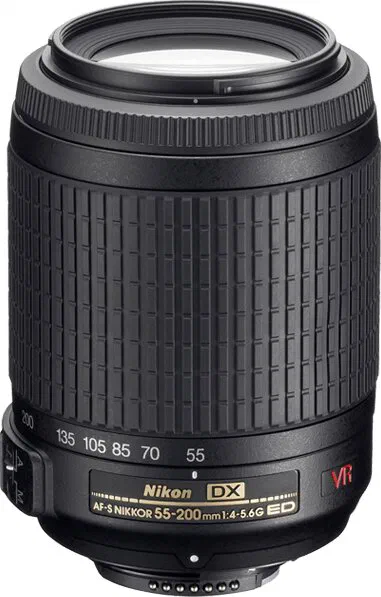
Nikon 55-200mm f/4-5.6G ED IF AF-S DX VR
- 52mm filter threads
The 55-200mm f4-5.6G is the least expensive entry point from action, sports, or wildlife photography. It’s going to have more reach, which is important for these types of photography.
Pay attention when buying one, because you want VR. It’s going to be helpful for getting sharp images when the lens is zoomed to 200mm.
The aperture isn’t very large. f5.6 will be difficult to use indoors. It may not let in enough light to get a good exposure.
It’s going to be great to use outdoors during the day. It can be easily hand held. You won’t need a tripod.
To freeze action, you’re going to need a fast shutter speed. Probably 1/500th of a second or faster.
See current price and information:
Nikon 55-300mm f/4.5-5.6G ED VR
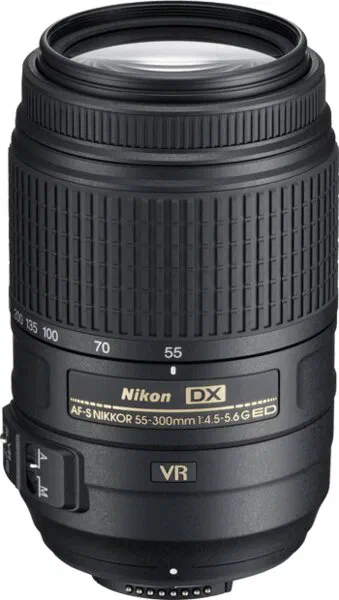
- 58mm filter threads
Larger, heavier, more expensive, but is a longer focal length.
Without a doubt, it is going to be easier for birding than the 55-200mm. For sports photography, it’s going to be able to capture action
I would check on the prices of 70-300mm full frame lenses before buying it. That way you’ll have more flexibility if you ever decide to upgrade your D7000.
See current price and information:
Tamron 70-300mm f/4.0-5.6 Di LD
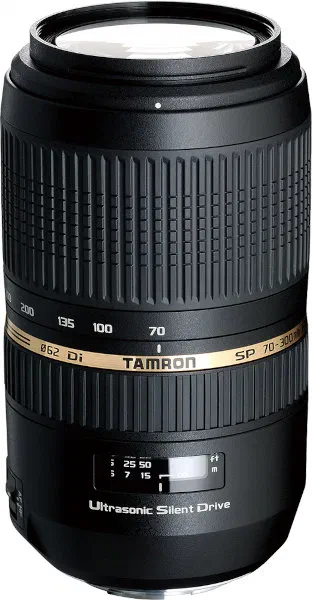
- Inexpensive
- Longer reach
- Great price to performance
- 62mm filter threads
By giving up 15mm on the wide-end, you can save money.
Most people are going to use the lens at 300mm for the majority of their shooting. A bird will only let you get so close. Sidelines are a thing. Planes fly in the sky.
One big shortcoming is the lack of image stabilization. This means you’ll need to use fast shutter speeds to get sharp images. You want to prevent blur from camera shake.
See current price and information:
Best Prime Lens
At these price points, primes are going to have better. Photos will be sharper and you’re less likely to experience chromatic aberration.
Shooting in low light will be easier. The larger aperture lets in more light. It’s less likely you’ll need to use a flash.
Nikon AF-S DX 35mm f/1.8G
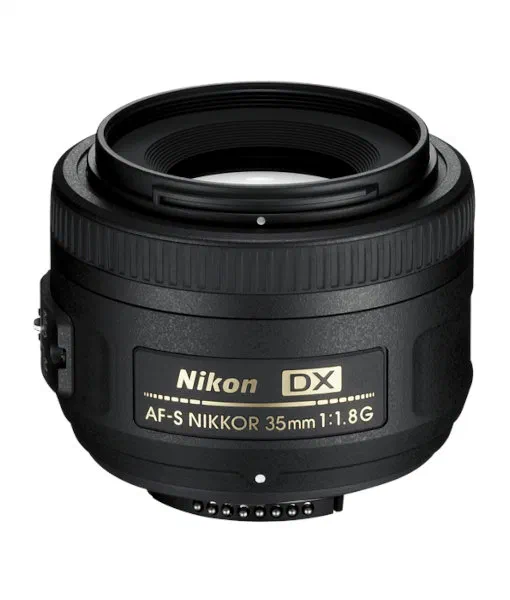
- Same field of view as a 50mm on full frame
- Fast aperture, good for low light
- Small and light weight
- 52mm filter threads
The focal length is equivalent to a 52.5mm lens on a full frame camera. 50mm is my favorite field of view, so it’s close enough.
It’s the first lens I would buy. The fast aperture is helpful for shooting in low light. Conditions you’ll find indoors or at night.
It’s great for street, portraits, and general photography.
The small size and light weight make it easy to always have with you. You can leave it on the camera, so you can just grab it and go.
See current price and information:
Wide Angle Lenses
These wide angle lenses are perfect for Landscape, Architecture, & Astrophotography.
Tokina 11-16mm f/2.8 AT-X116 Pro DX II
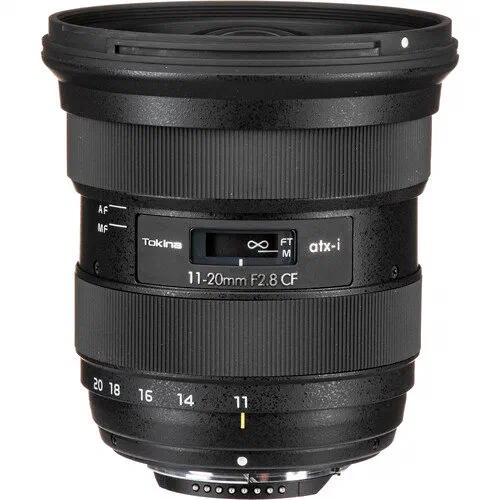
- Perfect for night photography
- Focus clutch is fun to use
- 77mm filter threads
The Tokina 11-16mm f/2.8 is fast and sharp. With a large aperture, this lens is an outstanding pick for astrophotography.
The focus clutch that controls changing between manual and autofocus is easy to use in the dark. To switch focus, the entire focus ring is either pushed forward or pulled back.
The autofocus motor is noisy and heavy.
Tokina made versions of the lens for different lens mounts. Make sure the lens is for Nikon. There are Canon EF and Sony A mount versions out there.
See current price and information:
Sigma 10-20mm f/3.5 EX DC HSM ELD SLD Aspherical
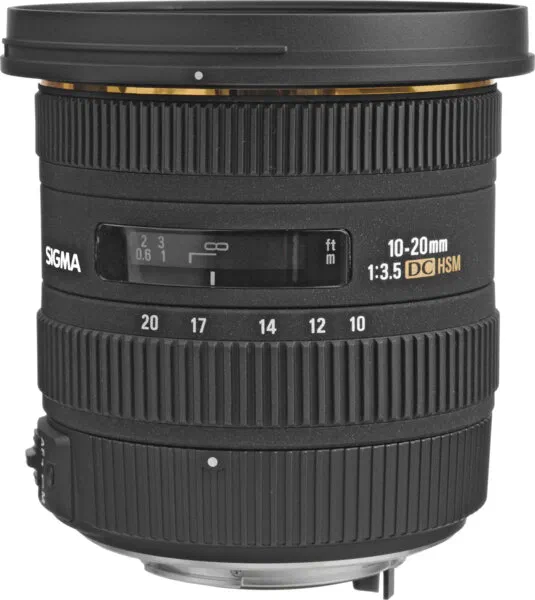
- It’s really wide
- Internal focus
- Can distort perspectives
- 82mm filter threads
The Sigma 10-20mm f/3.5 falls into the same price range as the Tokina 11-16mm f/2.8. It has a larger zoom range, but smaller maximum aperture.
You might be limited by what’s available. The F-mount has been discontinued for long enough that they can be hard to find.
Be careful. Make sure the one you buy uses the Nikon F lens mount. Sigma also made copies of the lens for other DSLR camera mounts including, Canon EF, Sony A, and Pentax K mounts.
See current price and information:
Portrait Lenses
Nikon AF-S Nikkor 85mm f/1.8G
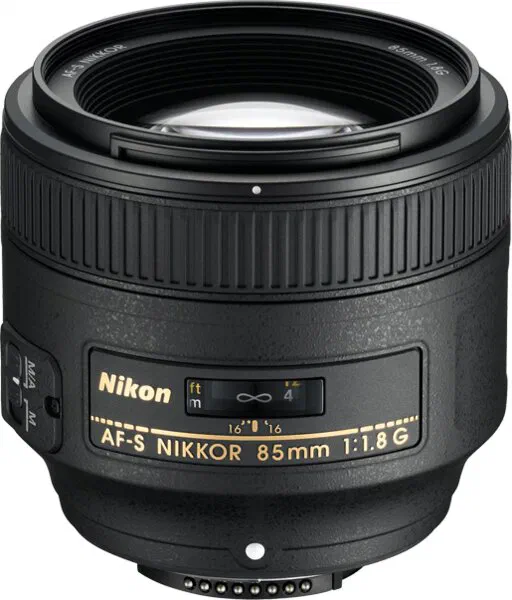
- Best lens for portraits
- Internal focus
- Great image quality
- 67mm filter threads
The 85mm focal length is the most popular for portraits. It was the recommendation for photographers that wanted to take their photos to the next level.
It was one of Nikon’s best sellers. Now no one wants them, because everyone switched to Nikon’s mirrorless Z-mount.
As a result, they are a phenomenal value used.
The Nikon 85mm f/1.8G is one of the best Nikon portrait lenses every produced. It is a fast lens that delivers excellent images and pleasing bokeh due to the wide aperture.
The 85mm 1.8G is a full frame lens. You’ll notice two differences when comparing it against a DX lens.
First, full frame lenses are usually more expensive than DX lenses. They have larger lens elements, which translates to additional cost.
Second, the lens is larger than many DX lenses. While not a huge issue, if you plan to carry it around with another lens, you’ll definitely need a bag.
See current price and information:
Nikon AF-S FX Nikkor 50mm f/1.8G
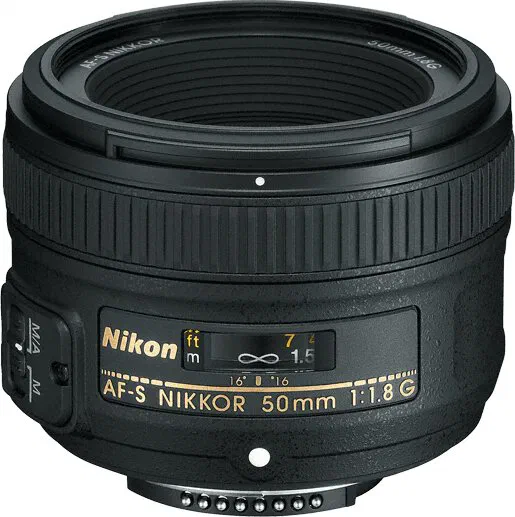
- Impossible to dislike
- Small and light
- Great for low light
- 58mm filter threads
Taking crop factor into account, and this lens will have the equivalent field of view of 75mm on a full frame camera.
That’s perfect for portraits on a budget. The aperture is fast enough that you’ll be able to blur backgrounds and get beautiful bokeh.
If you ever plan on upgrading to a full frame Nikon DSLR, this would be my first lens recommendation.
See current price and information:
Macro & Close-Up Lenses
Nikon Micro-Nikkor 40mm f/2.8G
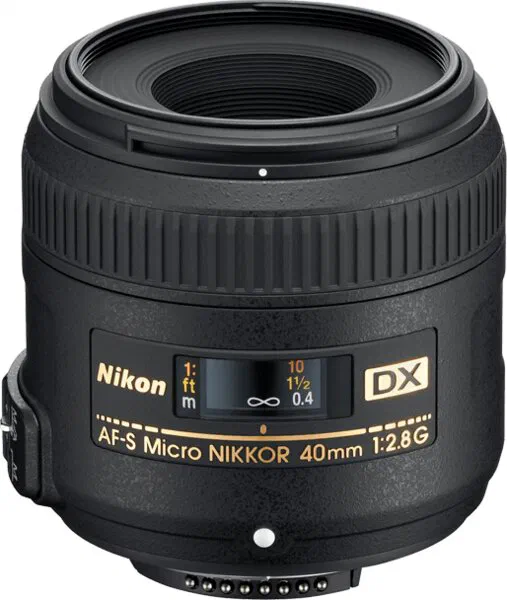
- Ideal for close-ups
- Can to 1x magnification
- Cheapest option with autofocus
- 52mm filter threads
The Nikon Micro-Nikkor 40mm f/2.8G is the best option for getting started with macro and close-up photography.
As far as modern macro lenses go, the lens is relatively inexpensive. It also has a high-quality autofocus motor and uses current optics, which makes getting macro shots fun and easier.
It is going to be great for food, products, insects, and capturing close detail. If you can’t focus close enough with other lenses, this is what you should get.
See current price and information:
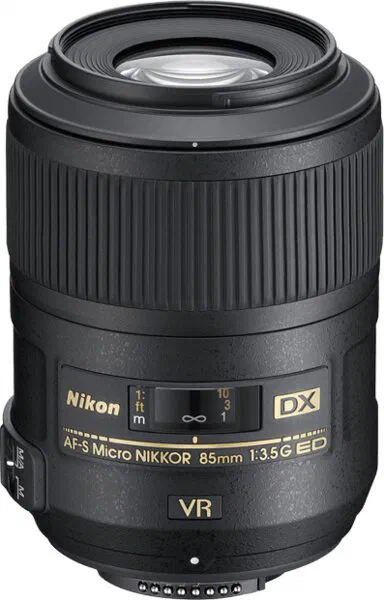
Nikon AF-S DX Micro Nikkor 85mm f/3.5G ED VR
- Better for 1:1 macro
- Longer working distance
- Weather sealed
- 52mm filter threads
The largest benefit of the 85mm macro over the 40mm, is a longer working distance. That’s the distance from the front of the lens to the subject.
At 1X magnification, the front of the lens is going to be close to the subject. If you are trying to photograph an insect, this may cause them to try to get away.
Another issue could be properly lighting a subject. Depending on your light source it could be difficult to get it close enough to a subject.
See current price and information: