The Best Nikon D500 Lenses for Photography
- Nathaniel Stephan
- October 13, 2025
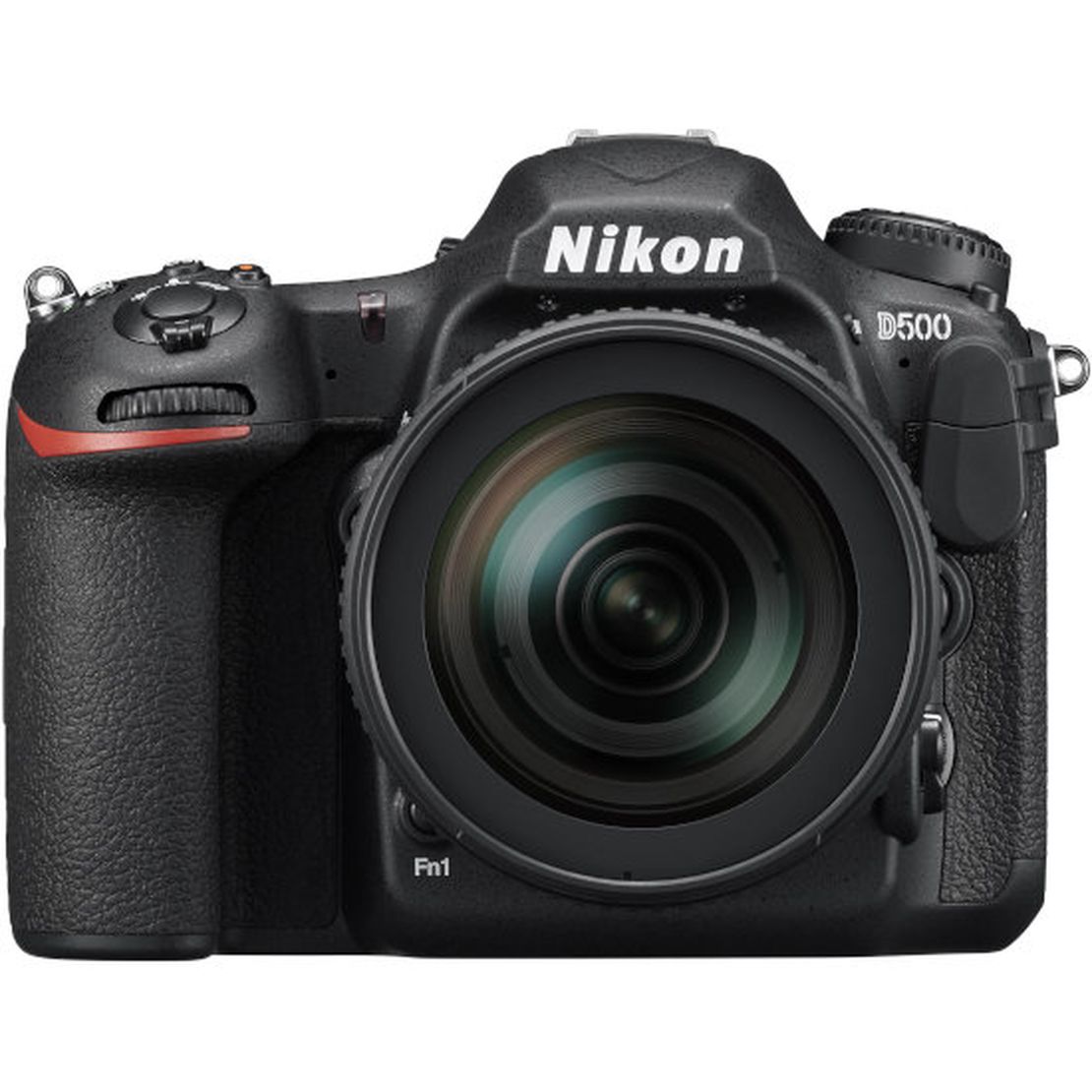
Table of Contents
The Nikon D500 can use almost all Nikon F-Mount lenses. DX lenses are designed for it’s APS-C size sensor. It can also use full frame, FX format lenses.
While the D500 is discontinued, it’s still a good camera for sports, action, wildlife, and events when used with the right lenses.
Original manual focus “non-Ai” lenses should not be used on the Nikon D500 because they can damage the mount.
Telephoto lens recommendations will take advantage of the 153 point phase autofocus system. Wider lenses can be a good choice for recording full HD or 4k video.
Nikon D500 Lens Compatibility
The Nikon D500 can use DX and FX lenses.
DX lenses were designed for APS-C sensors, which the D500 has. DX lenses have several auto focus motors and they are all compatible, including AF-P lenses.
FX lenses are for full frame cameras. They will have a 1.5X equivalent “crop factor.” That’s great for telephoto lenses as the D500 will capture the center of FX lenses, which is the sharpest area.
The Nikon has a built-in autofocus motor. AF and D-series lenses, from the 1980s and 90s, will be fully compatible, with auto focus.
See the Nikon F-mount lens and compatibility page for a detailed explanation on how to spot “non-Ai” lenses. That would only be an issue for manual focus lenses.
Nikon Lens Basics and Abbreviations
- AF: Auto Focus. All Nikon AF lenses have a built-in motor for automatic focusing.
- AF-D: Distance Information. These lenses transmit distance information to the camera for exposure metering.
- AF-S: Autofocus is powered by a Silent Wave Motor. (SWM)
- AF-P: Autofocus is powered by a Pulse motor. They are newer, faster, and quieter than AF-S lenses.
- E: Electromagnetic Diaphragm. The lens aperture is electronically controlled.
- ED: Extra-low Dispersion lens elements. They reduce chromatic aberrations for better image sharpness and color.
- G: These lenses do not have an aperture ring.
- IF: Internal Focusing. The lens doesn’t change size during focusing.
- VR: Vibration Reduction. This feature reduces the effect of camera shake.
- DX: These lenses are designed for Nikon’s APS-C sensor DSLR cameras.
- FX: FX format lenses are designed for full frame Nikon DSLRs. They can be used on DX camera bodies.
- Micro: Nikon’s name for macro lenses.
Affiliate Advertising Disclosure
Outside the Shot is a participant in the Amazon Services LLC Associates Program, an affiliate advertising program designed to provide a means for sites to earn advertising fees by advertising and linking to Amazon.com. As an eBay Partner, I may be compensated if you make a purchase. I also participate in affiliate advertising programs with KEH, and WEX Photo Video. More can be found on the Affiliate Disclosure page.
Kit Lens
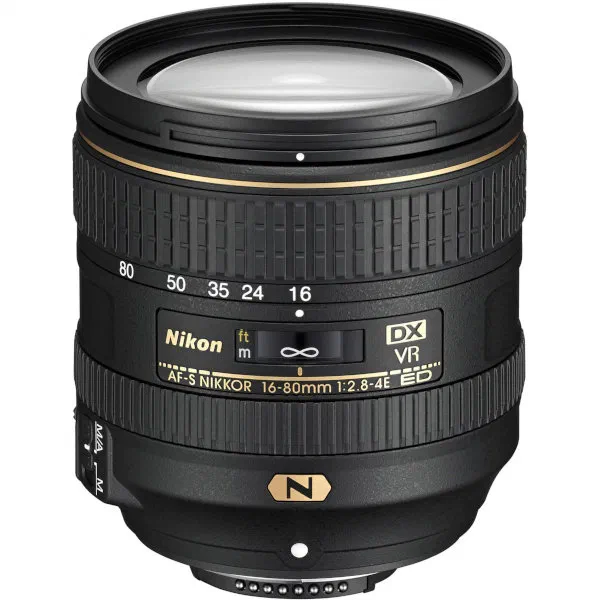
- Versatile focal range: The 16-80mm focal length range makes it ideal for landscapes, portraits, street photography, and even some wildlife photography.
- Constant maximum aperture: The f/2.8-4 aperture provides excellent low-light performance and depth-of-field control.
- Vibration Reduction (VR): This technology minimizes the impact of camera shake, allowing handheld shooting in low-light conditions.
The Nikon AF-S DX NIKKOR 16-80mm f/2.8-4E ED VR was the kit lens for the Nikon D500. It’s a great option because it covers the most commonly used focal lengths, while not being too large.
It has VR (Vibration Reduction) optical image stabilization to ensure sharp images, even in low light. The ED element helps to reduce chromatic aberration.
This lens is good for snapshots, general, travel, events, and video. It’s even wide enough to be good for landscapes and architecture. There’s a reason it was included with the D500.
See current price and information:
Best Telephoto Zoom Lens
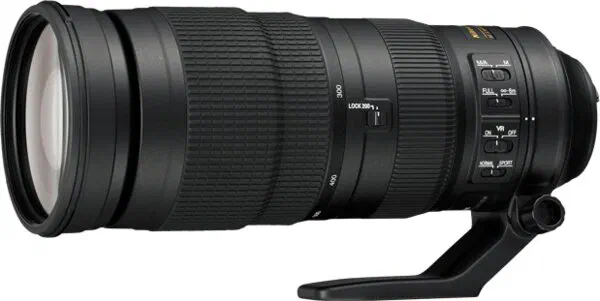
- Large zoom range: Great for wildlife and sports.
- Constant f/5.6 aperture: Get consistent exposure across the entire zoom range.
- Vibration Reduction: Reduces camera shake for sharper images.
The Nikon AF-S NIKKOR 200-500mm f/5.6E ED VR lens was launched with the release of the Nikon D500. That combination was and still is very popular for wildlife and bird photography.
The constant f5.6 aperture allows fast shutter speeds to be used so that you can freeze motion. The optics are excellent and vibration reduction will aid in capturing sharp images.
This is the lens to get to see sharp details in wildlife photos, like bird feathers, eyes, and hair.
See current price and information:
Sigma Wide Angle Zoom Lens
- Constant f/1.8 aperture: The wide maximum aperture across the entire zoom range is great for low light shooting and depth-of-field control.
- High image quality: This lens is known for its superb sharpness, contrast, and minimal distortion.
- Hyper Sonic Motor (HSM): The HSM ensures smooth, fast, and precise autofocus.
- Durable construction: The lens features a Thermally Stable Composite (TSC) material, resulting in greater precision and use in wide temperature variations.
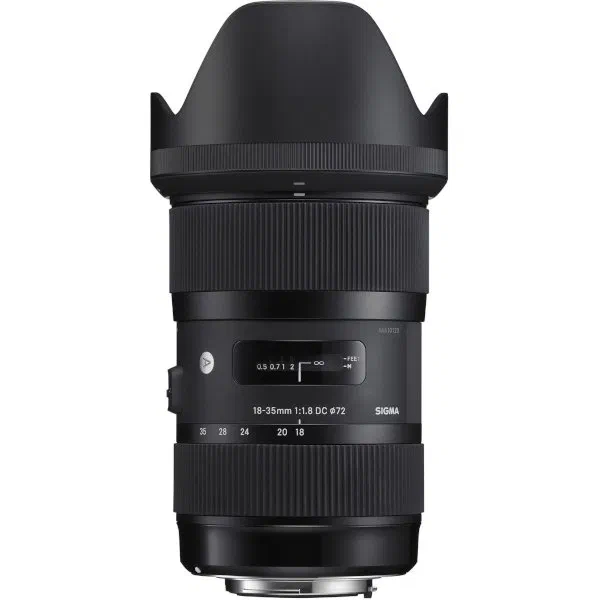
The Sigma 18-35mm F1.8 Art DC HSM lens is a super fast zoom lens. It was the first of it’s kind and is great for shooting in low light, like at events or night photography.
The fast aperture can create bokeh for a soft background for portraits and subject isolation.
Additionally, it’s perfect for video. It can capture wide angle shots for b-roll and used for interview and talking head shots.
See current price and information:
Best Prime Lens
- Versatility: The 35mm focal length is perfect for many styles of photography.
- Low-light performance: The wide f/1.8 aperture is excellent for low light and indoor situations.
- Compact and lightweight: Weighing only 200 grams, it’s an ideal lens for travel and handheld photography.
- Price: As one of Nikon’s more affordable lenses, it offers excellent value for its price.
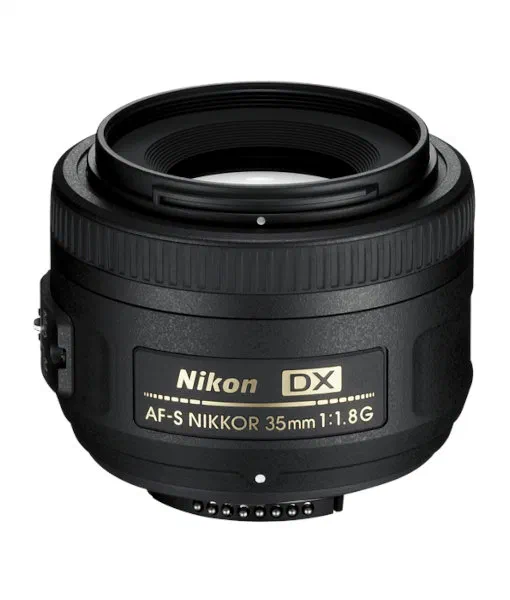
The Nikon AF-S DX NIKKOR 35mm f/1.8G lens is a compact, lightweight, and affordable prime lens that offers excellent image quality. Its 35mm focal length on a DX format camera is equivalent to 52.5mm on a full-frame, giving it a natural field of view that closely matches human perception. This makes it a great lens for a variety of photographic applications, including portraits, street photography, and even landscapes.
This lens’s maximum aperture of f/1.8 allows photographers to create images with a shallow depth of field, beautifully blurring the background while keeping the subject in sharp focus. It also means the lens performs very well in low-light situations, reducing the need for flash and enabling you to retain the ambiance of the scene.
See current price and information:
Nikon AF-S DX NIKKOR 10-24mm f/3.5-4.5G ED
- Versatile focal range: The 16-80mm focal length range makes it ideal for landscapes, portraits, street photography, and even some wildlife photography.
- Constant maximum aperture: The f/2.8-4 aperture provides excellent low-light performance and depth-of-field control.
- Vibration Reduction (VR): This technology minimizes the impact of camera shake, allowing handheld shooting in low-light conditions.
- Nano Crystal & Super Integrated Coating: These enhance light transmission and reduce lens flare and ghosting for improved contrast and color accuracy.
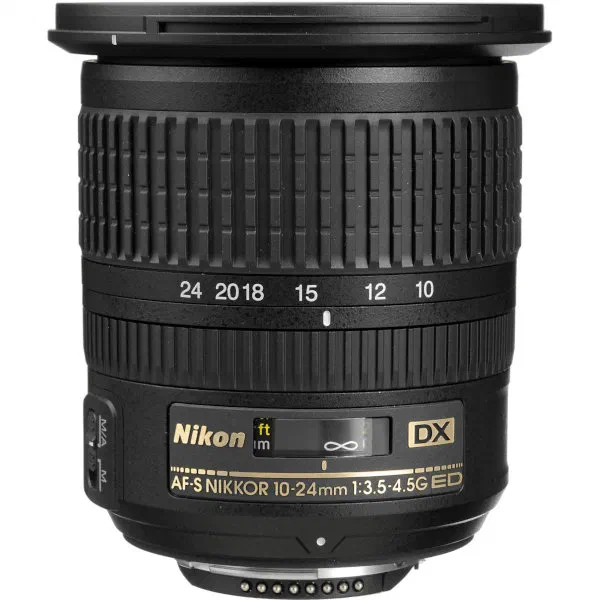
The Nikon AF-S DX NIKKOR 10-24mm f/3.5-4.5G ED is a great wide angle zoom lens.
This lens can be seen as the one-size-fits-all solution for Nikon D500 owners, covering nearly every shooting scenario without the need to constantly swap lenses. It’s an excellent choice for photographers who seek flexibility and high image quality in one lens.
See current price and information:
Tamron SP 15-30mm F/2.8 Di VC USD for Nikon
- Excellent image quality: The lens delivers sharp, high-contrast images across the entire zoom range.
- Constant f/2.8 aperture: This enables consistent performance throughout the zoom range, particularly beneficial for low-light photography.
- Vibration Compensation (VC): The inclusion of image stabilization is a significant advantage for handheld shooting.
- Wide-angle coverage: Ideal for interior, architectural, and landscape, photography.
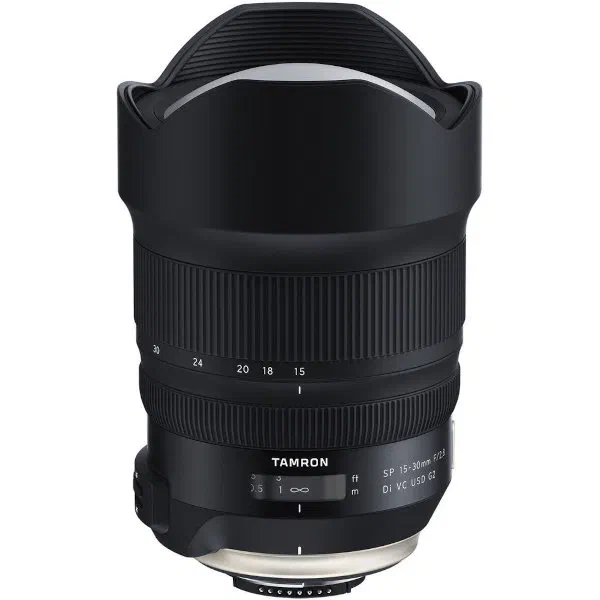
The Tamron SP 15-30mm F/2.8 Di VC USD is a high-quality wide-angle zoom lens, notable for its constant f/2.8 maximum aperture, which enables excellent low-light performance and depth-of-field control. This lens is particularly useful for landscape and architectural photography, where the wide field of view can capture expansive vistas or the grandeur of large structures.
Its Vibration Compensation (VC) feature, a rarity among wide-angle lenses, helps minimize the appearance of camera shake, providing greater flexibility for handheld shooting in lower light conditions. The Ultrasonic Silent Drive (USD) ensures a quick, precise, and nearly silent autofocus, beneficial when shooting events or wildlife where noise can be disruptive.
In summary, the Tamron SP 15-30mm F/2.8 Di VC USD is a fantastic choice for Nikon D500 owners who prioritize wide-angle photography. Its constant aperture, image stabilization, and exceptional optical performance make it a versatile and valuable addition to any photographer’s kit.
See current price and information:
Super Zoom Lens
- All-in-one zoom range: Covering from wide-angle to super-telephoto, it’s a truly versatile lens.
- Vibration Reduction: This helps to reduce the appearance of camera shake for sharper handheld shooting.
- Compact for its range: Considering its broad zoom range, the lens is relatively compact and easier to carry around than multiple lenses.
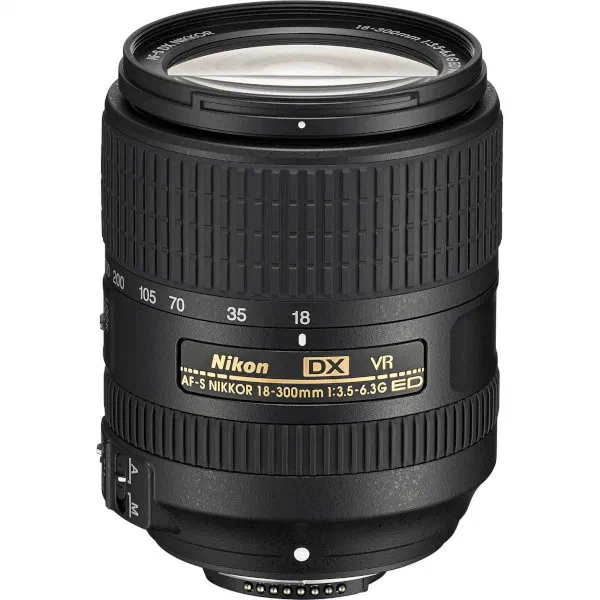
The Nikon AF-S DX NIKKOR 18-300mm f/3.5-6.3G ED VR lens is a super zoom that can do it all. You’ll never need to switch lenses.
This lens is a perfect companion for travel photographers or those seeking to carry a single lens that can handle everything from wide-angle landscapes to far-reaching telephoto shots.
The aperture range from f/3.5 to f/6.3 allows a fair amount of light in, suitable for various lighting conditions. Additionally, the lens includes Vibration Reduction (VR) technology that compensates for camera shake, offering an advantage in low-light situations or when using the telephoto end of the zoom range.
See current price and information:
Tokina AT-X 11-20mm f/2.8 PRO DX
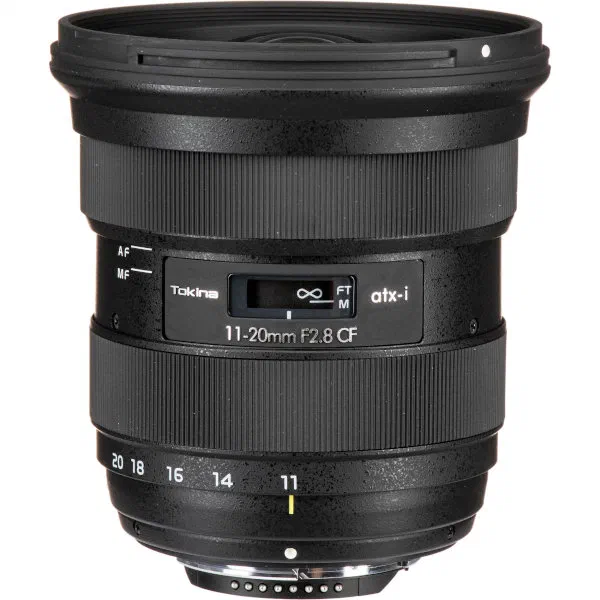
- Quality optics: The lens delivers crisp and vibrant images, with good control over chromatic aberrations and distortion.
- Constant f/2.8 aperture: This provides excellent low-light capabilities and depth-of-field control, which is uncommon for wide-angle zoom lenses.
- Wide-angle range: The 11-20mm focal length is perfect for capturing broad vistas in landscape and architectural photography.
- Solid construction: The lens has a robust and durable build, offering a premium feel.
The Tokina AT-X 11-20 PRO DX 11-20mm f/2.8 is a superb wide-angle zoom lens that offers excellent image quality and a constant f/2.8 aperture throughout the zoom range. This lens is particularly useful for photographers who focus on landscapes, cityscapes, architecture, and astrophotography, where the wide field of view can capture stunningly broad scenes.
The constant f/2.8 aperture is a key selling point, providing greater flexibility for low-light shooting and helping to create a shallow depth-of-field, which is rare in wide-angle photography. The lens’s optical construction also minimizes distortion, a common issue with wide-angle lenses, delivering clean and natural-looking images.
In conclusion, the Tokina AT-X 11-20 PRO DX 11-20mm f/2.8 lens is an excellent addition to any Nikon D500 owner’s kit, particularly for those seeking a quality wide-angle lens with a fast aperture. Its versatility and strong optical performance provide significant value, making it a top contender in the wide-angle zoom lens market.
See current price and information:
Nikon AF-S NIKKOR 70-200mm f/2.8E FL ED VR
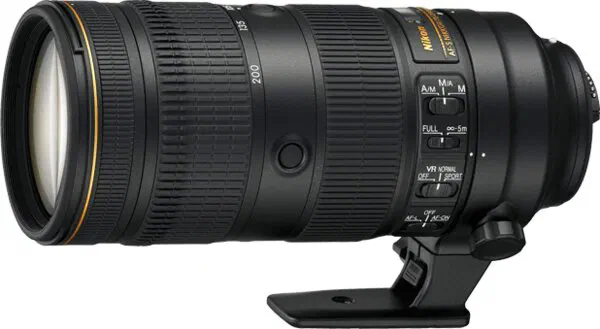
- Great for portraits, events, and sports photography
- Fast f/2.8 constant aperture and VR for superior low light performance
- Fast, silent autofocus
- Weather-sealed for dust and moisture resistance
This lens is another staple in the camera bag of many professional photographers. It covers the 70-200mm focal length, a range that’s particularly useful for portraiture, event photography, and sports.
Like the 24-70mm, it also features a fast f/2.8 constant aperture and vibration reduction. Additionally, it has a fast, silent autofocus system and weather sealing to protect against dust and moisture.
See current price and information:
Macro Lens (Micro)
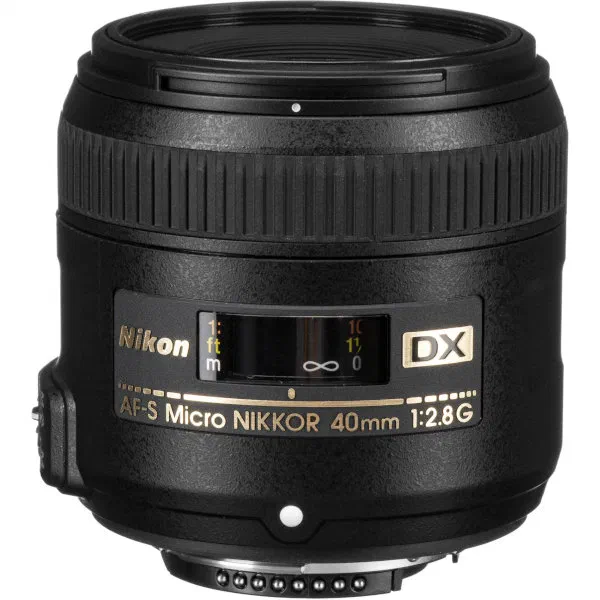
- Excellent image quality: It’s renowned for its sharpness, contrast, and color accuracy.
- Versatility: While designed for macro photography, the lens is also excellent for portraits and general photography.
- Compact and lightweight: At just 235 grams, it’s easy to carry, making it perfect for travel.
- Affordable: It’s considered a bargain given its high image quality and versatility.
The Nikon AF-S DX Micro-NIKKOR 40mm f/2.8G lens is a compact and versatile macro lens for DX format F-mount cameras.
Like any macro lens, it will deliver stunning detail and excellent image quality. It’s ideal for photographers who want to capture close-up subjects with precision, such as insects, flowers, or small objects, but it’s also quite effective for portraits and everyday photography due to its natural field of view on DX-format cameras.
The lens’s maximum aperture of f/2.8 is relatively fast, enabling smooth out-of-focus elements and good low-light performance. It also allows you to create images with shallow depth of field, emphasizing your subject against a blurred background.
In conclusion, the Nikon AF-S DX Micro-NIKKOR 40mm f/2.8G lens is a fantastic addition to any photographer’s kit. It’s an excellent choice for those looking to explore the world of macro photography without sacrificing the ability to capture great portraits and general images.
See current price and information: