Canon T4i Lenses: The Best Bang-for-Buck Picks in 2026
- Nathaniel Stephan
- June 23, 2025
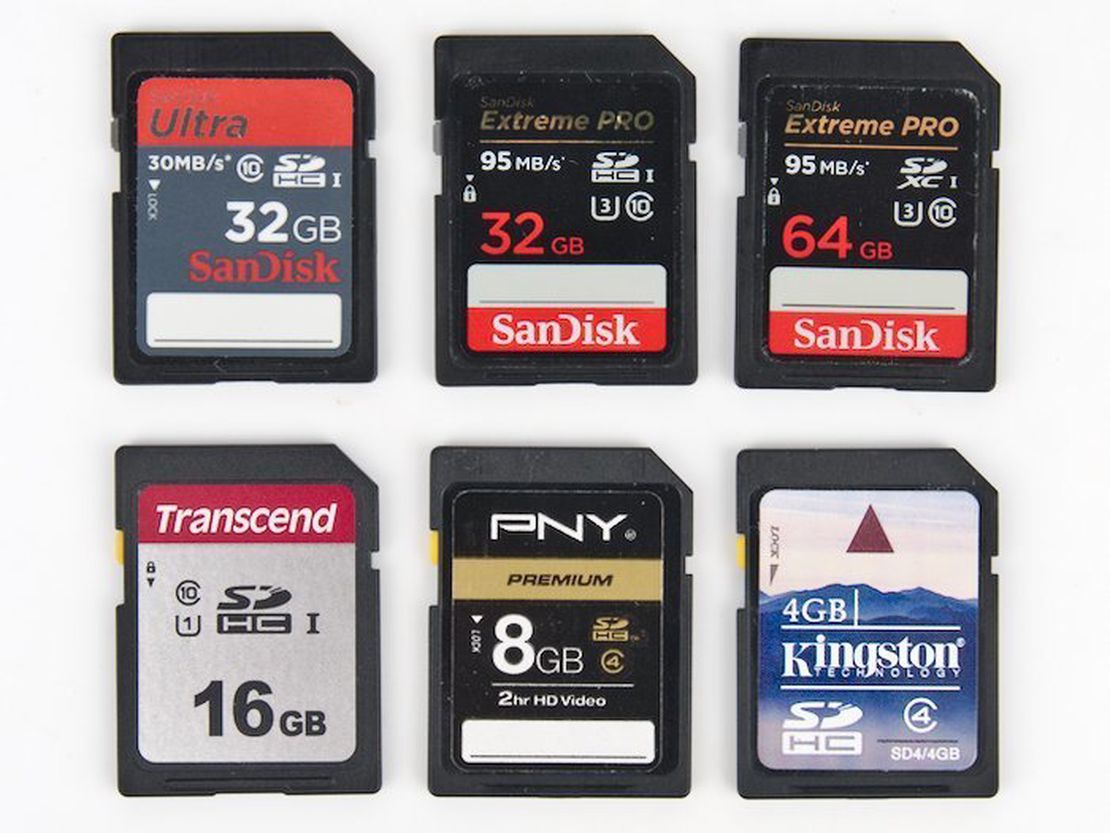
Table of Contents
The Canon T4i was designed to use EF-S lenses. It was released as the 650D in Europe and Kiss X6i in Japan.
Full frame EF lenses can also be used, but they are larger and more expensive.
It has a 18 APS-C sensor and was released in 2012. It’s still a great camera, but buying expensive lenses for it doesn’t make much sense.
My recommendations focus on lenses that are small, light, inexpensive, and fun. They’ll be perfect for getting the most out of your camera.
Canon T4i Memory Card Requirements
Lens Abbreviations
Image stabilization (IS) is the feature you want.
For video, choose lenses with an STM motor. They are quieter, so focusing noise will be less noticeable.
- IS - Image stabilization. Reduces the effects of camera shake for sharper images.
- IF - Internal Focus. The lens does not extend or retract when focusing.
- L - Luxury. Identified by a red ring around the front of the lens. These are Canon’s highest quality lenses, designed for professional use.
- USM - UltraSonic Motor.
- STM - Stepper motor. Quieter than USM and better suited for video.
- EF-S - Designed for cameras with an APS-C sized sensor, like the T7.
- EF - Full frame lens. Compatible with the T7.
- I, II, or III - Indicates the generation of the lens.
Affiliate Advertising Disclosure
Outside the Shot is a participant in the Amazon Services LLC Associates Program, an affiliate advertising program designed to provide a means for sites to earn advertising fees by advertising and linking to Amazon.com. As an eBay Partner, I may be compensated if you make a purchase. I also participate in affiliate advertising programs with KEH, and WEX Photo Video. More can be found on the Affiliate Disclosure page.
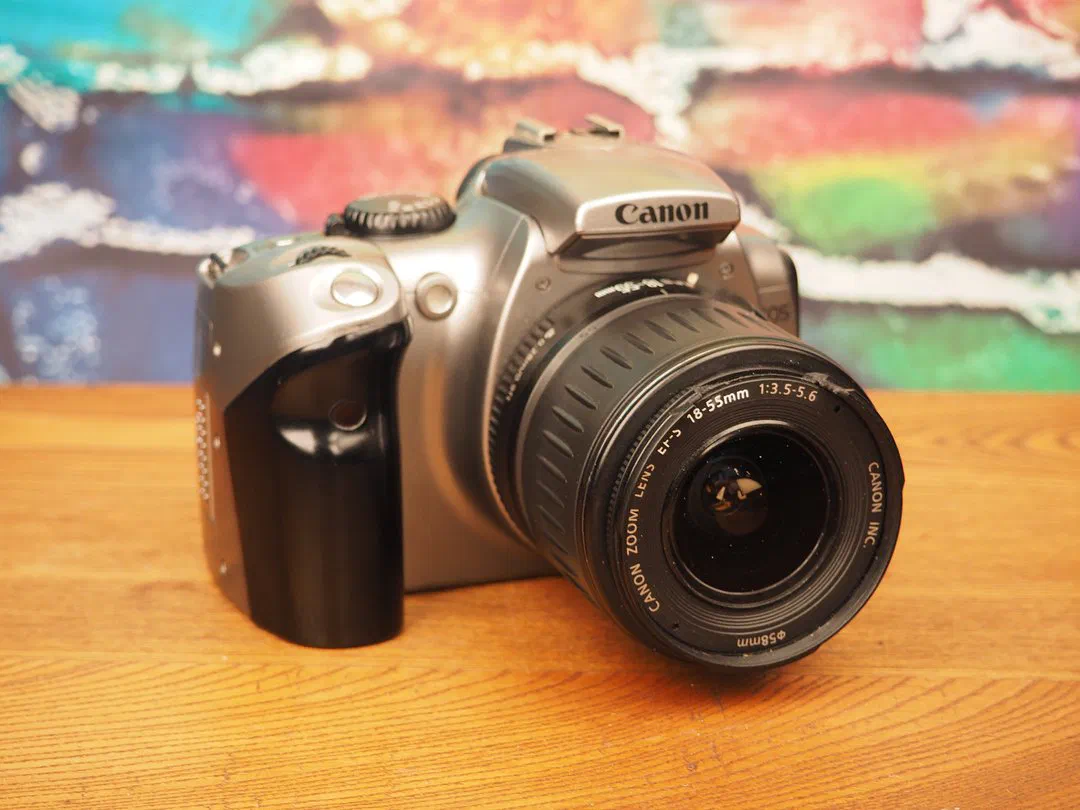
Best Value - Canon EF-S 18-55mm f3.5-5.6
- EF-S 18-55mm f/4-5.6 IS STM (2017)
- EF-S 18-55mm f/3.5-5.6 IS STM (2013)
- EF-S 18-55mm f/3.5-5.6 IS II (2011)
- EF-S 18-55mm f/3.5-5.6 III (2011)
- EF-S 18-55mm f/3.5-5.6 IS (2007)
- EF-S 18-55mm f/3.5-5.6 II USM (2005)
- EF-S 18-55mm f/3.5-5.6 II (2005)
- EF-S 18-55mm f/3.5-5.6 USM (2004)
- EF-S 18-55mm f/3.5-5.6 (2004)
Any version with IS is the best value. If you already own one without IS, upgrading is not worth it.
The 18-55mm covers a versatile focal range. It handles landscapes, architecture, street, travel, portraits, and group shots with ease.
It was the kit lens bundled with nearly every EF-S camera, so millions are available on the used market. With some patience, you can find a used IS version for the same price as one without.
It is not the best choice for low-light, sports, action, or wildlife photography. A f/1.8 prime will perform better in low light, and a telephoto zoom will cover the rest.
See current price and information:
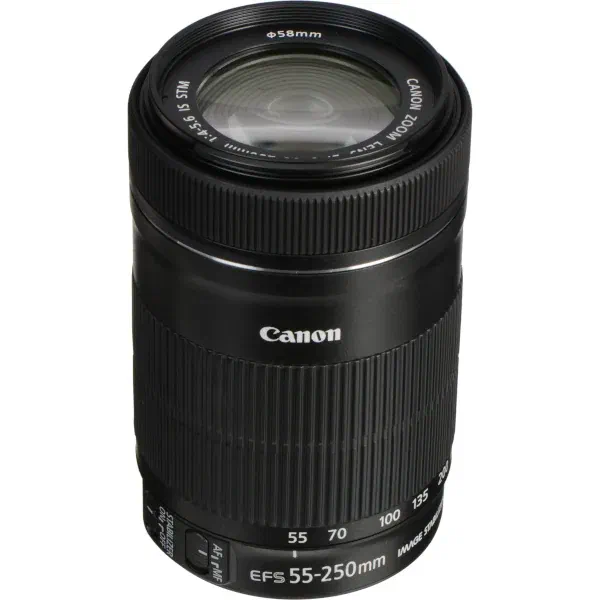
Best Value Telephoto - Canon EF-S 55-250mm f4-5.6
- EF-S 55-250mm f/4-5.6 IS STM (2013)
- EF-S 55-250mm f/4-5.6 IS II (2011)
- EF-S 55-250mm f/4-5.6 IS (2007)
Whether you are shooting on the sidelines or photographing birds, this lens is a great starting point. All versions include IS, so any of them are a solid choice.
It was the second kit lens option for most EF-S cameras, which keeps prices affordable and availability high.
It is small and light, making it easy to carry on walks or hikes. You can comfortably hand hold it without needing a monopod or tripod.
It is a major step up from a phone or the 18-55mm and a great way to find out if you enjoy sports, action, or wildlife photography.
It also holds its value well and is easy to resell if you decide to upgrade later.
See current price and information:
Canon EF 70-300mm f/4-5.6 IS
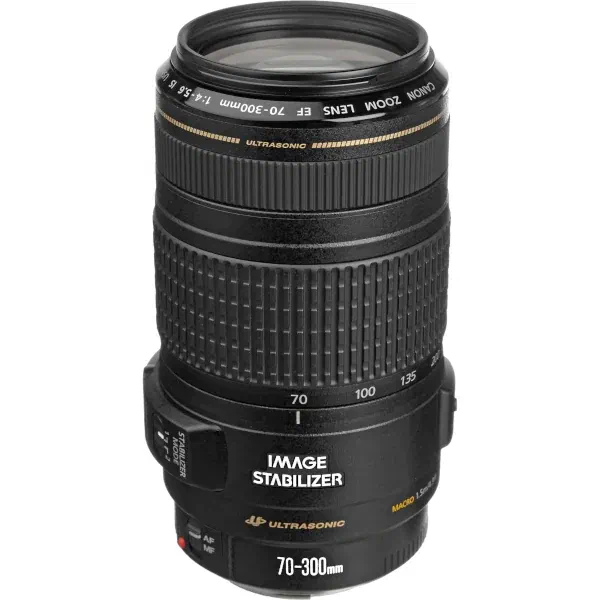
This lens offers more reach and excellent price-to-performance value.
It is also an EF lens, meaning it can be used on a full frame camera down the road. A used Canon 5D Mark II can be found for around $250, making this a smart long-term investment.
DON’T BUY THE Canon EF 75-300mm f4-5.6 III
This lens is widely considered the worst Canon has ever made.
It is an EF lens originally designed for 35mm film cameras. Canon included it as a second kit lens with early DSLRs, but it is not sharp and is significantly overpriced for what it delivers.
See current price and information:
Standard Zooms
These lenses are upgrades over the 18-55mm kit zoom.
Sigma 17-50mm f/2.8 EX DC OS HSM FLD
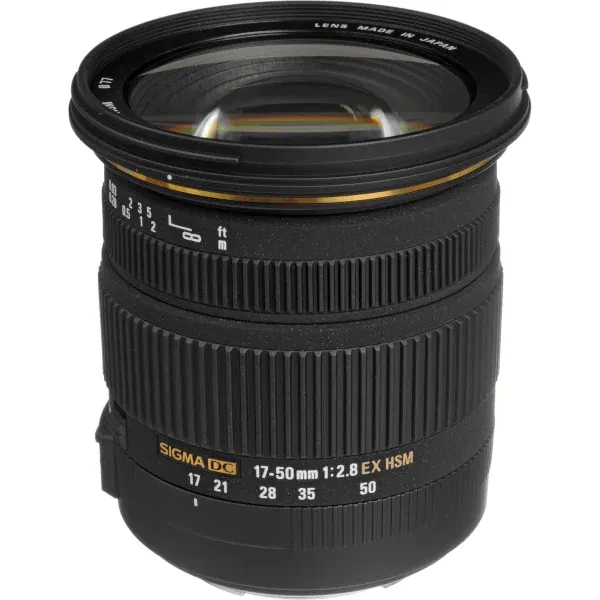
This lens was made in multiple mounts. Make sure you are buying the Canon EF mount version and not a Nikon F mount by mistake.
Used copies are typically less than half the price of the Canon 17-55mm with only a small drop in image quality.
Build quality is not the best, so avoid copies with noticeable cosmetic wear or damage.
See current price and information:
Canon EF-S 17-55mm f/2.8 IS USM
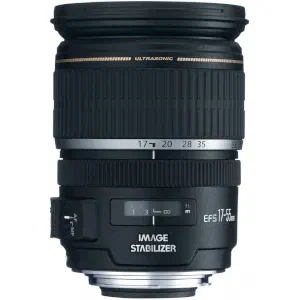
This is the APS-C equivalent of a full frame 24-70mm f/2.8L. Used copies offer great price-to-performance value.
That said, it is expensive relative to the cost of the camera. It may make more sense to upgrade the body before investing in this lens.
The constant aperture and wide focal range make it a versatile single-lens option that should cover the needs of most photographers.
See current price and information:
Canon EF-S 15-85mm f/3.5-5.6 IS USM
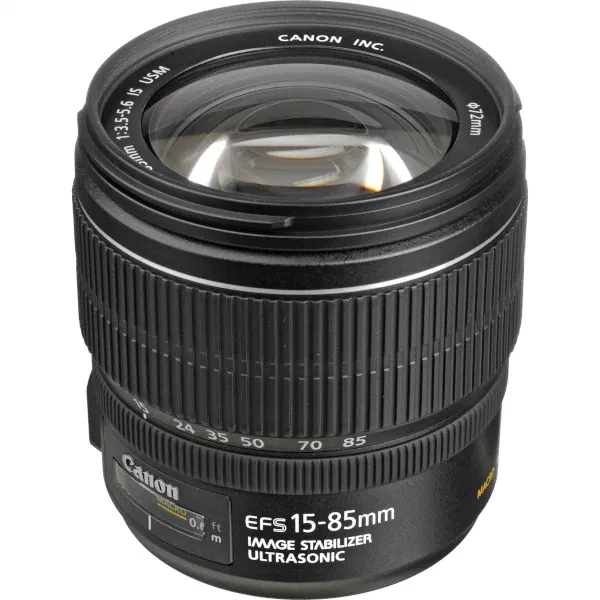
This is a solid travel lens if you only want to carry one. The extra telephoto reach is useful when you cannot get closer to your subject.
Image quality is better than a super zoom, and the size is more manageable.
For most people though, the 18-55mm and 55-250mm two-lens kit will be a better experience. The camera will balance better and be more enjoyable to shoot.
See current price and information:
Wide Zooms
Canon only offers two EF-S wide zoom options.
If you need to go wider, upgrading to a full frame camera is worth considering. The 1.6x APS-C crop factor is a significant disadvantage for wide angle photography.
Canon EF-S 10-18mm f/4.5-5.6 IS STM
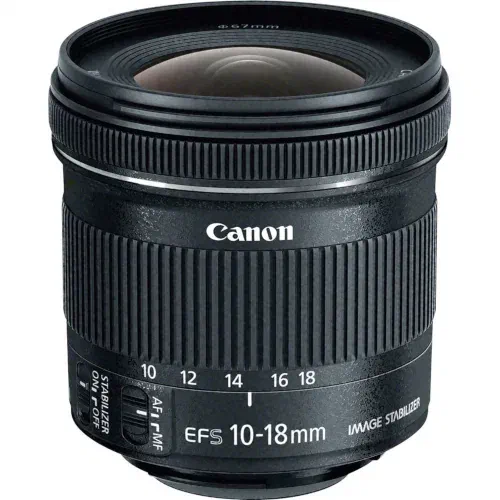
Compared to the 10-22mm, this lens has better image quality, a lighter build, and faster autofocus. The tradeoff is a slower aperture and less robust build quality.
See current price and information:
Canon EF-S 10-22mm f/3.5-4.5 USM
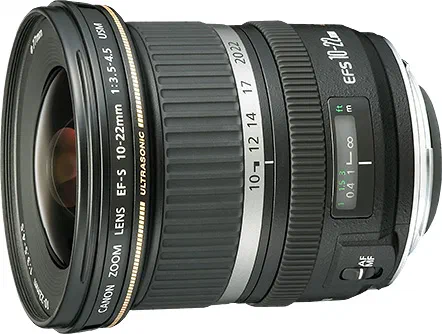
This is the one I would recommend. It is slightly faster, covers a larger zoom range, and is similarly priced.
The downsides are that it is larger, heavier, and older, having been released in 2004.
See current price and information:
Prime Lenses
There are only three EF-S prime lenses, and two of them are macros.
Canon made this choice intentionally. Entry-level APS-C Rebel cameras were designed to eventually push users toward more expensive full frame bodies and lenses.
The 1.6x crop factor can work in your favor if you need extra reach for wildlife or sports.
If landscapes or architecture are your main interests, upgrading to a full frame camera will give you a better lens selection.
Canon EF-S 24mm f/2.8 STM
Canon’s fun pancake lens. It is ideal for travel and street photography.
The smaller size makes it a noticeably different experience compared to shooting with the 18-55mm kit lens.
See current price and information:
Canon EF 50mm f/1.8 STM
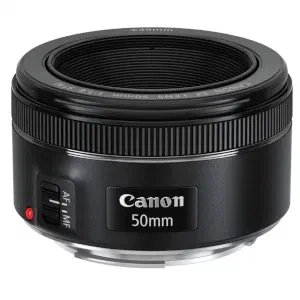
My favorite Canon EF lens. Look specifically for the second version, which has a metal mount.
The first version is all plastic. One bad drop and it could be ruined. There is not much price difference between the two, so the second version is worth seeking out.
On a crop sensor body, 50mm will feel like a short telephoto. It is better suited for portraits than everyday walkaround use.
See current price and information:
Canon EF 85mm f/1.8 USM
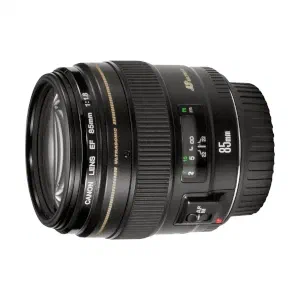
A lens built specifically for portrait photography.
Used prices have dropped significantly, though it is still probably more lens than the camera demands.
See current price and information:
Canon EF 100mm f/2 USM
At this focal length, you will need to stand well back from your subject.
It offers great value for the price, but it is better suited to a full frame camera. Keep it in mind as a future upgrade option.
See current price and information:
Canon EF 20mm f/2.8 USM
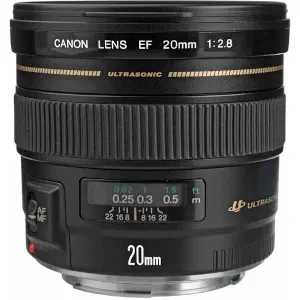
On a crop sensor, this lens has the equivalent field of view of 32mm, which is not wide enough to be useful for most wide angle work.
It is included here mainly to illustrate the limitations of the EF-S system for wide angle shooting. A zoom or a full frame upgrade will serve you better.
See current price and information:
Samyang 14mm f/2.8 IF ED UMC
This lens was sold in multiple mounts, so double-check you are buying the Canon EF version.
It is also manual focus only. That is not a major issue since the depth of field is large even at f/2.8.
The bulbous front element means lens filters cannot be used.
See current price and information:
Super Zooms (Aren’t Very Good)
Convenience comes at the cost of size, weight, and image quality.
Super zooms tend to have mediocre image quality across the board, with the worst performance at both ends of the focal range. That is a problem because the wide and telephoto ends are the most commonly used focal lengths.
I would not recommend any of them. Most people will be happier with a simple two-lens kit.
Sigma 18-300mm f/3.5-6.3 DC OS
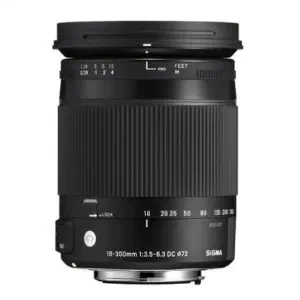
This lens costs more than an 18-55mm, 70-300mm, and 24mm f/2.8 combined. It also weighs 585 grams.
It is also available in Nikon, Pentax, Sony, and Sigma SA mounts, so be careful when buying used.
I would rather save money and switch lenses occasionally.
See current price and information:
Canon EF-S 18-200mm f/3.5-5.6 IS
The price is reasonable and the zoom range is usable.
It can make sense for sports where the action moves quickly between near and far distances. Some photographers also prefer it for travel since keeping the lens attached means no dust getting into the camera or onto the sensor.
See current price and information:
More Sports, Action, and Wildlife Lenses
These are the next step up from a 70-300mm.
At this price point, it is worth pairing them with a camera that has at least 45 autofocus points, such as the Canon 7D Mark II, 90D, 80D, 77D, or Rebel T8i.
Tamron SP 150-600mm f/5-6.3 Di VC USD G2
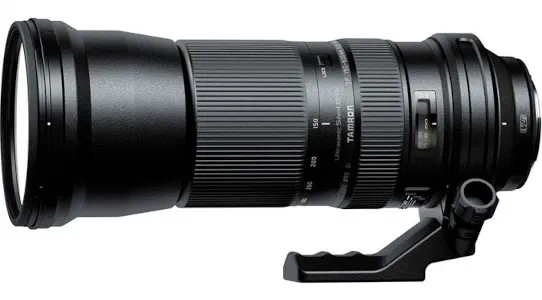
Look for the G2 version. It is a significant improvement over the original.
Prices have dropped as photographers switch to the RF mount, making used copies a strong value.
The size and weight are the main drawbacks. A monopod is a good idea.
See current price and information:
Sigma 150-600mm f/5-6.3 Contemporary DG OS HSM
There is also a Sport version with a more robust build, available at a higher price.
The Contemporary is typically priced similarly to the Tamron. If you plan to transport the lens frequently, the Sport version may be worth the extra cost.
See current price and information:
Canon EF 100-400mm f/4.5-5.6L IS II USM
This lens has the best image quality of the three and the highest price.
It is lighter and has a white finish, but the shorter focal range is a tradeoff to keep in mind.
See current price and information:
Macro Lenses
A DSLR would not be my first choice for macro photography. The manual focusing aids in live view are not refined enough for precise work.
Mirrorless cameras offer better focusing aids and faster workflows. Micro Four Thirds cameras also have a larger macro lens selection with easy lens adaptation.
Canon EF-S 60mm f/2.8 Macro USM
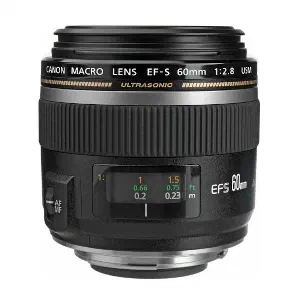
Capable of 1:1 magnification, though it works well for close-up photography in general.
It is best suited for tabletop subjects within arm’s reach. At 1x magnification, the lens can get close enough to interfere with lighting setups.
See current price and information:
Canon EF 100mm f/2.8L Macro IS USM
The higher price reflects the image stabilization, internal focusing, and weather sealing.
If any of those features matter to you, this is the lens to get. It also doubles as a capable portrait lens.
See current price and information:
Tamron AF 90mm f/2.8 Di SP A/M 1:1 Macro
Image quality on this lens and its later versions is very good.
Prices are lower because it lacks internal focusing, image stabilization, and weather sealing. The front element extends when focusing.
The focus clutch is a standout feature. It makes it easy to switch to manual focus or lock in a specific magnification, then move the camera to fine-tune focus.
See current price and information: